Most of us are well aware of the benefits that come with a strong cup of coffee, tea, or energy drink (depending on where you like to get your caffeine). The increased energy and alertness are a particular bonus for students—and you probably enjoy the taste. As with most things, however, moderation is key. It probably wouldn’t hurt for many of us to cut back on our caffeine consumption, especially if we find ourselves having a hard time falling asleep at night or feeling needy for that next cup.
How much is too much?
Caffeine is OK in small doses. Experts say up to 400 milligrams per day is generally considered safe. But all those lattes add up fast, and going over that 400 milligram mark can be problematic, says Dr. Mary M. Sweeney, an assistant professor of psychiatry and behavioral sciences at Johns Hopkins University School of Medicine in Baltimore.

The amount of caffeine found in some of your favorite drinks may surprise you
- A 20-ounce Starbucks venti coffee has 475 milligrams of caffeine.
- A 20-ounce Dunkin’ coffee with an espresso shot has 388 milligrams of caffeine.
- A 2-ounce energy shot has up to 422 milligrams of caffeine.
- A 16-ounce Monster or Rockstar energy drink has 160 milligrams of caffeine.
- A 16-ounce Starbucks grande cappuccino has 150 milligrams of caffeine.
- A 20-ounce Starbucks chai tea latte has 145 milligrams of caffeine.
- A 12-ounce (average) soda has 35–45 milligrams of caffeine.
Will caffeine help you ace that test? Maybe
Caffeine isn’t all bad. A jolt of joe can boost your memory power for up to 24 hours, according to a Johns Hopkins University study published in Nature Neuroscience. Participants who were given 200-milligram caffeine tablets after studying a series of images were better at distinguishing them from similar images when tested the next day, as compared to their caffeine-free peers.
Sleep sabotage
It’s a no-brainer that caffeine impairs sleep, but research shows it does more than just keep you from nodding off in class. It can mess up your total sleep schedule because caffeine stays in your bloodstream for up to 10 hours, according to the American Academy of Sleep Medicine. That can be a major problem for students. “It can be easy to get into a negative spiral of using caffeine to try to correct for inadequate sleep, but that caffeine you consume may again prevent you from getting enough sleep,” says Dr. Davis Smith, staff physician at the University of Connecticut in Storrs. “Occasional caffeine is fine, but adequate sleep is critical to good learning because of how it benefits your concentration and memory.”
Anxiety inducer
The stimulation you get from a shot of espresso can be less than ideal for your anxiety levels. Increased depressive symptoms and anxiety were associated with a greater caffeine intake, reported a small study published in 2021 in Cureus. “Not sleeping enough also leads to worse control of anxiety and depression,” says Dr. Smith.
Blood pressure problems and panic attacks
“Caffeine can increase heart rate and blood pressure, which [can lead] to health problems, including panic attacks and nausea,” says Dr. Jeannie Moorjani, a pediatrician at the Arnold Palmer Hospital for Children at Orlando Health in Florida. While it might sound extreme, ending up in the hospital because of too much caffeine occasionally happens. Dr. Robert Glatter, an emergency physician at Lenox Hill Hospital in New York City, has seen many young patients in the ER who have spiking blood pressure and irregular heartbeats from caffeine overload. “I always ask them what they drank or ate, and a lot of times it’s the caffeine that’s causing these scary symptoms,” Dr. Glatter says.
How to cut back without turning into a zombie

Go small.
A typical travel coffee mug can hold around 14 to 30 ounces on average—that’s anywhere from double to almost quadruple a standard cup of coffee! If you take your coffee to go, trade in your oversized travel mug for an 8-ounce reusable to-go mug, or make sure to only fill your large travel mug with a single serving of coffee and then rinse it out and refill with water to stay hydrated throughout the day.
Try half and half.
Order a half-caffeinated/half-decaf drink or add more water to your home brew to dilute the caffeine in your daily coffee instead of downing your usual high-octane version, suggests Dr. Sweeney. “Relatively small amounts of caffeine can help relieve withdrawal symptoms, so combining a mostly decaffeinated beverage with a small amount of caffeinated coffee may be a helpful strategy to cut back,” she says.
Sneak in a snooze.
To combat the grogginess you’re likely to feel when cutting back on caffeine, take a power nap (as long as it’s before 3 p.m. so it doesn’t mess with your nighttime sleep). There are plenty of benefits to napping, including boosting your mood, alertness, and performance, according to the National Sleep Foundation.
Look for low-caf.
Switch up your favorite beverages for something similar but with less caffeine. Swap soda for a green tea kombucha, which typically contains less than 30 milligrams of caffeine, or switch your evening Earl Grey for a caffeine-free herbal tea.
Say hello to H2O.
Aim to get your water intake to be greater than your caffeinated beverage intake, says Dr. Glatter. If you regularly drink a lot of caffeine, cutting back may mean experiencing some withdrawal symptoms, such as headaches or nausea, but keeping yourself hydrated by drinking lots of water will help. “Every time you think you want a coffee, ask yourself when the last time you drank water was,” says Jewel B., a third-year undergraduate at Villanova University in Pennsylvania. Bonus: Sipping on water will give your hands and mouth something to do when you crave a soda.
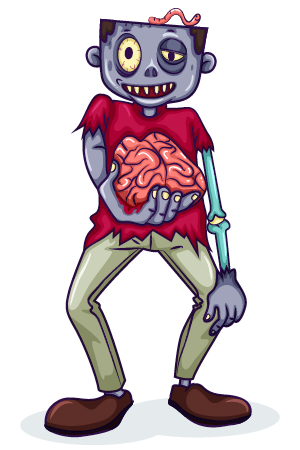
Don’t drink coffee—think coffee.
Some research suggests just the thought of downing caffeine is enough to boost your grade on a test. When researchers gave study participants a decaf beverage but told them it was caffeinated, they performed better on tests (just like participants who actually got caffeine), according to the findings published in Psychopharmacology.
Why? The powers of perception around caffeine are strong, says Dr. Candice Dye, associate director of the pediatric residency program at the University of Alabama at Birmingham School of Medicine. “People think ‘this is the way I am supposed to act when I drink coffee’ and buy into it.’’
Bring on the snacks.
Swap your caffeine crutch with a high-protein snack to keep your energy up naturally. Nutritious, fatigue-fighting snacks should be rich in protein, fiber, and whole grains (e.g., multigrain toast with nut butter and sliced fruit). Plus, “Eating a balanced diet will help avoid the hunger that can worsen the effects of caffeine withdrawal,” says Dana Greene, a nutritionist in Massachusetts.
Exercise to help you stay alert.
Brief stair-climbing intervals can provide an immediate energy and mood boost, according to a 2024 randomized controlled study.
Sleep smarter.
Reaching for cappuccino number three can seem like the only way to stay awake through a monster study session. But there’s another solution: sleep. If you can’t fit more hours of sleep into your crazy-packed schedule, there are plenty of small changes you can make to improve the quality of your sleep. Start with keeping your bedroom cool and dark and switching your phone to night mode to cut down on the blue screen light that can mess with your internal clock.
Set a caffeine curfew.
On that note, enjoy your caffeine at least six hours before bedtime to get the sweetest Z’s. A dose of caffeine any closer to bedtime can significantly disturb your rest, according to a study published in the Journal of Clinical Sleep Medicine.
The bottom line: Everyone is affected by caffeine differently, so there’s no surefire way to predict how quitting cold turkey or loading up on large coffees would affect you. Your best bet for cashing in on the benefits of caffeine without any of the health risks is to notice how your body feels when you consume it and try to keep your consumption in check.
GET HELP OR FIND OUT MORE
Find out the caffeine content of your favorite drinks: US National Library of Medicine
10-minute study break workout to wake yourself up: Sunny Health and Fitness
Why you should drink water first thing every day: USA Today
Article sources
Candice Dye, MD, pediatrician and associate director, Pediatric Residency Program, School of Medicine, University of Alabama at Birmingham.
Robert Glatter, MD, emergency physician, Lenox Hill Hospital, New York, New York.
Dana Greene, RD, LDN, Boston, Massachusetts.
Jeannie Moorjani, MD, pediatrician, Arnold Palmer Hospital for Children, Orlando, Florida.
Mary M. Sweeney, PhD, assistant professor, Behavioral Pharmacology Research Unit, Department of Psychiatry and Behavioral Sciences, Johns Hopkins University School of Medicine, Baltimore, Maryland.
American Academy of Pediatrics. (2011). Sports drinks and energy drinks for children and adolescents: Are they appropriate? Pediatrics, 127(6), 1182–1189. https:///doi.org/10.1542/peds.2011-0965
Bertasi, R., Humeda, Y., Bertasi, T., Zins, Z., et al. (2021). Caffeine intake and mental health in college students. Cureus, 13(4), e14313. https://doi.org/10.7759/cureus.14313
Borota, D., Murray, E., Keceli, G., Chang, A., et al. (2014). Post-study caffeine administration enhances memory consolidation in humans. Nature Neuroscience, 17, 201–203. https://doi.org/10.1038/nn.3623
Center for Science in the Public Interest. (n.d.). Caffeine chart. https://cspinet.org/eating-healthy/ingredients-of-concern/caffeine-chart
Consumer Reports. (2012). The buzz on energy-drink caffeine. https://www.consumerreports.org/cro/magazine/2012/12/the-buzz-on-energy-drink-caffeine/index.htm
Ding, M., Satija, A., Bhupathiraju, S. N., Hu, Y., et al. (2015). Association of coffee consumption with total and cause-specific mortality in three large prospective cohorts. Circulation, 132(24), 2305–2315. doi: 10.1161/CIRCULATIONAHA.115.017341
Drake, C., Roehrs, T., Shambroom, J., & Roth, T. (2013). Caffeine effects on sleep taken zero, three, or six hours before going to bed. Journal of Clinical Sleep Medicine, 9(11), 1195–1200. http://dx.doi.org/10.5664/jcsm.3170
Fuligni, A. J., Bai, S., Krull, J. L., & Gonzalez, N. A. (2017). Individual differences in optimum sleep for daily mood during adolescence. Journal of Clinical & Adolescent Psychology, 1–11. https://doi.org/10.1080/15374416.2017.1357126
Foundation for a Drug-Free World. (n.d.). Stimulants. http://www.drugfreeworld.org/drugfacts/prescription/stimulants.html
Harrell, P., & Juliano, L. (2009). Caffeine expectancies influence the subjective and behavioral effects of caffeine. Psychopharmacology, 207(2), 335–342. https://doi.org/10.1007/s00213-009-1658-5
Heffron, T. M. (2013). Sleep and caffeine. American Academy of Sleep Medicine. http://www.sleepeducation.org/news/2013/08/01/sleep-and-caffeine
Jin, M.-J., Yoon, C.-H., Ko, H.-J., Kim, H.-M., et al. (2016). The relationship of caffeine intake with depression, anxiety, stress, and sleep in Korean adolescents. Korean Journal of Family Medicine, 37(2), 111–116. doi: 10.4082/kjfm.2016.37.2.111
Meredith, S. E., Juliano, L. M., Hughes, J. R., & Griffiths, R. R. (2013). Caffeine use disorder: A comprehensive review and research agenda. Journal of Caffeine Research, 3(3), 114–130. doi: 10.1089/jcr.2013.0016
National Center for Complementary and Integrative Health. (2017, October 4). Energy drinks. https://nccih.nih.gov/health/energy-drinks
National Coffee Association. (2017). Daily coffee consumption up sharply [Press release]. http://www.ncausa.org/Portals/56/PDFs/Communication/NCA_NCDT2017.pdf?ver=2017-03-29-115235-727
National Coffee Association. (2020, March 26). NCA releases atlas of American coffee. https://www.ncausa.org/Newsroom/NCA-releases-Atlas-of-American-Coffee
National Institute on Drug Abuse for Teens (2016, May 10). Is caffeine really addictive? https://teens.drugabuse.gov/blog/post/caffeine-really-addictive
National Sleep Foundation. (n.d.). Napping. https://sleepfoundation.org/sleep-topics/napping
Randolph, D., & O’Connor, P. (2017). Stair walking is more energizing than low dose caffeine in sleep deprived young women. Physiology & Behavior, 174, 128–135. https://doi.org/10.1016/j.physbeh.2017.03.013
Stenling, A., Quensell, J., Kaur, N., & Machado, L. (2024). Stair climbing improves cognitive switching performance and mood in healthy young adults: A randomized controlled crossover trial. Journal of Cognitive Enhancement, 8, 191–205. https://doi.org/10.1007/s41465-024-00294-1
Studte, S., Bridger, E., & Mecklinger, A. (2015). Nap sleep preserves associative but not item memory performance. Neurobiology of Learning and Memory, 120, 84–93. https://doi.org/10.1016/j.nlm.2015.02.012
Temple, J. L., Bernard, C., Lipshultz, S. E., Czachor, J. D., et al. (2017). The safety of ingested caffeine: A comprehensive review. Frontiers in Psychiatry, 8, 80. https://doi.org/10.3389/fpsyt.2017.00080
US National Library of Medicine. (n.d.). Caffeine. https://medlineplus.gov/caffeine.html
University of Georgia. (2008). Low-intensity exercise reduces fatigue symptoms by 65 percent, study finds [Press release]. http://news.uga.edu/releases/article/low-intensity-exercise-reduces-fatigue-symptoms-by-65-percent-study-finds/