Key points
- Getting moderate levels of activity in between days of more intense workouts—known as “active rest”—can help promote muscle recovery.
- Active rest can include low-impact activities like walking, foam rolling, and yoga.
- Working active rest days into your fitness routine can help you progress faster and avoid burnout.
You know the sense of determination you get when you want to accomplish a fitness goal? That eye-on-the-prize, can’t-take-a-day-off motivation? While it can feel great to be so focused, giving your body time to recover with active rest days can actually be more beneficial than going hard seven days a week, according to the experts. “We can’t skip the recovery aspect of training and expect the body to respond and grow lean muscle tissue,” says Ashley Borden, a certified strength and conditioning specialist and athletic trainer in Los Angeles.
If you’re someone who works out five to seven days a week, scheduling regular bouts of active rest into your workout routine can actually help you train more effectively. “The key about taking a rest, and especially if it can be moderately active, is that you feel better the next day,” says Dr. Edward Coyle, a professor of kinesiology and health education at the University of Texas at Austin. “If you feel better in your training, that allows you to train more intensely.” Remember that next time you’re thinking of jamming an extra workout into your already busy schedule.
What is active rest?
Not all rest is created equal.
- Passive rest—think lounging around during a Netflix binge—might seem appealing, but it’s not the most productive for your fitness routine. “Sometimes doing absolutely nothing can actually stiffen you up more,” says Borden.
- Active rest—or a low-intensity activity, such as walking, stretching, or foam rolling—allows you to keep up your fitness momentum and promote better recovery for your muscles.
Active rest shouldn’t be intense—if you’re working hard enough that you have trouble talking, that’s too much, says Dr. Bruce Gladden, director of the Muscle Physiology Lab at Auburn University in Georgia.
“Active recovery allows me to feel like I am training my body while still giving myself a chance to recover. I train six days a week, and I find it hard to take the seventh day off, so it’s nice to have something to do that settles my itch to train.”
—Alex T., fourth-year student, Villanova University, Pennsylvania
 How to work active rest into your workouts
“Active rest is participating in activity with a reduced load compared to what’s considered your normal workout,” says Scott Oliaro, head athletic trainer and associate director of sports medicine at the University of North Carolina in Chapel Hill. “This can include changing the activity (biking or swimming instead of running), reducing the mileage of a run, or changing the duration of [the] activity.”
Here are several ways to try it:
 Power walking
Also known as speed walking, your gait should be faster than your natural walking pace. Your heart rate is elevated, but you can still easily hold a conversation.
 Yoga
Look for flows from our FitnessU instructors or classes on yoga apps that emphasize lots of stretching.
 Swimming
Switch up your cardio routine with a few laps on your active rest days to reduce the impact on your joints and help your body recover.
 Biking
Keep it mellow. Save the sprints and hills for a more intense workout.
 Elliptical
If you’re able to safely access a gym, a low-impact elliptical session is another great cardio alternative.
 Rebounding
Jumping on a trampoline (you can find small ones to fit in your bedroom/small spaces) is a great moderate-intensity, low-impact workout. Research by the American Council on Exercise found that while participants still got a great workout, jumping on a trampoline felt easier than running or biking (if you ask us, it’s also way more fun).
 Hiking
Give your muscles a break and add in a nice view with a leisurely hike. Just remember Dr. Gladden’s rule of thumb—the effort should be easy enough that you can still comfortably talk. No hills or trails nearby? A stroll around campus works too.
 Foam rolling
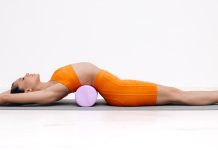
Follow an intense workout with a body-loving foam rolling session. For 10 minutes, spend a full minute rolling out each of the following body parts: quads, hamstrings, upper back, triceps, calves, inner thighs, outer thighs, and glutes. “Spend as much time as you feel you need on extra-sore or tight body parts with your foam roller,” Borden says.
“Active rest days have become time for me to explore other interests: hiking, rock climbing, walking, etc.”
—Sophie C., second-year graduate student, The College of New Jersey, Ewing
How do you know it’s time for an active rest day?
“The harder you’re exercising, the more you need active rest,” says Dr. Coyle. “One rule that most athletes follow for training is a hard day followed by an easy day. If you try to put two or three hard days in a row, that can be counterproductive.”
Ask yourself:
Am I sore every day? “Pain is a great indicator that your body may not be ready to participate in a particular exercise,” says Oliaro. Any soreness lasting more than 48 hours is your body’s way of saying it needs a break.
Is my workout performance going down? “That’s a clear sign you need to build in some active rest,” Dr. Gladden says.
How am I truly feeling? “If on a scale from 1–10 you feel like a 5 or less, roll out and refuel,” says Borden.
Here’s an example of what a week of moderate training with active rest might look like (tailor your own schedule to fit your needs and fitness level).

Monday: Workout
High-intensity cardio, such as cycling or a long run
Tuesday: Active rest
Yoga to stretch out any tightness in legs
Wednesday: Workout
Strength-training session, like barre or HIIT, to target the upper body
Thursday: Workout
Give arms a break with a cycling session
Friday: Active rest
Foam roll to show extra love to muscles after a long week
Saturday: Workout
Kickboxing or dance cardio YouTube class
Sunday: Rest
You don’t have to be on the move every single day. If you’re feeling tired even when you work in regular active rest, listen to your body and take a full day or two off.

The case for adding active rest
“There’s no shame in the rest game,” says Borden. Working active rest into your workout routine will help you grow stronger and stay active week after week.
Active rest prevents injury
When you don’t build active rest into your training schedule, you’re breaking down muscle tissue faster than it can repair itself, which can lead to stress fractures and soft tissue injury, says Oliaro.
It prevents soreness
Some research indicates that active rest is best when it involves the same muscles you used during a more intense workout. A 2016 study published in PLOS One looked at canoeists and football players who engaged in 20 minutes of post-exercise active recovery using the same muscles and found it was more effective for preventing muscle fatigue than participating in a recovery activity using different muscles.
It speeds up recovery
Low-intensity workouts help your muscles heal. “While you don’t increase the oxidative stress in your muscles, you’re increasing blood flow to the muscles that have been taxed, delivering more fuel and amino acids to the muscles [which helps them build], and removing factors that might be causing soreness or pain,” says Dr. Gladden.
Active rest can lower stress
According to a study published in the Journal of Endocrinological Investigation, active rest—defined as 40 percent of your maximum workout effort—lowered levels of the stress hormone cortisol in participants’ blood.
“My stress and anxiety levels decrease tremendously! I feel more relaxed after I take walks.”
—Cearra S., fourth-year student, Mount Carmel College of Nursing, Columbus, Ohio
It promotes workout progress
Trying to push through daily high-intensity workouts puts you into what’s called an “overreaching period,” where you’re unlikely to see improvement, says Dr. Gladden. Overreaching for a week or more can cause lasting immune system dysfunction (e.g., you could be more susceptible to getting sick), according to a study in the Journal of Applied Physiology.
It keeps your fitness routine fresh
Even if you love it, doing the same workout over and over is a recipe for burnout. “Mentally, active rest helps keep training fresh and new,” says Oliaro.
Active rest is an act of self-care
If you usually have a specific time goal or mile split in mind, try going with your body’s flow on an active rest day instead—slowing down or stopping to walk when your legs start getting tired.
“I feel happier and more at ease when I incorporate active rest into my routine. I try to run every day, but sometimes I need to give my body a break and not be so focused on ‘looking’ fit.”
—Nina L.*, third-year graduate student, University of Hawaii at Manoa
*Name changed
What to do on rest and recovery days: Active
The active recovery workout routine: Shape
Article sources
Ashley Borden, certified strength and conditioning specialist and athletic trainer.
Edward Coyle, PhD, professor of kinesiology and health education at the University of Texas at Austin.
Bruce Gladden, PhD, director of the Muscle Physiology Lab at Auburn University in Georgia.
Scott Oliaro, head athletic trainer and associate director of sports medicine at the University of North Carolina in Chapel Hill.
Brooks, K. A., & Carter, J. G. (2013). Overtraining, exercise, and adrenal insufficiency. Novel Physiotherapies, 3(1). doi: 10.4172/2165-7025.1000125
Burandt, P., Porcari, J. P., Cress, M. L., Doberstein, S., et al. (October 2016). Putting mini trampolines to the test. American Council on Exercise. https://www.acefitness.org/certifiednews/images/article/pdfs/ACE_MiniTrampoline.pdf?utm_source=Rakuten&utm_medium=10&ranMID=42334&ranEAID=TnL5HPStwNw&ranSiteID=TnL5HPStwNw-NK8ONx.a3JUjBMDAugurPQ
Evidence-Based Fitness. (February 17, 2008). Rest vs. active recovery. https://evidencebasedfitness.net/rest-vs-active-recovery/
Gleeson, M. (2007). Immune function in sport and exercise. Journal of Applied Physiology, 103(2), 693–699. doi: 0.1152/japplphysiol.00008.2007
Hill, E. E., Zack, E., Battaglini, C. Viru, M., et al. (2008). Exercise and circulating cortisol levels: The intensity threshold effect. Journal of Endocrinological Investigation, 31(7), 587–591. doi: 10.1007/BF03345606
Mika, A., Olesky, L., Kielnar, R., Wodka-Natkaniec, E., et al. (2016). Comparison of two different modes of active recovery on muscles’ performance after fatiguing exercise in mountain canoeist and football players. PLoS One, 11(10). doi: 10.1371/journal.pone.0164216
Mike, J. N., & Kravitz, L. (n.d.). Recovery in training: The essential ingredient. University of New Mexico. https://www.unm.edu/~lkravitz/Article%20folder/recoveryUNM.html
Ode, G. (February 29, 2016). What is the difference between tendonitis, tendinosis, and tendinopathy? Sports-Health. https://www.sports-health.com/sports-injuries/general-injuries/what-difference-between-tendonitis-tendinosis-and-tendinopathy