



























—Loes V., fourth-year graduate student, University of Rhode Island
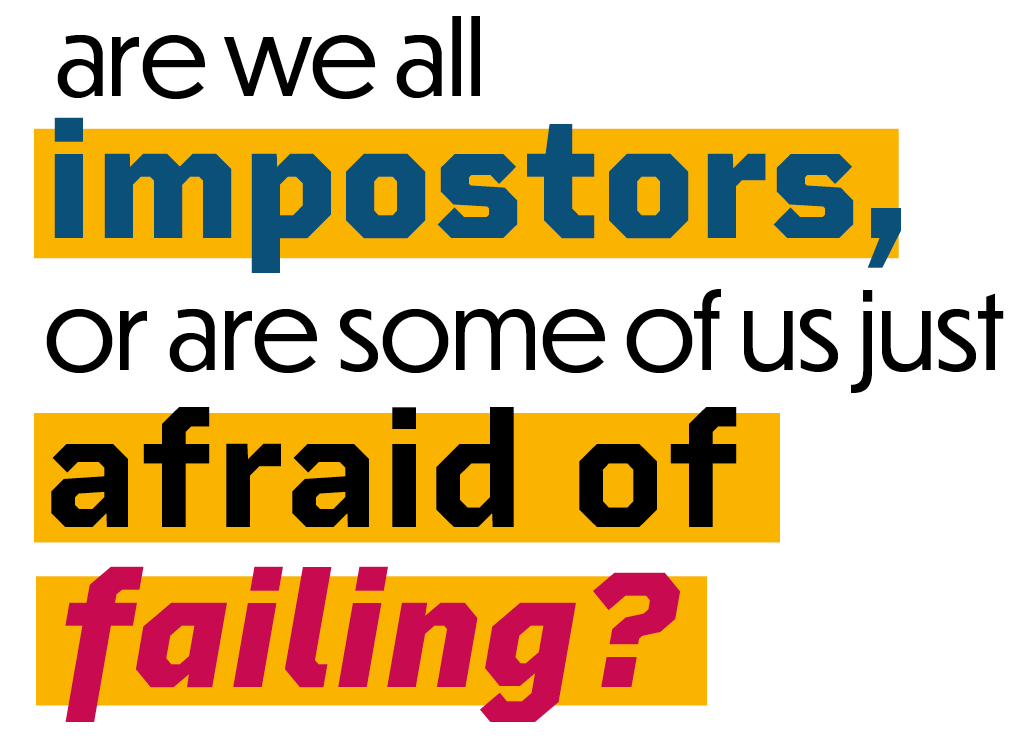
This is a great question. Another question to ask might be: Are we all impostors, or are some of us just afraid of failing?

To clarify, someone suffering from “impostor syndrome”:
- Doubts their ability or qualifications to be successful.
- Is afraid a mistake was made (in their hire, acceptance to a program, etc.).
- Fears this mistake may be discovered and they will be “outed” as not being worthy of their accomplishments.
But are any of these things really true? Usually, no. People who struggle with feeling “good enough” may be experiencing impostor syndrome, but it’s also possible that these feelings of self-doubt are rooted in an early childhood history of being bullied or criticized. The good news? Unlearning self-doubt is possible—it just may take some time and effort to do so.
Does everyone feel like an impostor?
The short answer is also no. While it’s normal to not feel a sense of belonging or inclusion in all spaces, I have found that those who don’t struggle with impostor syndrome tend to have high levels of self-trust and confidence—qualities that typically develop at a young age.
How to build self-trust and confidence

If building up self-trust and confidence sounds like what you need, start by thinking about the following questions:
- What are some qualities that I like about myself?
- What people or things make me feel excited or inspired?
- What am I good at?
- What is something I’ve accomplished that I’m proud of?
- What if this is an opportunity for me to show myself what I can do or what I can be—rather than what I can’t do or be?
The more intentional we are with reminding ourselves of positive, affirming experiences, the better we become at believing in ourselves. Living within a culture that promotes the expectation that people shouldn’t struggle also contributes to a problematic narrative suggesting that failure is unacceptable. Other cultures share a different message—e.g., that struggling is a necessary part of the learning process.
So instead of asking, “Am I an impostor?” consider a different question: “What is my capacity to learn, to grow, and to persist?”