—Angela N., second-year student, Collin County Community College
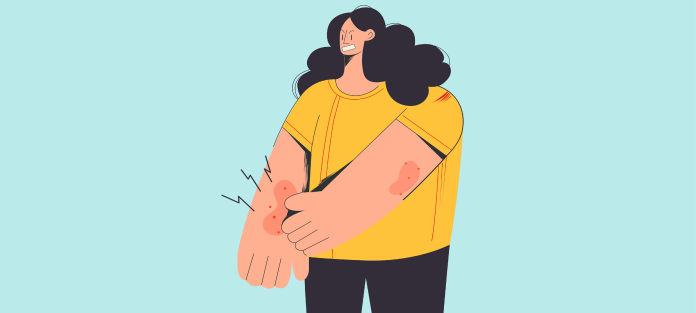
Psoriasis is a common affliction that can occur in both children and adults. Before we discuss the various therapies available for managing psoriasis, let’s talk about what it is.
 What is psoriasis?
Psoriasis is a systemic disease that presents as chronic inflammation of the skin. This means it affects the entire body. The same systemic inflammation that causes psoriasis may also lead to arthritis (known as psoriatic arthritis) and can increase your chances of obesity, hypertension, diabetes, and atherosclerotic disease, such as heart disease. There is a genetic component to this disease, but it is also linked to smoking, alcohol, and some medications.
 Treatments and therapies for managing psoriasis
Treatments for mild psoriasis include corticosteroid creams or other topical agents, phototherapy, and methotrexate (a medication used to treat a variety of conditions, including some cancers). In more severe cases, widespread disease “biologics” are used. These are mainly immunosuppressants that target a specific part of your immune system to help calm the inflammation.
Emollients (e.g., moisturizers, ointments) may help reduce symptoms by keeping the skin soft. Another non-medicated compound that can relieve itching from psoriasis is coal tar (though it is messy). Coal tar may be especially helpful if the rash is on the scalp. It is available over the counter in shampoos and other products.
 Can managing stress help relieve psoriasis?
There is no scientific proof that stress reduction has any impact on psoriasis, though it’s easy to see why many people believe it does. For example, one of my patients had a moderate form of psoriasis. She went on vacation, and the rash cleared. “Ah, relaxation did it,” we all said. But upon further examination, we discovered that the holiday had been spent by the ocean during the summer—so the patient had gotten a massive dose of phototherapy in combination with swimming in salt water (both of which are effective treatments for psoriasis). That said, stress reduction is good for us in general, so it’s a good idea to try reducing stress levels whenever possible.