



























“What are some easy recipes or general cooking tips for people who struggle to cook because of energy and/or disability?”
—Amanda S.*, fourth-year student, University of Wyoming, Laramie
Cooking at home can save you money, give you control over ingredients, and add a fun and rewarding activity to your day-to-day life. However, low energy levels and disabilities can make cooking a struggle. Ordering takeout, heating pre-packaged meals, or skipping a meal altogether may be more appealing when cooking feels most daunting.
While meal prep may seem challenging, it can be simplified with a little planning and creativity. Below are cooking strategies on how to easily throw together a few ingredients to make tasty and nourishing meals.
Diversify your food groups
First, decide what food groups you would like to include in your meals (e.g., protein, carbs, and vegetables). Assess what you already have on hand and what you might need to shop for. Try eating a variety of foods and as many of the food groups as possible throughout the day. Having three or more food groups at each meal can help boost the overall nutrition of your meals and be more satisfying to your hunger.
You may be surprised at how many diverse meals you can whip up with this method.
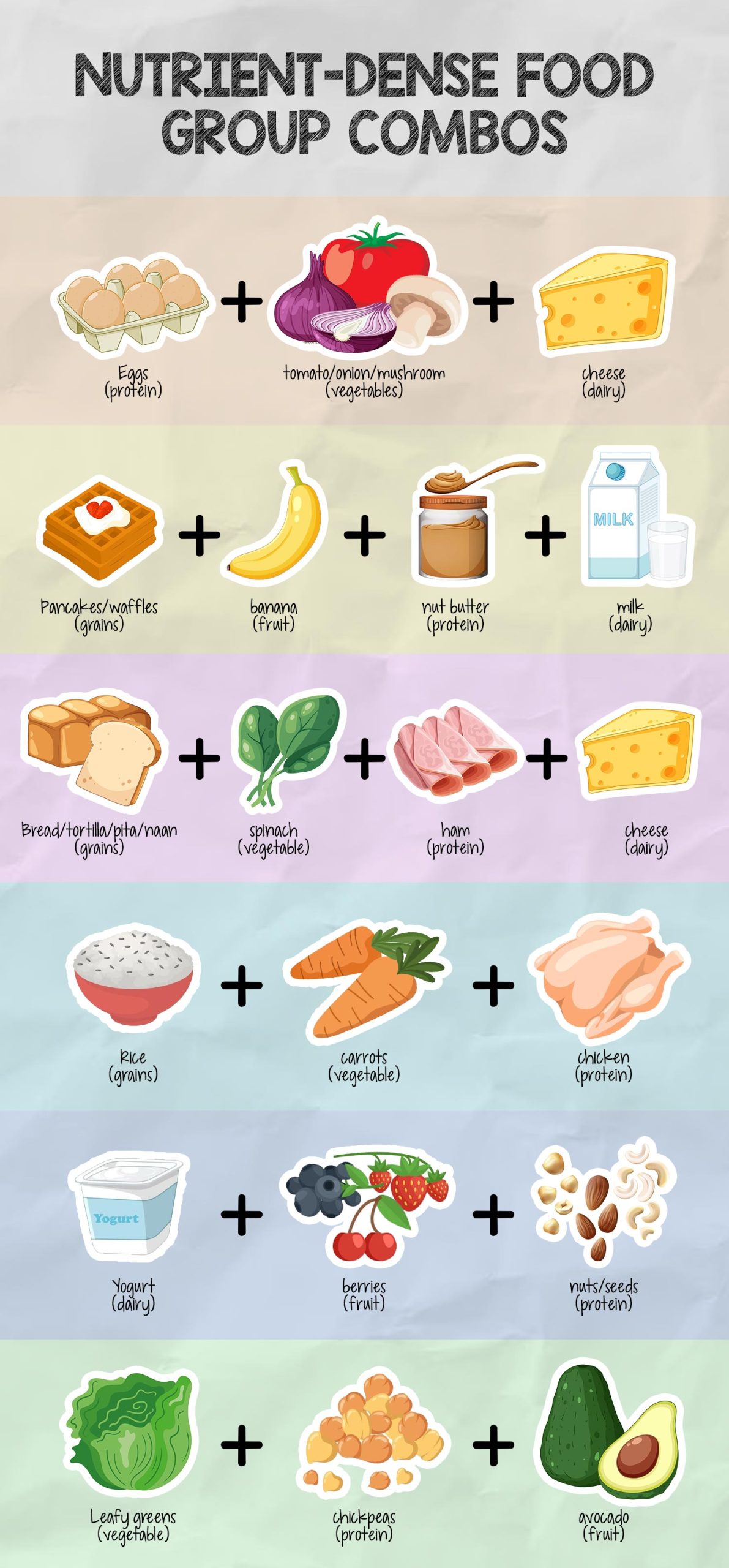
Nutrient-dense food group combos
- Eggs (protein) + tomato/onion/mushroom (vegetables) + cheese (dairy)
- Pancakes/waffles (grains) + banana (fruit) + nut butter (protein) + milk (dairy)
- Bread/tortilla/pita/naan (grains) + spinach (vegetable) + ham (protein) + cheese (dairy)
- Rice (grains) + carrots (vegetable) + chicken (protein)
- Yogurt (dairy) + berries (fruit) + nuts/seeds (protein)
- Leafy greens (vegetable) + chickpeas (protein) + avocado (fruit)
Simplify ingredient prep
To save time and energy, you may find it helpful to use prewashed and precut fruits or veggies, pre-seasoned/marinated meats or meat alternatives, precooked ingredients, and/or frozen, canned, boxed, or packaged items. The convenience may cost a little more but may be worth the investment by eliminating the tasks of preparing the ingredients yourself. Here are some ideas on how to incorporate premade foods into your meals:
- Stir drained cannellini beans from a can into ready-to-heat tomato and red pepper soup. Top with crumbled cheese.
- Add prewashed baby carrots to a plate of cooked chicken and rice.
- Heat precooked pork belly or marinated beef and add it to noodles and veggies.
Put those kitchen appliances to use
Finally, choose a method of preparation that is most convenient for you. If you live in a dorm, microwave meals can be a surprisingly nutritious option. And if you have access to a kitchen, appliances such as a toaster oven, air fryer, slow cooker, or Instant Pot® can complete cooking with little to no monitoring on your part after you’ve set it to heat.
For more inspiration, check out our recipe section for ideas on delicious, nourishing, and student-friendly meals.
There is no one right way to cook or eat, so get creative and work with the energy, abilities, and tools you have to nourish yourself—whether you prepare a simple meal or go on a lengthy cooking adventure.
*Name changed