Anxiety is a normal phenomenon; it’s something we all experience at some point in our lives. Most of us feel a little anxious from time to time, but when we break out in a cold sweat, our heart starts pounding, and we feel like we can’t breathe, it can seem like something is really wrong. These symptoms might signal a panic attack, but the good news is there are things you can do to reduce how bad they feel—and in some cases, even stop them in their tracks before they happen.
Panic attacks manifest differently for different people, and they are relatively common. Nearly 60 percent of students in a CampusWell survey said they’ve experienced a panic attack at some point.
Physically, a panic attack can include:
- Tingling or numbness
- Pounding or racing heart
- Difficulty breathing
- Sweating
- Chills
- Headaches
- Chest pain
- Trembling
- Stomachache
- Dizziness or faintness
Emotionally, a panic attack may feel like:
- Detachment from your body or the environment around you (also known as derealization or depersonalization)
- Fear of losing control or dying
- Impending doom, like something terrible is about to happen
Here’s what happens in your body during a panic attack: When sensing danger (real or imagined), your body responds by releasing adrenaline, activating a “fight-or-flight” response and altering your breathing pattern. This helped our ancient human ancestors when they had to sprint to escape from giant hyenas and saber-tooth cats, but it’s not as necessary for survival in today’s (relatively) predator-free society.
“When I first started getting panic attacks, I felt like I was going to die. But I’ve lived through so many of them now that I’ve learned that if I calm down and breathe as normally as possible, eventually the feeling will go away.”
—Fourth year undergraduate student, Bemidji State University, Minnesota

Anxiety is rough, but it’s not actually life-threatening
Luckily, you’re not actually in physical danger during a panic attack. You might feel like you’re about to pass out, but it’s very unlikely to happen (especially if you don’t have any underlying medical conditions). As Dr. Alice Boyes, psychologist and author of The Anxiety Toolkit, explains, “Fainting isn’t likely, because the panic response involves increases in muscle tone, heart rate, and blood pressure,” which is “just the opposite of the physical effects that occur when someone faints.”
Similarly, you might feel short of breath during a panic attack, but that doesn’t mean you’re getting insufficient air. Your body and brain are basically messing with you. These sensations may feel like signals of real danger, but they’re almost certainly not. “I couldn’t stop hyperventilating and then my thoughts started racing,” says a second-year graduate student at the University of Colorado, Denver. “I eventually called a doctor and he walked me through regular breathing into a paper bag and told me I would be OK.”
Dr. Boyes notes that “occasionally a real heart condition can cause people to experience panic-like sensations, so it’s a good idea to rule this out medically” by bringing it up during your next appointment with a health care provider.
Anxiety is normal, sometimes even healthy
Anxiety is a totally normal phenomenon. It can even be useful when it motivates us to avoid dangerous situations. But when anxiety becomes so intense and persistent that it interferes with our daily functioning, it pushes into the realm of anxiety disorders (which are more common than you might think—about one in three US adults lives with an anxiety disorder).
The good news is that psychologists have identified strategies to manage panic attacks.
Here are three ways to handle a panic attack the next time you feel one coming on
1. Take slow, deep breaths
Dr. Boyes says the key is breathing slowly, which “helps slow your heart rate and naturally calms all of the body systems involved in your body’s fight/flight/freeze response.” Similarly, research shows that deep, slow breathing stimulates the parasympathetic nervous system, which helps us calm down.
Dr. Boyes advises focusing on your out-breath and not worrying about your in-breath. “Your in-breath will naturally lengthen when your out-breath is longer,” she says. “Try to make your breath out slow, steady, and gentle,” and “breathe out until the last drop of breath is released.”
2. Labeling thoughts and sensations
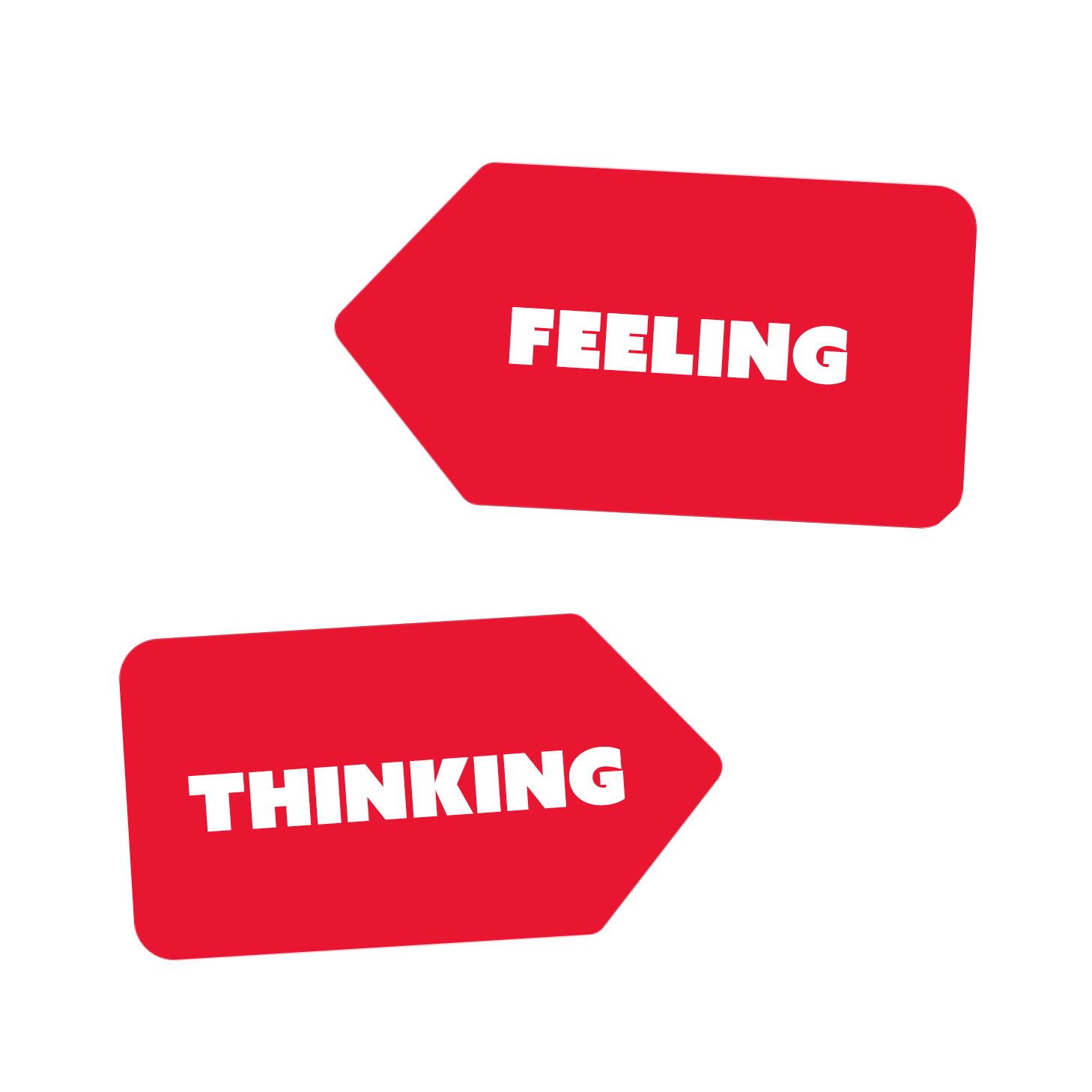 Here’s a simple technique from mindfulness-based therapies: When anxious thoughts arise, mentally label them “thinking,” and when uncomfortable physical sensations in your body arise, mentally label them “feeling.”
I find this technique helpful when I need to get up and present in front of people, which still makes me anxious even though I do it all the time. I close my eyes and start labeling. The pounding of my heart and the butterflies in my stomach become simply “feeling.” Thoughts like “I’m going to mess up,” “people are going to laugh,” or “sweet merciful Beyoncé, why am I doing this?” become simply “thinking.”
3. Grounding techniques
Marriage and family therapist John Tsilimparis recommends using “grounding techniques” that give you something else to focus on during a panic attack. In a post for ExpertBeacon, he suggests you “run your fingers along the teeth of your house keys, or hold an ice cube in your hand for as long as you can, then switch to your other hand.” The point is to get your brain to focus on a physical sensation other than the symptoms of the panic attack. Tsilimparis calls this approach “healthy diversion”; you’re deliberately distracting yourself to lessen the impact of the anxiety.
Here are some additional grounding techniques:
- Press your feet down and feel the solid ground underneath you.
- Stretch and massage your muscles.
- Slowly cross your legs or arms and notice the control you have over your body.
- Identify as many colors around you as possible.
The culprit behind all this anxiety? Avoidance
What feeds anxiety is our habit of avoiding the things that make us anxious and the uncomfortable thoughts, feelings, and situations associated with them, according to psychologists Georg Eifert and John Forsyth in their book The Mindfulness & Acceptance Workbook for Anxiety. Avoiding a situation because it’s uncomfortable “is the common thread that binds all anxiety problems together,” they write.

How avoidance feeds our anxiety
Avoiding situations that make us feel anxious can create an anxiety loop—in other words, each time we ignore or avoid a situation that makes us feel anxious, the harder it will be to feel less anxious about it in the future. This can also sometimes cause mild anxiety to spiral pretty quickly into panic.
For example, if a public speaking assignment makes you incredibly anxious, your instinct may be to avoid it. Not going through with the speech might relieve your anxiety in the moment, but the next time you’re asked to speak in front of people, your anxiety may feel even stronger. Facing our fears—in incremental ways that we can manage—can help mitigate our anxiety when we see that the situation wasn’t so bad after all. Therapists use a similar tactic—called exposure therapy—to help treat anxiety and panic disorders.
For some, especially those with a history of trauma, anxiety may be a daily occurrence. If you are experiencing anxiety or panic, you can get help. Try talking to a professional mental health counselor who can give you tools for managing and working through your anxiety.
How to stop a panic attack: Cleveland Clinic
Practical tips for managing anxiety: CampusWell
How to cope with anxiety in college: Harvard Health
Article sources
Alice Boyes, PhD, author of The Anxiety Toolkit, blogger for Psychology Today, former clinical psychologist, Las Vegas, Nevada.
Mary K. Alvord, PhD, psychologist, director of Alvord, Baker & Associates, Rockville, Maryland.
Anxiety and Depression Association of America. (2016, April). Symptoms. Retrieved from https://www.adaa.org/understanding-anxiety/panic-disorder-agoraphobia/symptoms
Anxiety and Depression Association of America. (n.d.). Therapy. Retrieved from https://www.adaa.org/finding-help/treatment/therapy
Anxiety and Depression Association of America. (n.d.). Tips to manage anxiety and stress. Retrieved from https://www.adaa.org/tips-manage-anxiety-and-stress
Alvord, M. K. (2012, April 12). Anxiety and mood disorders in children [PDF document]. Retrieved from https://www.adaa.org/sites/default/files/Alvord_PublicEd2012_Mood-Anxiety-Children).pdf
Bagnell, A. (2013). Dealing with your teen’s anxiety: An expert gives advice. Retrieved from http://www.theglobeandmail.com/life/parenting/dealing-with-your-teens-anxiety-an-expert-gives-advice/article8947796/
Beesdo, K., Knappe, S., & Pine, D. S. (2009). Anxiety and anxiety disorders in children and adolescents: Developmental issues and implications for DSM-V. Psychiatric Clinics of North America, 32(3), 483–524.
Bubrick, J. (n.d.). Behavioral treatment for kids with anxiety. http://childmind.org/article/behavioral-treatment-kids-anxiety/
CampusWell survey, September 2022.
Carbonell, D. (n.d.). A breathing exercise that calms panic attacks. http://www.anxietycoach.com/breathingexercise.html
Carbonell, D. (n.d.). What can panic attacks do to you? http://www.anxietycoach.com/what-panic-attacks-can-do-to-you.html
Depression and Bipolar Support Alliance. (n.d.). Helping friends and family members with anxiety. http://www.dbsalliance.org/site/PageServer/PageServer?pagename=education_anxiety
Falk, A. E., & Walkup, J. T. (2016). Anxiety disorders in children, adolescents, and emerging adulthood. Psychiatry Advisor. http://www.psychiatryadvisor.com/anxiety/anxiety-disorders-childen-adolescents-adults/article/433647/
Forsyth, J. P., & Eifert, G. H. (2007). The Mindfulness & Acceptance Workbook for Anxiety: A Guide to Breaking Free from Anxiety, Phobias & Worry Using Acceptance & Commitment Therapy [Kindle]. Oakland, CA: New Harbinger Publications.
Goyal, M., Singh, S., Sibinga, E. M. S., Gould, N. F., et al. (2014). Meditation programs for psychological stress and well-being: A systematic review and meta-analysis. JAMA Internal Medicine, 174(3), 357–368.
Harvard Health Publications. (2016, March 18). Understanding the stress response. http://www.health.harvard.edu/staying-healthy/understanding-the-stress-response
Hofmann, S. G., Asnaani, A., Vonk, I. J. J., Sawyer, A. T., et al. (2012). The efficacy of cognitive behavioral therapy: A review of meta-analyses. Cognitive Therapy and Research, 36(5), 427–440.
Hofmann, S. G., Sawyer, A. T., Witt, A. A., & Oh, D. (2010). The effect of mindfulness-based therapy on anxiety and depression: A meta-analytic review. Journal of Consulting and Clinical Psychology, 78(2), 169.
Hölzel, B. K., Carmody, J., Vangel, M., Congleton, C., et al. (2011). Mindfulness practice leads to increases in regional brain gray matter density. Psychiatry Research: Neuroimaging, 191(1), 36–43.
Isenberg, S. B. (2012, April 12). Evidence-based treatment for anxiety and depression in children and teens. Anxiety and Depression Association of America. https://www.adaa.org/sites/default/files/Isenberg_Public%20Ed2012_Evidence-Based-Treatment.pdf
James Madison University. (n.d.). Grounding techniques. https://www.jmu.edu/counselingctr/files/Grounding%20Techniques.pdf.
Kaczkurkin, A. N., & Foa, E. B. (2015). Cognitive-behavioral therapy for anxiety disorders: An update on the empirical evidence. Dialogues in Clinical Neuroscience, 17(3), 337.
Khng, K. H. (2017). A better state-of-mind: Deep breathing reduces state anxiety and enhances test performance through regulating test cognitions in children. Journal of Cognition and Emotion, 31(7), 1502–1510.
Merikangas, K. R., He, J-P., Burstein, M., Swanson, S. A., et al. (2010). Lifetime prevalence of mental disorders in US adolescents: Results from the National Comorbidity Survey Replication–Adolescent Supplement (NCS-A). Journal of the American Academy of Child & Adolescent Psychiatry, 49(10), 980–989.
Myers, R. (2016, October 25). Helping your child cope with situational anxiety. https://childdevelopmentinfo.com/development/helping-child-cope-situational-anxiety
National Institutes of Mental Health. (n.d.). Panic disorder: When fear overwhelms. https://www.nimh.nih.gov/health/publications/panic-disorder-when-fear-overwhelms/index.shtml
Neuman, F. (2014, June 4). Fear of fainting. Psychology Today. https://www.psychologytoday.com/blog/fighting-fear/201406/fear-fainting
Richards, T. A. (n.d.). What you fear the most cannot happen. Anxiety Network. http://anxietynetwork.com/content/what-you-fear-most-cannot-happen
Terlizzi, E. P., & Villarroel, M. A. (2020, September). Symptoms of generalized anxiety disorder among adults: United States, 2019. National Center for Health Statistics. https://www.cdc.gov/nchs/data/databriefs/db378-H.pdf
Tsilimparis, J. (n.d.). Grounding techniques before you have your next panic attack. Expert Beacon. https://expertbeacon.com/grounding-techniques-you-have-your-next-panic-attack
University of California, Los Angeles. (n.d.). Free guided meditations. http://marc.ucla.edu/mindful-meditations
Yates, J. (n.d.). Beginning meditation handout. http://dharmatreasure.org/wp-content/uploads/beginning-meditation-handout.pdf