Key points
- Fentanyl is a powerful synthetic opioid that is used by medical professionals to treat severe pain. It is also illegally manufactured as a street drug for its heroin-like effects.
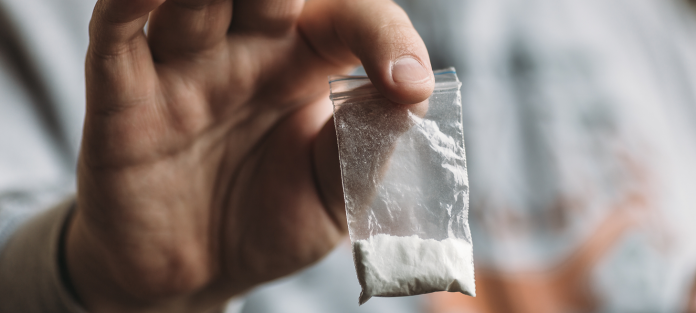
- Other street drugs such as cocaine and MDMA can be laced with fentanyl, meaning users may consume it without knowing. Even a small dose of fentanyl can put someone at risk of overdose and death.
- Knowing the symptoms of fentanyl overdose and being prepared with naloxone, a medication that reverses the effects of overdose, can help you save someone’s life.
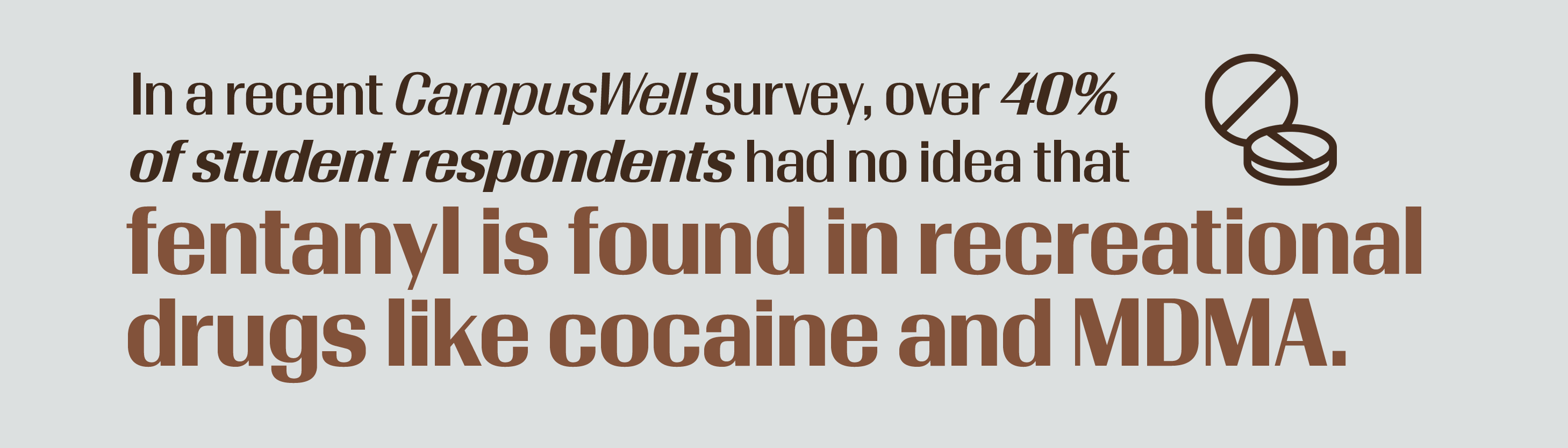
You may have heard about fentanyl, a synthetic opioid that’s 50 to 100 times more potent than morphine. Maybe you haven’t given it much thought if you’re not actively using it or seeking it out, but did you know that common street drugs are being laced with it? In a recent CampusWell survey, over 40 percent of student respondents had no idea that fentanyl is found in other recreational drugs like cocaine and MDMA.
“Fentanyl is commonly found in heroin and fake pills sold on the street, such as benzos and prescription opioids, and has been increasingly found in powder cocaine, crack cocaine, and crystal meth,” says Jacqueline Goldman, researcher and project manager at the People, Place & Health Collective at the Brown University School of Public Health in Providence, Rhode Island.
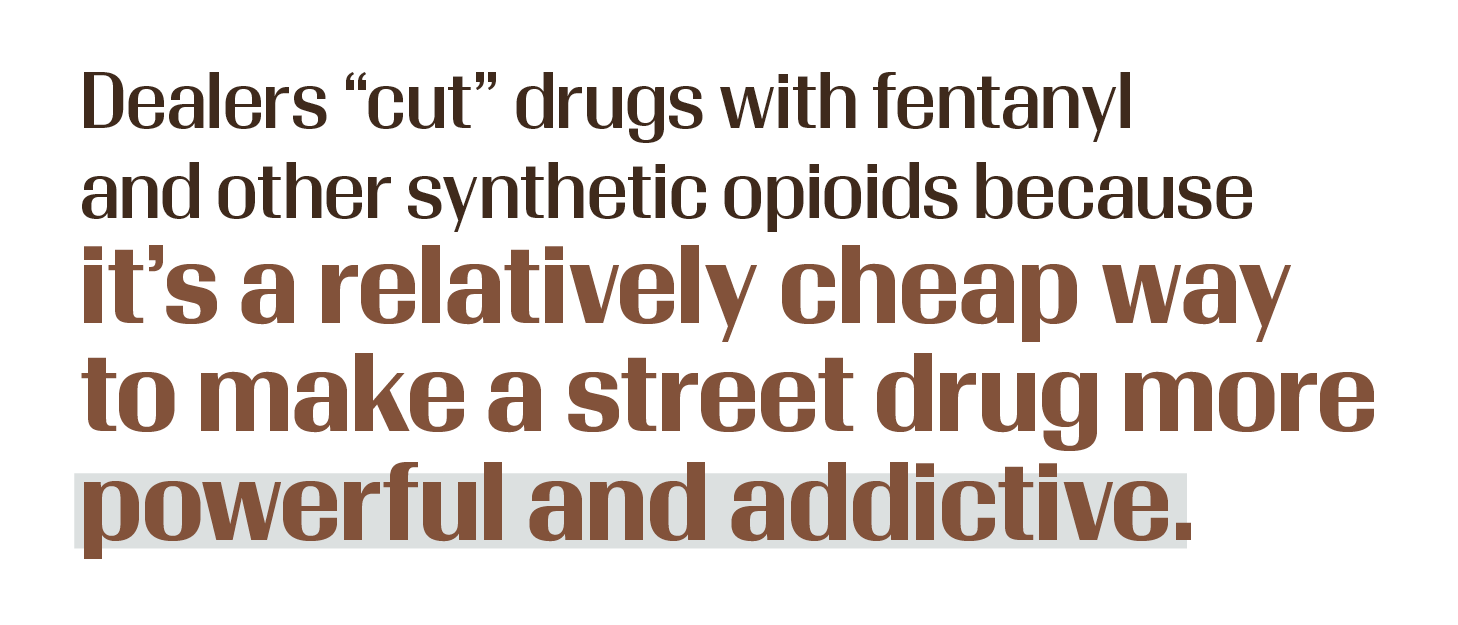
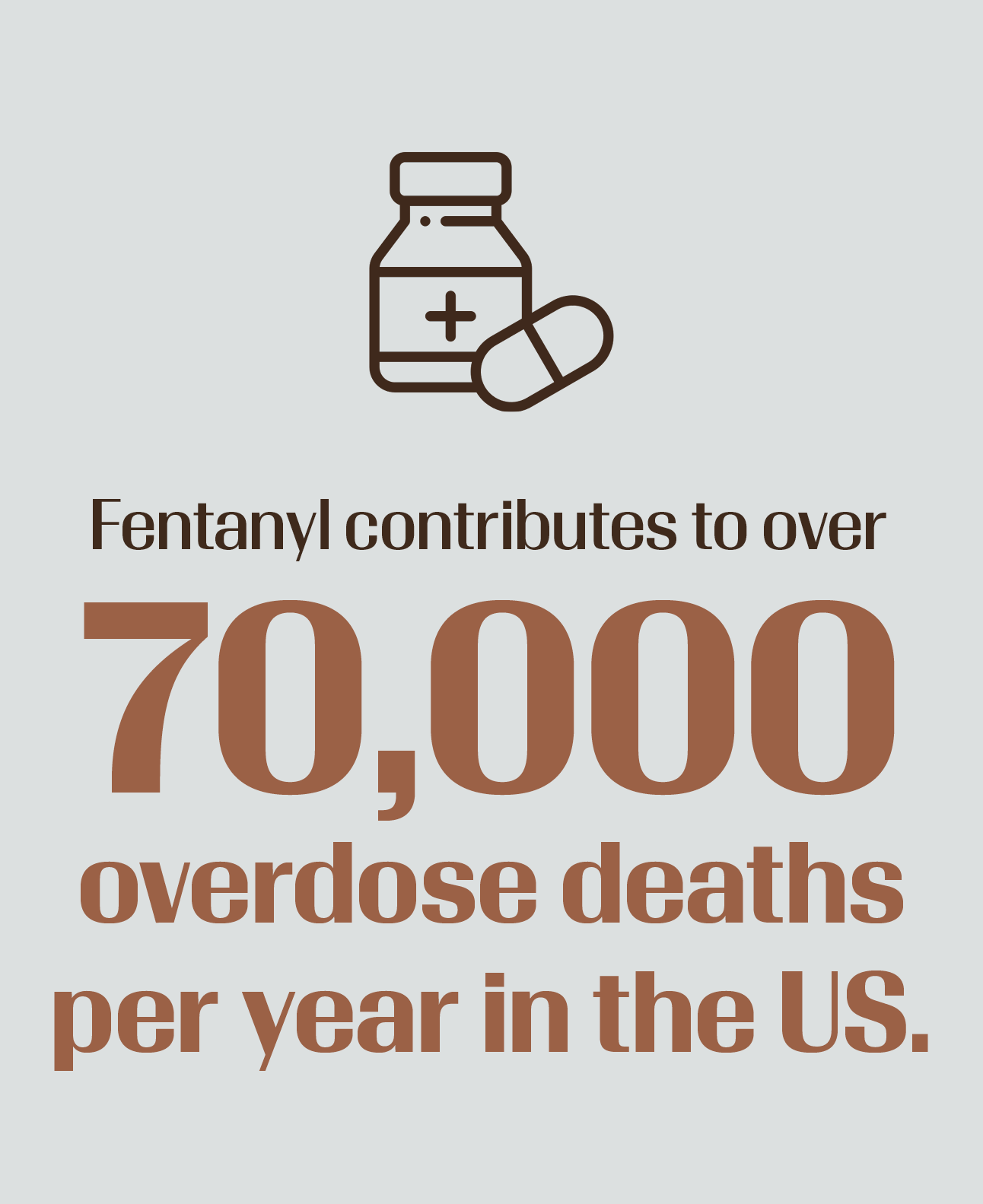
Dealers “cut” drugs with fentanyl and other synthetic opioids because it’s a relatively cheap way to make a street drug more powerful and addictive. Users who aren’t aware their drugs are laced with fentanyl are at a major risk, since the potency of fentanyl can lead to accidental overdose and death, especially for those whose bodies are not accustomed to opioids. This contributes to over 70,000 opioid overdose deaths per year in the US, according to the Centers for Disease Control and Prevention (CDC).
Even if you never come into contact with fentanyl, it’s important to know what it is, how harmful it can be, and how to tell when a drug is laced with it. We spoke with the experts to find out how to recognize an opioid overdose—and what to do if you or someone you know needs help. Even if you’re not directly at risk, this information could save someone’s life.
What is fentanyl?
Fentanyl is a powerful synthetic opioid drug that is used in the treatment of severe pain. Two types of fentanyl exist, and both are considered synthetic opioids.
Pharmaceutical fentanyl
Pharmaceutical fentanyl is a doctor-prescribed pain medicine that is used primarily for cancer patients and major surgery patients who are experiencing severe pain. Sometimes, pharmaceutical fentanyl is used to treat patients with chronic pain who have developed a physical tolerance to other opioids, according to the National Institute on Drug Abuse (NIDA).
Illegally manufactured fentanyl
Illegally manufactured fentanyl, or IMF, is a heroin-like drug sold on the black market. Illegally manufactured fentanyl is highly potent and addictive. It comes in a liquid and a powder, and unfortunately, it’s not easy to distinguish between fentanyl and other drugs. That’s part of what makes it so easy to mix IMF into other drugs.
In addition, there are other synthetic opioids that are being made to mimic fentanyl. These are known as fentanyl analogs, and can range from being less potent to 100 times more potent than fentanyl.
Street names for IMF include the following, as provided by the CDC:
- Apache
- Dance Fever
- Friend
- Goodfellas
- Jackpot
- Murder 8
- Tango & Cash
“I’m only familiar with the drug [fentanyl] because of the show Euphoria,” says Jessica W.*, a PhD student at Clemson University in South Carolina. “They do a great job of showing why taking it isn’t worth it.”
What other drugs might be laced with fentanyl?
Fentanyl has been found mixed into the following drugs:
 Heroin
- Cocaine
- Methamphetamine pills
- MDMA (Ecstasy or “Molly”)
Pure IMF is typically found in the following forms:
- Powder
- Nasal spray
- Eye drops
- Paper
- Small candies
As of 2022, fentanyl and other synthetic opioids are the most common drugs responsible for overdose deaths. Over 150 people die each day from overdosing on synthetic opioids, according to the CDC. Part of the reason this number is so high is because it’s easy to slip fentanyl and other synthetic opioids into street drugs, as mentioned above, which increases the number of accidental overdoses.
According to the CDC, there has been a sharp increase in fentanyl-related deaths in the past few years, especially in states where law enforcement has observed a significant increase in the presence of fentanyl in the drugs that they encounter. Of those deaths, most were related to illegally manufactured fentanyl that was mixed with or sold as heroin or in pill form, with or without the users’ knowledge that the drugs contained fentanyl.
In 2016, the Drug Enforcement Agency reported that hundreds of thousands of counterfeit prescription pills had entered the US drug market, some of which contained deadly amounts of fentanyl and fentanyl analogs. And in a 10-state study, nearly 57 percent of people who died from a drug overdose involving fentanyl or fentanyl analogs also tested positive for other drugs like cocaine, methamphetamine, and heroin.
Increased awareness, as well as better access to testing strips and naloxone (more on that below), can help prevent overdose deaths.
How can I stay safe from fentanyl?
You can check for the presence of fentanyl in any drug by using test strips. These strips can test injectable drugs as well as powders and pills.
In the past, test strips have been hard to find. Luckily, as the stigma around deaths from fentanyl and other drug overdoses begins to wane, test strips are becoming more widely available. DanceSafe, a public health non-profit that tests drugs on-site at festivals, concerts, and other events, offers fentanyl test strips for sale on their website, and other popular vendors like Amazon and Walmart have also started to carry test strips online.
If a drug tests positive, the FDA recommends disposing of fentanyl by flushing it down the toilet. Since it’s such a potent drug, putting it in the garbage could lead to accidental poisoning of a child or pet if they end up in contact with it.
Signs of fentanyl overdose
According to the CDC, the signs of an opioid or fentanyl overdose may include the following:
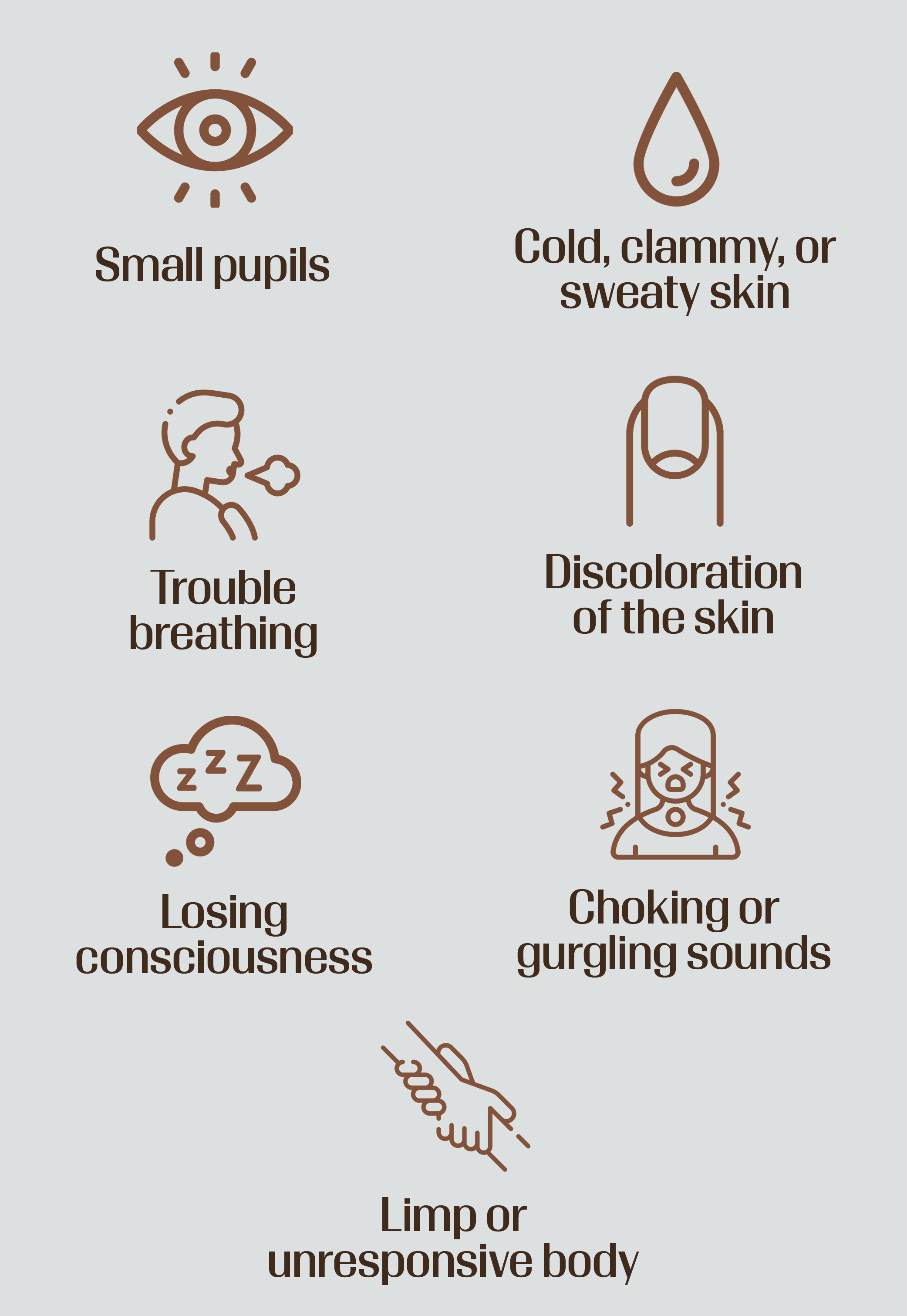
- Unusually small pupils
- Cold, clammy, or sweaty skin
- Trouble breathing: slow, weak, or no breathing
- Discoloration of the skin, especially the lips or nails (from lack of oxygen)
- Losing consciousness, falling asleep
- Choking or gurgling sounds
- Limp or unresponsive body
Life-saving tips
Goldman offers these safety tips for those who choose to use any type of recreational drug:
- Never use drugs alone. Use with someone else who has naloxone (see below) and can call 911 if an overdose happens.
- Stagger your use with others to make sure someone is conscious and able to assist if needed. “One person can use, and then wait a few minutes before the next person will use,” says Goldman.
- Go slowly. Take a smaller amount at first and then wait before taking any more.
- Make sure you have access to naloxone. A drug called naloxone (also called naltrexone or Narcan®) can rapidly reverse an opioid overdose. If you or someone you care about uses recreational drugs, having this on hand can help prevent death by overdose.
While laws on naloxone distribution vary from state to state, some states allow you to purchase naloxone at a pharmacy using what is called a “standing order.” This means that pharmacists are allowed to sell naloxone to customers without a prescription. Check your state’s laws or simply ask your doctor for a naloxone prescription the next time you go in for a check-up.
What do I do if someone has overdosed on fentanyl?
Below are the steps you should take if you suspect someone has overdosed on fentanyl (or any other opioid).
- Immediately call 911. As of 2022, 40 states and the District of Columbia have Good Samaritan fatal overdose prevention laws. These laws exist to encourage medical assistance in overdose situations and will generally protect someone from being arrested, charged, or prosecuted for substance possession when calling 911 to prevent an opioid overdose.
- If available, administer naloxone (Narcan®). This is generally administered via nasal spray or injection to the thigh muscle. It will reverse opioid effects for 60 to 90 minutes to give the user more time to get emergency medical help. Most paramedics carry naloxone if you don’t have any on hand. Once naloxone is administered, seek immediate medical attention.
- Keep the person who has overdosed awake and breathing. Speak to them to make sure they’re conscious.
- Roll the person who has overdosed onto their side to prevent choking.
- Remain with the person until emergency services have arrived.
How can I get help for someone dealing with addiction or substance misuse?
Opioid addiction, or opioid use disorder (OUD), is a disease that affects millions of Americans of different ages and backgrounds. If you or someone you know is struggling with opioid addiction, help is available. American Addiction Centers offers a toll-free and confidential 24/7 fentanyl misuse hotline to provide assistance and advice on dealing with fentanyl addiction.
*Name changed.
How to Administer Naloxone/Narcan: Health Vermont
Fentanyl overdose symptoms, signs and treatment: American Addiction Centers
How to use fentanyl test strips: Prevent Overdose Rhode Island
Street fentanyl fact sheet: Center for Addiction and Mental Health
Article sources
Jacqueline Goldman, researcher and project manager, People, Place and Health Collective, Brown University School of Public Health, Providence, Rhode Island.
CampusWell survey, February 2022.
Centers for Disease Control and Prevention. (2021, November 18). Drug overdose—Other drugs. https://www.cdc.gov/drugoverdose/deaths/other-drugs.html
Centers for Disease Control and Prevention. (2021, August 9). Drug overdose—Reported law enforcement encounters testing positive for fentanyl increase across US. https://www.cdc.gov/drugoverdose/deaths/fentanyl-encounters/index.html
Centers for Disease Control and Prevention. (2022, June 6). Drug overdose—Synthetic opioid overdose data. https://www.cdc.gov/drugoverdose/deaths/synthetic/index.html
City of Philadelphia Department of Public Health. (2022, October 3). Learn how to get and use naloxone (Narcan®). https://www.phila.gov/services/mental-physical-health/learn-how-to-get-and-use-naloxone-narcan/
Drug Policy Alliance. (n.d.). Good Samaritan fatal overdose prevention laws. https://drugpolicy.org/issues/good-samaritan-fatal-overdose-prevention-laws
FDA. (2021, July 21). Accidental exposures to fentanyl patches remain deadly to children. U.S. Food and Drug Administration. https://www.fda.gov/consumers/consumer-updates/accidental-exposures-fentanyl-patches-continue-be-deadly-children
National Center for Health Statistics. (2022, April 13). Provisional drug overdose death counts. Centers for Disease Control and Prevention. https://www.cdc.gov/nchs/nvss/vsrr/drug-overdose-data.htm
National Center for Injury Prevention and Control, Division of Drug Overdose Prevention. (2022, February 23). Fentanyl facts. Centers for Disease Control and Prevention. https://www.cdc.gov/stopoverdose/fentanyl/index.html
National Harm Reduction Coalition. (2021, May 24). Fentanyl. https://harmreduction.org/issues/fentanyl
National Institute on Drug Abuse. (2022, February 16). Fentanyl. https://nida.nih.gov/drug-topics/fentanyl
National Institute on Drug Abuse. (2022, January 11). Naloxone drug facts. https://nida.nih.gov/publications/drugfacts/naloxone
New York State Department of Health. (2006). Resource sheet: Fentanyl. https://www.health.ny.gov/diseases/aids/consumers/prevention/opioidprevention/resource_sheet.htm
Park, J. N., Rashidi, E., Foti, K., Zoorob, M., et al. (2021). Fentanyl and fentanyl analogs in the illicit stimulant supply: Results from U.S. Drug seizure data, 2011–2016. Drug and Alcohol Dependence, 218. https://doi.org/10.1016/j.drugalcdep.2020.108416