
Rate this article and enter to win
Can we really lose the baggage associated with body shape and food that the media and diet industry have imposed upon us? Simply put, yes—because eating intuitively is about reconnecting with what our bodies and minds already know how to do. “Instead of following rigid, restrictive diets, intuitive eating is the process of tuning into your body’s cues for hunger, fullness, and what you want to eat in that moment,” says Lauren Fowler, RD, a nutritionist with expertise in eating disorders, based in Vermont. “Eating intuitively is a way of using your body’s wisdom—your intuition—to guide your decisions around food.”
As we practice mindful eating, we may develop a healthier relationship and have more pleasurable experiences with food and with ourselves.
What the research says
For many of us, decisions about how we eat are driven, to some extent, by our body image and ideas about how to control our weight. “Learning to eat for your body’s health needs, rather than for other reasons like image or social rules, leads to less stress and less guilt and shame and is associated with a number of health benefits,” says Dr. Marc Weigensberg, an associate professor at the University of Southern California’s Keck School of Medicine in Los Angeles.
The research backs this up. A meta-analysis of studies published in the Journal of the Academy of Nutrition and Dietetics found that a mindful eating approach helped participants ditch unhealthy (and ineffective) weight-loss strategies, improve their metabolic fitness, and feel more satisfied with their bodies. That’s a win-win-win.
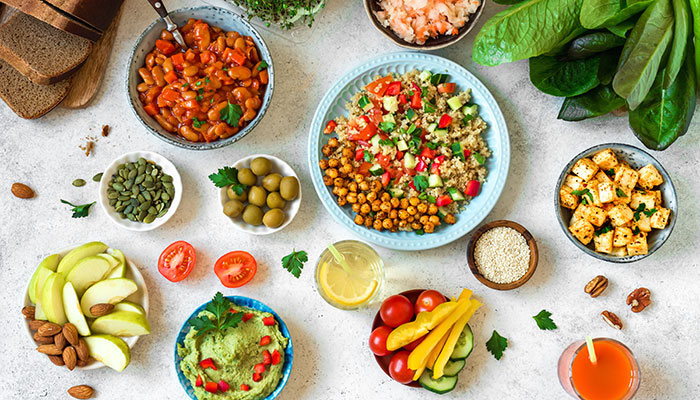
7 steps to becoming an intuitive eater
Here’s how to make your eating habits more mindful:

Tune in to your cues. Are you hungry or just bored? (Hint: Try drinking a glass of water and waiting 15 minutes—if you still feel hungry afterward, it’s true hunger.) Once you’ve determined that you’re actually hungry, focus on what your body is telling you, says Fowler. Do you want to snack on some chips, or is your body craving a full, balanced lunch? If you can’t stop thinking about a bowl of pasta after a run, it’s probably because your body needs energy-dense carbs. Eating mindfully suggests you’re better off reaching for the rigatoni than trying to get by on a simple salad.
“You can work on this by checking in with your body every few hours to prioritize nourishment,” says Fowler. “You’ll find that you may be able to focus better, have more energy, and feel better throughout the day with consistent fuel.”
As you eat, focus on fullness. No matter how good that froyo is, too much of it will probably make you feel sick.
“[Eating intuitively] helps me understand what my body needs and avoid emotional/reactive eating.”
—Olivia B., first-year graduate student, The College of New Jersey, Ewing

 Eating mindfully is about enjoying your food. “I like to look at how you can get the most satisfaction out of eating,” says Elyse Resch, MS, RD, a nutritionist who cocreated the brand Intuitive Eating—a program that aims to help chronic dieters recover. “To me, that’s the driving force of Intuitive Eating.” If you’ve been thinking about treating yourself to a post-exam cupcake or slice of pizza, go for it. Cherish that mouthfeel. Equally, relish the kale chips and salad.

Eating intuitively is not about “good” or “bad” foods. “All foods should be emotionally equivalent. That doesn’t mean they’re nutritionally equivalent, but you should be able to feel that you can look for the same pleasure and satisfaction out of any food without judging it,” says Resch.
 In other words, eating intuitively means you’re not beating yourself up when you indulge. If you’re truly listening to your instincts, giving your body what it needs is something you do naturally, proponents of mindful eating say. Making peace with a slice of cake and striving to make healthy choices are not mutually exclusive.
“Mindful eating habits have helped me slim down, watch what I eat, savor moments/food more, and learn more about spices and cooking. They’ve also helped me learn about what food goes in which groups and about the benefits of different food groups.”
—Andrew K., fifth-year undergraduate, University of Maryland, Baltimore County

“Rather than jumping on the latest fad diet, obsessing about a number on the scale, or worrying about the size of pants you wear, it’s helpful to instead focus your energy on healthy behaviors that you can engage in, regardless of body weight, and try to make these a regular part of your lifestyle,” says Dr. Rebecca Puhl, deputy director of the Rudd Center for Food Policy & Obesity at the University of Connecticut in Mansfield.
A study among young adults published in Appetite found that both men and women who reported trusting their body’s natural hunger and fullness cues were less likely to engage in disordered eating behaviors. The women in the study were also less likely to engage in chronic dieting or binge eating if they reported that they typically stopped eating when they felt full.
“Mindful eating habits help me enjoy my meal mentally and physically. Counting calories and similar activities take away joy from my spirit and meal; adding an intuitive take to eating ensures I am not mindlessly chomping but rather carefully and joyfully consuming food that makes my body and me happy.”
—Anusha M., first-year graduate student, University of the Pacific, Stockton, California

 Intuitive eating is all about getting maximum pleasure from your meals. At the very least, that means remembering you ate them. When we’re distracted (e.g., watching TV, scrolling social media), we eat more, and we continue to eat more throughout the day, according to a review of studies in the American Journal of Clinical Nutrition. Researchers think that’s because we literally forget what we ate earlier in the day.
“When one is present while eating, that is a much more satisfying experience than being distracted while you’re putting the food in your mouth,” says Resch.
“Eating is a positive experience for me. It’s a relaxing time to separate from daily stresses.”
—Ally S., fifth-year student, University of Wisconsin Oshkosh

Once you’re tuning into your instincts, it gets easier to stick up for them—even when Mom sends a care package full of treats or your friends want to split a second pizza when you’re already stuffed. Setting boundaries is not only OK, it’s part of the process.
 If someone is pressing food on you, you always have the option to say, “No thanks.” You don’t need to explain. But if you feel awkward or are concerned about seeming high-maintenance, offer to take some home for later. “A major portion of intuitive eating is realizing that you have a right to have your needs met, and that includes speaking up,” says Resch.
With no food rules, you can do what feels right—which may be a full serving, a taste, or “Not for me, thanks.”

Becoming an intuitive eater is a healthy approach to total wellness, so think big picture. For example, mindfulness—being present and savoring the moment—can become a way of valuing a brisk walk to the store, or an interaction with a classmate you don’t quite gel with. “If you’re looking to mindful eating as the basis of your relationship with food, it will leach out into other aspects of your life,” says Resch, “like finding meaningful experiences in life, and in your work and relationships.”
Can eating intuitively help treat eating disorders?
In a society that constantly sends us messages about which foods are “good” or “bad” or only for “cheat days,” it can be hard to identify what eating habits may raise a red flag.
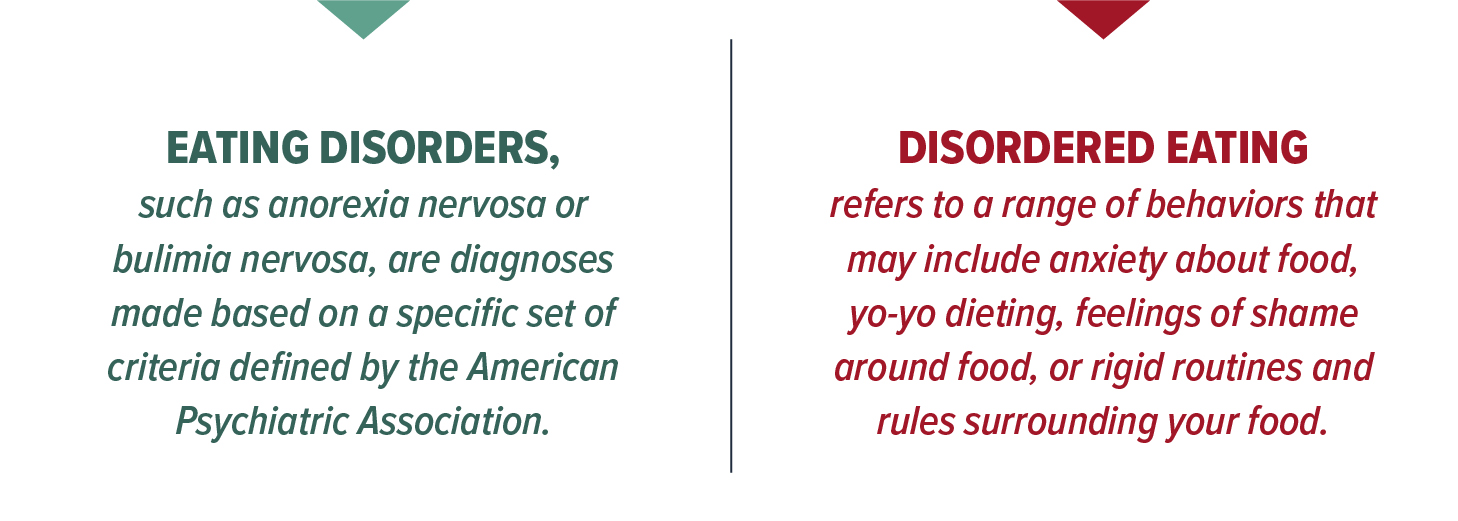 Eating intuitively can help break negative thought processes and behaviors surrounding food, proponents say. “Intuitive eating works in eating disorder recovery is [about] making peace with food,” says Fowler.
The research on using intuitive eating to break disordered eating habits and develop a healthier relationship with food (and your body) is promising. A meta-analysis of 24 peer-reviewed studies published in the Journal of the Academy of Nutrition and Dietetics suggested that an intuitive approach to eating could help treat binge eating, anorexic tendencies, and self-shaming in participants while improving participants’ self-esteem, body satisfaction, and self-acceptance.
Intuitive eating practices may also help prevent disordered eating and boost body image. A 2017 study of men and women found that intuitive eating practices consistently predicted a lower likelihood of disordered eating behaviors and body image concerns when contrasted with “rigid dietary control.”
That said, if your body image or eating issues are persistent, seek support at your student health center or counseling center. “People meeting diagnostic criteria for an eating disorder probably can’t think their way out of their problem,” says Dr. Davis Smith, staff physician at the University of Connecticut in Mansfield. “At least not without professional help.”
What does intuitive eating mean?: National Eating Disorders Association
10 principles of intuitive eating: IntuitiveEating.com
Explore health at every size: Association for Size Diversity and Health
Article sources
Elyse Resch, MS, RDN, CEDRD, nutritionist; coauthor, Intuitive Eating: A Revolutionary Program That Works (St. Martin’s Griffin, 2003).
Lauren Fowler, RDN, nutritionist, Vermont.
Rebecca Puhl, PhD, professor, Department of Human Development and Family Studies; deputy director, Rudd Center for Food Policy & Obesity, University of Connecticut, Mansfield.
Marc Weigensberg, MD, associate professor, Keck School of Medicine, University of Southern California, Los Angeles.
American Psychiatric Association. (n.d.). What are eating disorders? Psychiatry. https://www.psychiatry.org/patients-families/eating-disorders/what-are-eating-disorders
Anderson, M. (2020, February). What is disordered eating? Academy of Nutrition and Dietetics. https://www.eatright.org/health/diseases-and-conditions/eating-disorders/what-is-disordered-eating
Boucher, S., Edwards, O., Gray, A., Nada-Raja, S., et al. (2016). Teaching intuitive eating and acceptance and commitment therapy skills via a web-based intervention: A pilot single-arm intervention study. JMIR Research Protocols, 5(4). https://doi.org/10.2196/resprot.5861
Bruce, L. J., & Ricciardelli, L. A. (2016). A systematic review of the psychosocial correlates of intuitive eating among adult women. Appetite, 96, 454–472. https://doi.org/10.1016/j.appet.2015.10.012
Campus Well survey, December 2020.
Conason, A. (2014, June 27). The evidence for intuitive eating. PsychologyToday.com. Retrieved from https://www.psychologytoday.com/blog/eating-mindfully/201406/the-evidence-intuitive-eating
Evans, M. (2017, January 10). Healing the hate: A better body image in the new year. Marci RD Nutrition. http://marcird.com/blog/healing-the-hate-a-better-body-image-for-2017
Fowler, L. (2016, June 16). Should intuitive eating be part of eating disorder recovery? Lauren Fowler. http://www.laurenfowler.co/blog/recovery-intuitive-eating
Harvard School of Public Health. (2017). The best diet: Quality counts. https://www.hsph.harvard.edu/nutritionsource/best-diet-quality-counts/
Linardon, J., & Mitchell, S. (2017). Rigid dietary control, flexible dietary control, and intuitive eating: Evidence for their differential relationship to disordered eating and body image concerns. Eating Behaviors, 26, 16–22. https://doi.org/10.1016/j.eatbeh.2017.01.008
Medical News Today. (2014, July 9). New wellness approach that focuses on mindfulness and intuitive eating is more effective than traditional weight loss programs. http://www.medicalnewstoday.com/releases/279291.php
Resch, E., & Tribole, E. (2007). 10 principles of intuitive eating. Intuitive Eating. http://intuitiveeating.com/content/10-principles-intuitive-eating
Robinson, E., Aveyard, P., Daley, A., Jolly, K., et al. (2013, February). Eating attentively: A systematic review and meta-analysis of the effect of food intake memory and awareness on eating. American Journal of Clinical Nutrition, 97(4), 728–742. https://doi.org/10.3945/ajcn.112.045245
Romano, K. A., Swanbrow Becker, M. A., Colgary, C. D., & Magnuson, A. (2018). Helpful or harmful? The comparative value of self-weighing and calorie counting versus intuitive eating on the eating disorder symptomology of college students. Eating and Weight Disorders, 23(6), 841–848. https://doi.org/10.1007/s40519-018-0562-6
Schaefer, J. T., & Magnuson, A. B. (2014). A review of interventions that promote eating by internal cues. Journal of the Academy of Nutrition and Dietetics, 114(5), 734–760. http://dx.doi.org/10.1016/j.jand.2013.12.024
Van Dyke, N., & Drinkwater, E. J. (2014). Relationships between intuitive eating and health indicators: Literature review. Public Health Nutrition, 17(8), 1757–1766. https://doi.org/10.1017/S1368980013002139
Zaslow, J. (2016, June 1). Weight vs. wellness: Which goals work for your health? CampusWell. https://www.campuswell.com/weight-vs-wellness