



























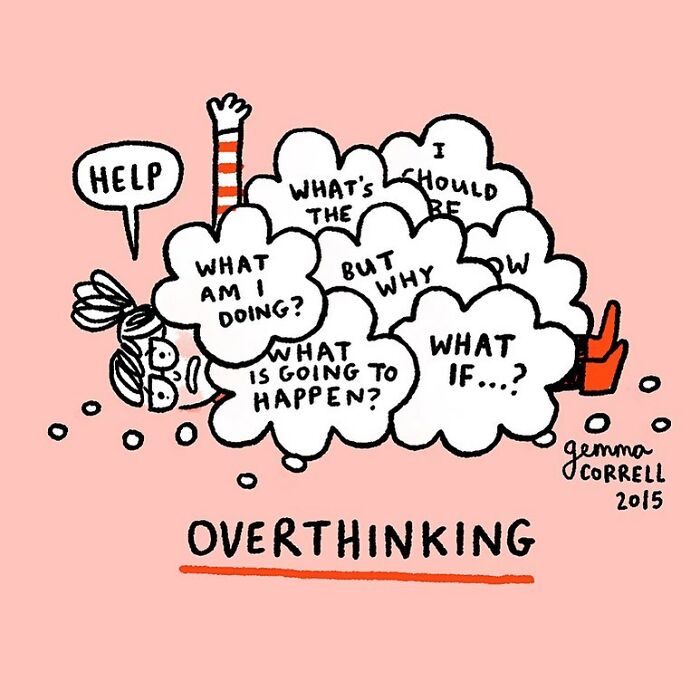
Sometimes we may find our thoughts spiraling over decisions, worries, past conversations, and more. In this illustration, British cartoonist Gemma Correll shows the burden of overthinking: Thoughts such as “What am I doing?” or “What is going to happen?” have the potential to bury us and interfere with the responsibilities of day-to-day life.
Researchers who study this type of thinking, also called rumination, have found it’s linked to symptoms of depression, anxiety, substance use, and overall negative psychological well-being. Fortunately, we can learn to escape the vortex of overthinking. The first step is to simply notice the thoughts.
How meditation can help with overthinking
Mindfulness techniques like meditation help us notice thoughts, unlock from their grip, and direct our attention to a more neutral place. With practice, the ability to notice our intrusive thoughts can be strengthened.
The meditation below is a great way to build the muscle of awareness and befriend the overthinking mind. This meditation uses two techniques: anchoring to the present moment by using the body and the breath, and mentally noting when the mind has wandered into thoughts. The purpose here is not to prevent thinking; rather, we’re aiming to notice when the mind has wandered and invite it back to our chosen anchor.
GET HELP OR FIND OUT MORE
10 signs you are an overthinker: Inc.
Strategies for overcoming overthinking: Psychology Today
Book for beginning a meditation practice: Real Happiness by Sharon Salzberg
Article sources
Marks, A. D., Sobanski, D. J., & Hine, D. W. (2010). Do dispositional rumination and/or mindfulness moderate the relationship between life hassles and psychological dysfunction in adolescents? Australian & New Zealand Journal of Psychiatry, 44(9), 831–838.