



























Rate this article and enter to win
Maybe you rocked the SATs and got into the school you barely dared apply to. Or you won three consecutive track meets and broke your own record. But that was luck. There’s no way you belong here…
Feeling like a fraud much? It’s called impostor syndrome, or the impostor phenomenon, and it’s a thing. Here’s what you need to know—and seven ways to crush those fraudulent feelings before they crush you.
Impostor what?
The term “impostor phenomenon” was coined by two psychologists—Dr. Pauline R. Clance and Dr. Suzanne A. Imes—as a way to describe feelings of fraudulence related to personal achievements. Translation: You think your successes are flukes, and you expect to be called out eventually for being a fake.
These feelings keep you from owning your accomplishments. Instead, you may attribute your successes to external factors, like good timing or connections. Up to 70 percent of us experience the impostor phenomenon at some point in our lives, according to a classic study, and it’s especially prevalent in colleges and universities.
This isn’t about smarts or talent, experts emphasize. “People who don’t feel like impostors are no more intelligent or capable than those who do,” says Dr. Valerie Young, a leading author and speaker on this topic. “The only difference is that in the same scenario—failing an exam, meeting with your faculty advisor, preparing to make a presentation—they think different thoughts.”
People who experience impostor phenomenon experience shame when they fail. However, “they don’t experience shame the same way, because we don’t all define competence the same way,” says Dr. Young. In her book The Secret Thoughts of Successful Women: Why Capable People Suffer from the Impostor Syndrome and How to Thrive in Spite of It (Crown Business, 2011), she identifies five “competence types” and outlines how “impostors” can reframe their specific thinking.
| Competence type | Characteristic thoughts | What’s working for you and what will help |
| Perfectionist | “Anything short of a flawless performance is unacceptable from me.” | You care deeply about the quality of your work. Now give yourself permission to have an off day. |
| Expert | “I never know enough. I’m ashamed of not understanding this.” | You love knowledge and learning. Acknowledge that you can never know it all; that’s like trying to get to the end of the internet. |
| Natural genius | “If I really were smart, I’d have come out of the womb knowing advanced calc.” |
You value mastery. Let go of your thing about ease and speed. All the greats had to work at whatever their greatness is. |
| Soloist | “I should be able to do this on my own.” | You work well independently. Recognize that asking for help is a sign of competence and self-worth. |
| Superstudent | “I have to excel at everything: academics, sports, and student leadership.” | You care deeply about excelling in multiple arenas. Just know that at times you will need to scale back in one area to focus on a higher priority. |
Impostors on campus
For many students, the impostor phenomenon is a short-term thing. “We know from research that nearly every college student experiences uncertainty and stress during the college transition,” says Katharine Meyer, a researcher in education policy at the University of Virginia. For others, the sense of being an impostor may stick around. Some student populations are especially prone to it. Maybe you’re among the first in your family to attend college, are ethnically or racially diverse, are a woman in a male-dominated field, come from a high-achieving family, or are pursuing an artistic, subjectively judged major.
What to do about it
In some ways, impostor feelings are rational, says Dr. Young. In school, you’re being tested every day. And if your community has historically had limited access to higher ed, you don’t have a history of belonging. However, when you look at the people who have acknowledged feeling impostor-ish—among them, Emma Watson, Albert Einstein, Sonia Sotomayor, and Maya Angelou—it’s clear how deserving they are and how much they do belong.
7 ways to handle your inner impostor

1. Find your place, find your people
First in your family to attend college? A woman in a male-dominated major? A man of color in STEM? There’s probably a group for that. Many campuses have organizations like WiSE (Women in Science and Engineering) or first-gen student alliances to help you connect and feel supported. As you start to find your footing, those impostor feelings usually start to fade. It’s totally normal to feel out of place at first—college is a big transition for everyone.
A 2025 study from Western Michigan University found that impostor syndrome often stems from “a cognitive and emotional mindset of self-doubt” that builds over time—but it also fades as students find belonging through supportive communities. The more you show up, ask questions, and connect with others, the more you’ll realize you’ve earned your place here.
“Incorporating more extracurricular activities into my schedule has dissolved my feelings of being an impostor. I’ve embraced the qualities of myself that don’t fit the mold of a perfect academic. Instead, I can devote my creative side to other campus clubs, teams, and groups.”
—Fourth-year student, Queen’s University, Ontario, Canada
“Attending NEW Leadership Oregon [a campus program] and the Oregon Students of Color Conference introduced me to amazing new people.”
—Fourth-year undergraduate, Portland State University, Oregon
“I connected with people of my nationality; we’re the minority.”
—Third-year student, Community College of Denver, Colorado
“There are systems in place to help you. For anything. Groups for everything. Join. Go.”
—Third-year undergraduate, University of Memphis, Tennessee
2. Make a list of why you’re awesome
We tend to remember negative events, information, and feedback more than the good stuff—that’s part of our brain’s negativity bias. A 2024 qualitative study found that participants reported negative emotional memories persisted more vividly and longer than positive ones.
So next time someone compliments your research skills, attention to detail, or your attitude, don’t just let it slide. Save it—put it in your phone notes or stick it on your mirror. When doubt creeps in, flip through that list. It’s proof you’re doing better than your worries would have you believe.
“Remember that everyone feels like an impostor from time to time. It might seem like other people know what they’re doing, but really, everyone struggles with this. You’re not alone. You’re not an impostor. You made it to this point for a reason. You belong as much as anyone else, and you bring unique and important qualities to the table.”
—Second-year graduate student, University of Regina, Saskatchewan, Canada
“Continuously update your CV and résumé as soon as you think of something to add. I find this helps me track my successes and remind myself of everything I have already accomplished when I am feeling like an impostor.”
—Fourth-year graduate student, Memorial University of Newfoundland, Newfoundland and Labrador, Canada
3. And another one of the stuff you’ve failed at
Yes, we’re suggesting that you keep track of your failures. The key is to also track how you dealt with them and what they taught you, so you can see how those negative experiences resulted in something good—including building your own resilience (the ability to handle life’s changes and challenges).
“Developing a healthy relationship with failure, mistakes, and constructive criticism is key, especially for people who feel like impostors because we experience shame in the face of all three,” says Dr. Young.
Treat yourself to an episode of the Freakonomics Radio podcast, “Failure Is Your Friend,” which reminds us that while we often focus on achievement, it’s the setbacks along the way that truly shape success.
4. Reframe your thinking—like this
“If you want to stop feeling like an impostor, you have to stop thinking like an impostor,” says Dr. Young. “Those who don’t feel like impostors have different thoughts than those who do.”
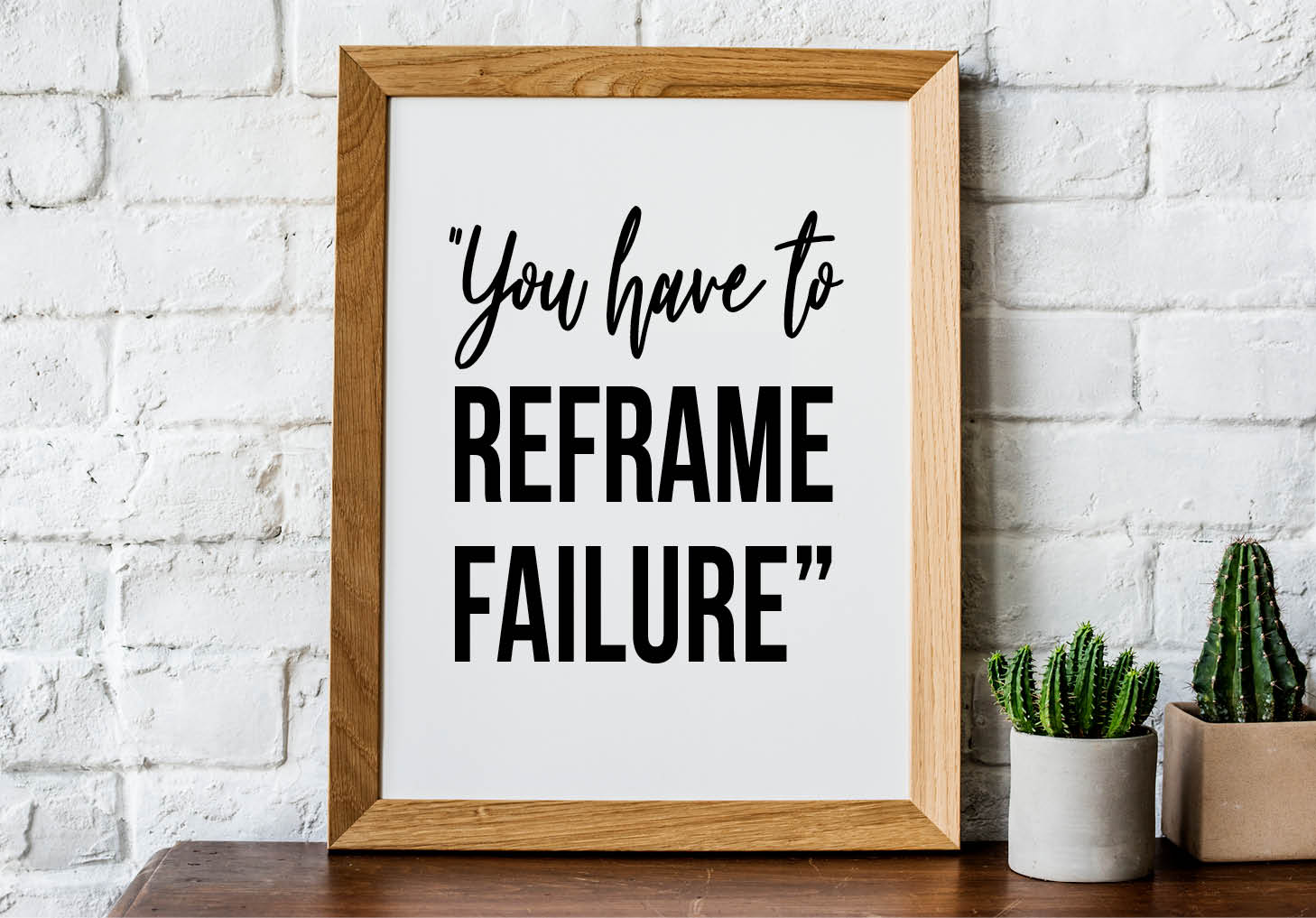
So what do you do? “You have to reframe failure, our unrealistic expectations, and fear. We’re all entitled to make mistakes and be wrong. We have a right to ask questions; we have a right to not understand, and no one feels confident 24/7,” says Dr. Young.
Even if you don’t believe the reframed thoughts, keep going. “You don’t have to feel confident to act confident. Don’t let the feeling of fear rule the action. What we want is to no longer feel like an impostor, but feelings are the last to change. Over time, your feelings will catch up,” she says. Another way to practice: “Giving advice to someone in the same situation can help you internalize it,” says Dr. Baldwin.
| Scenario | Impostor thought | Reframe |
| Your advisor recommends that you take a more advanced course. | “I have no idea what I’m doing; I’m not smart enough.” | “I’m going to learn a lot. This is a great opportunity to challenge myself.” |
| You get negative feedback on a writing assignment. | “I suck at writing.” | “The more I write, the better I get.” |
| Before you present, you have sweaty hands, a nervous stomach, and a dry throat. | “I’m terrified.” | “I’m excited.” |
| You want to ask a question in class. | “People will think I’m not smart enough for this class.” | “Probably half the class wants to know this too.” |
5. Use all the resources
“The key to staying in college for all students, regardless of your background or identity, is making sure you take advantage of as many opportunities as possible to integrate yourself with your campus both academically and socially,” says Dr. Luoluo Hong, vice president for student affairs and enrollment management at San Francisco State University. Here’s what Dr. Hong recommends:
- Go to the new student orientation.
- Show up for class, show up for class, show up for class!
- Take advantage of your professor’s office hours to discuss questions or ideas.
- Get to know your faculty.
- Live on campus if you can.
- If you have to work, get a job on campus rather than off campus.
- Join a student club or start one.
In addition, check out every resource your college offers, even if you don’t think you need it. Get to know the rec center, health services, counseling center, career center, tutoring service, disability accommodations, and financial support office. Talk to your professors, classmates, teaching assistants, resident assistants, librarians, and everyone else you encounter. You aren’t doing this alone, and there are resources available that you don’t even know about.
6. Find a mentor

“Engage a faculty member who may have a similar background or share some of your experiences,” says Dr. Adrian K. Haugabrook, vice president for student success and engagement at Wheelock College, Massachusetts. People like to be asked.
A mentor who understands your experience can be especially helpful if you’re navigating two distinct social environments: college and home. Even if your family and friends are proud that you’re in college, you may find yourself playing it down when you go home so that you can’t be accused of feeling superior.
“I suggest other students not try to do it all on their own like I did. Go talk to an advisor and try to find a mentor who can help you navigate college life.”
—Second-year graduate student, Florida International University
“Talking to various mentors and leaders, I discovered that many individuals have experienced the ‘impostor syndrome.’ The trick is to keep your head high and realize many other people feel the same way you do.”
—Second-year graduate student, Boise State University, Idaho
7. Learn to take a compliment
One small, essential thing you can do right now to deal with impostor feelings: Learn how to take a compliment. You can do this. Yes, you can.
“Practice saying thank you and acknowledging your work rather than explaining it away,” says Dr. Young.
It can be helpful to recognize your own cognitive dissonance. “We feel uncomfortable when we have two oppositional thoughts; for example, feeling negatively about yourself and receiving a compliment,” says Dr. Keith Anderson, a psychologist at Rensselaer Polytechnic Institute in New York. “Our natural tendency is to revert to the oldest thought, the negative one. Practice overriding this instinct by focusing on the compliment.”
| Compliment | Instead of . . . | Try . . . |
| “Your work on the migration pattern of ancient swallows was exceptional. Good job!” | “Oh, it wasn’t that great. I just used the research. I could have expanded the intro.” | “Thank you. I worked really hard on it.” |
| “Awesome presentation on the function of neurotransmitters in mice with social anxiety.” | “Aaargh, I must have said ‘um’ 400 times.” | “That’s great to hear—thank you.” |
The Secret Thoughts of Successful Women: Why Capable People Suffer from the Impostor Syndrome and How to Thrive in Spite of It: Valerie Young (Crown Business, 2011)
Resources for low-income students: Let’s Get Ready
Community and resources for first-gen students: I’m First
How College Students Can Better Manage Imposter Syndrome: Bentley University
Article sources
Keith Anderson, PhD, FACHA, psychologist/outreach coordinator, Rensselaer Polytechnic Institute, New York.
Amy Baldwin, EdD, director of University College at the University of Central Arkansas; author of The First-Generation College Experience (Prentice Hall, 2011).
Adrian K. Haugabrook, EdD, vice president for student success and engagement, Wheelock College, Massachusetts.
Luoluo Hong, PhD, vice president for student affairs and enrollment management, San Francisco State University, California.
Katharine Meyer, PhD candidate, Curry School of Education, University of Virginia.
Valerie Young, EdD, speaker, author of The Secret Thoughts of Successful Women: Why Capable People Suffer from the Impostor Syndrome and How to Thrive in Spite of It (Crown Business, 2011).
Baumeister, R. F., Bratslavsky, E., Finkenhauer, C., & Vohs, K. D. (2001). Bad is stronger than good. Review of General Psychology, 5(4), 323–370. Retrieved from https://carlsonschool.umn.edu/file/49901/download?token=GoY7afXa
Clance, P. R., & Imes, S. (1978). The impostor phenomenon in high achieving women: Dynamics and therapeutic intervention. Psychotherapy Theory, Research, and Practice, 15(3), 241–247. Retrieved from http://www.paulineroseclance.com/pdf/ip_high_achieving_women.pdf
Cokley, K., McClain, S., Enciso, A., & Martinez, M. (2013). An examination of the impact of minority status stress and impostor feelings on the mental health of diverse ethnic minority college students. Journal of Multicultural Counseling and Development, 41(2), 82–95.
Guardian Staff. (2016, April 29). CV of failures: Princeton professor publishes résumé of his career lows. Guardian. Retrieved from http://www.theguardian.com/education/2016/apr/30/cv-of-failures-princeton-professor-publishes-resume-of-his-career-lows
Gravois, J. (2007, November 9). You’re not fooling anyone. Chronicle of Higher Education. Retrieved from http://chronicle.com/article/Youre-Not-Fooling-Anyone/28069/
Ito, T. A., Larsen, J. T., Smith, K. N., & Cacioppo, J. T. (1998). Negative information weighs more heavily on the brain: The negativity bias in evaluative categorizations. Journal of Personality and Social Psychology, 75(4), 887–900.
Leasure, T. (2025). Prevalence of imposter syndrome among undergraduate students at Western Michigan University (Honors thesis). Western Michigan University. https://scholarworks.wmich.edu/honors_theses/3945
Matthews, G. (1984). The impostor phenomenon: Attributions for success and failure. In G. Matthews (Chair), Impostor phenomenon: Research, assessment, and treatment issues. Symposium conducted at the 92nd Annual Convention of the American Psychological Association, Toronto, Canada.
Olsson, I. (2024). Exploring the persistence of negative emotional memories over positive ones: A qualitative study. International Journal of Psychological Studies, 16(4), 1-26. https://doi.org/10.5539/ijps.v16n4p26
Rose, A. J., Carlson, W., & Waller, E. M. (2007). Prospective associations of co-rumination with friendship and emotional adjustment: Considering the socioemotional trade-offs of co-rumination. Developmental Psychology, 43(4), 1019–1031.
Sakulku, J., & Alexander, J. (2011). The impostor phenomenon. International Journal of Behavioral Science, 6(1), 73–92. Retrieved from http://bsris.swu.ac.th/journal/i6/6-6_Jaruwan_73-92.pdf
CampusWell survey, June 2016.
Tugend, A. (2012, March 23). Praise is fleeting, but brickbats we recall. New York Times. Retrieved from http://www.nytimes.com/2012/03/24/your-money/why-people-remember-negative-events-more-than-positive-ones.html?_r=0