



























Rate this article and enter to win
What’s in a nap? If you’re doing it right, napping brings a bunch of benefits: improved learning ability, memory, alertness, physical and mental stamina, and relief from stress. To avoid grogginess and other possible side effects, however, you need to be strategic about napping. This quiz helps you figure out whether a nap will work for you or against you.

Napping can make you smarter and improve your performance and alertness on the job. It can help you learn more, remember what you’re studying, and feel better.
Napping improves learning and memory
- College students with GPAs of 3.5 and higher were much more likely to be nappers than were their peers with lower GPAs in a study published in Sleep and Breathing.
- A 10-minute nap significantly improved alertness and cognitive performance in young adults, according to a study in the Journal of Sleep Research.
- Napping can have a positive effect on declarative memory (the ability to recall facts and events), according to a 2021 review of research.
- Napping for 90 minutes improves young adults’ capacity to learn, a 2020 study found.
Other effects
Napping improves tolerance and decision-making
Recent studies confirm that midday naps boost focus and decision-making. When naps were restricted, people became more impulsive and prone to risky choices, while post-lunch naps improved concentration and cognitive control.
Napping relieves stress
A 45- to 60-minute nap reduced the effects of stress in undergraduate students in a study in the International Journal of Behavioral Medicine. The students recovered from a stressor more quickly than stressed students who didn’t nap.
Napping improves physical performance
Athletes had quicker reaction times and performed better after a one-hour nap, according to a study in the Journal of Shangqiu Normal University.
Need to compensate for missed sleep?
Skimping on sleep seriously affects our performance—and makes us oblivious to just how poorly we’re doing. That’s according to a study in which researchers at the University of Pennsylvania restricted people’s sleep. Even as the participants became less able to sustain their attention and succeed at memory tasks, they insisted they had adjusted to the shorter sleep hours, according to the journal Sleep.
Expecting a late night?
If you’re expecting to be up later than usual that night, planned napping—taking a nap before you get sleepy—may help. Remember, though, that all-nighters are highly disruptive to your body and mind. Sleep-deprived cramming is unlikely to help you perform better on tests, research shows.

If you’re sleepy and planning to drive, take an emergency nap.
This is critical. Sleep-deprived drivers are as dangerous as drunken drivers, according to a study in the journal Nature. Napping improves our alertness and reaction times. Pilots who nap during flights are better at landing planes, according to a classic study in the Journal of Sleep Research.
If you feel sleepy while driving…
Pull into a safe, well-lit area, such as a rest stop or restaurant parking lot, and take a 15- to 20-minute nap, says the National Sleep Foundation.
If you can’t nap before driving long distances and are not really tired, use caffeine.
Long-distance commercial drivers who used caffeinated substances were less likely to crash their vehicles than those who didn’t, a study in The BMJ found. But if you’re really tired, caffeine is not enough. Don’t drive.
It sounds like you’ll be okay without a nap today (but hey, we’re not judging).

The best time to nap is halfway between the time you woke up and the time you’ll go to bed, usually around 1–3 p.m.
Fortunately, this is probably when you most want to snooze. “This sleepiness comes from a true physiologic process, because we have a dip in the alerting signal of our circadian rhythm,” wrote Dr. Shelley Hershner, director of the Collegiate Sleep Disorder Clinic at the University of Michigan.
Napping later than 3 p.m. (or past the halfway point of your day) could set you up for a wakeful night. Try another way to pick up your energy:
- Snack on vegetables, fruit, beans, and nuts. The nutrients in these food groups are natural energy boosters, according to the Cleveland Clinic.
- Drink water or herbal tea. Dehydration can cause fatigue, according to dietitians at the University of Michigan. From mid-afternoon onward, avoid caffeine; that will keep you up at night, too.
- Don’t just sit there. A few jumping jacks or yoga moves, or a quick walk, will help you feel more alive. Even a 15-minute walk can give you an energy boost, says the National Health Service in the UK.
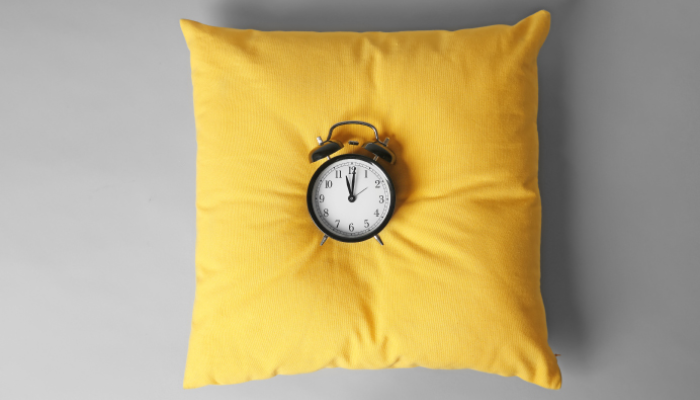

Even brief naps can result in measurable performance improvements, research shows. “Did you know that a six-minute nap increased subjects’ memorization of a list of words by 11 percent? Hey, most of us would be happy to take a letter grade higher, especially for a 10-minute investment in time,” writes Dr. Hershner. Of course, you’ll need to allow a few extra minutes for falling asleep.
Do you have more than 10 minutes?
The optimal length of a nap is disputed. Check out these options, then see what works for you.
Up to half an hour
Napping for 10–30 minutes gets you some brain benefits without inducing grogginess, so how do you wake up on time? Some studies have found benefits in “coffee naps.” If you’re confident you can fall asleep quickly, try drinking a cup of coffee and taking your nap; around 25 minutes in, the caffeine will kick in and wake you. A small study in the journal Ergonomics suggested coffee naps may be more effective for alertness and performance than napping alone.
Up to an hour
Some evidence suggests we can nap for up to an hour without feeling that grogginess and inertia. In a 2023 Sleep study, naps lasting 30 to 60 minutes improved mood and alertness more than shorter naps, with 30-minute naps showing the greatest benefits for memory performance.
Up to 90 minutes
A typical sleep cycle (incorporating deep sleep and REM sleep) takes about 90 minutes. In studies, naps of 60 or 90 minutes have resulted in greater benefits for visual and memory tasks, compared with shorter naps.
Be wary of napping beyond 90 minutes. If you nap longer, “it’s harder to wake up and leaves you groggy because you’ve interrupted a sleep cycle,” says Nancy H. Rothstein, director of sleep health at Resonea, an organization dedicated to sleep health, wellness, and employee safety.
This probably isn’t enough time to take a nap, unless you can fall asleep the second your head hits the pillow.
If you don’t have time to nap, caffeine might help. Caffeine does not have the same brain benefits as napping, but it makes us feel more physically awake (because napping can induce grogginess), according to a study in Behavioral Brain Research.
But the same time limit applies: Don’t consume caffeine after 3 p.m., or you risk your nighttime sleep.

If you’re having difficulty falling asleep at night, a nap will likely make that worse.
Do you have insomnia?
Insomnia is difficulty falling asleep or staying asleep at night, accompanied by daytime exhaustion, that is not explained by lifestyle and behavioral factors. It can be related to stress, transitions, psychiatric conditions, medications, or substance use. Most adults experience insomnia at some point in their lives, according to the Mayo Clinic.
If you are having difficulty falling asleep or staying asleep, behavioral changes can help, such as being physically active during the day and avoiding stimulating activities (including screen use) close to bedtime.
Insomnia treatment
If you think you are experiencing insomnia, talk with your health care provider or go to your counseling center. Medication may help in the short term. Cognitive behavioral therapy is a proven treatment for insomnia, and can be effectively delivered in the traditional therapeutic setting or online, according to the Journal of Psychology Research and Behavioral Management.
Already a champ at sleeping? Go for it, take that nap.

Go for it. Take that nap.
Don’t take a nap this time. Wait until you can get into a more welcoming sleep zone.
A promising nap environment looks like this:
- You can lie down; it’s harder to fall asleep when you’re sitting up.
- You have a blanket nearby in case you get cold, but you won’t get so warm and comfy that it’s a struggle to get up.
- You can darken the room or use an eye mask.
- You won’t be disturbed by noise; if necessary, use headphones or a noise machine.
Bonus:
Some colleges provide napping stations for students.
GET HELP OR FIND OUT MORE
Napping advice: National Sleep Foundation
Are naps actually good for us?: Matt Walker [TED Talk]
Understanding sleep: National Institute of Neurological Disorders & Stroke [NIDS]
Article sources
Shelley Hershner, MD, director, Collegiate Sleep Disorder Clinic, University of Michigan.
Nancy H. Rothstein, director of sleep health, Resonea, Scottsdale, Arizona.
Ackerman, J., & Zarracina, J. (n.d.). How to nap. [Infographic]. Boston Globe. http://www.boston.com/bostonglobe/ideas/naps/
American College Health Association. (Spring 2014). National College Health Assessment. http://www.acha-ncha.org/docs/ACHA-NCHA-II_ReferenceGroup_ExecutiveSummary_Spring2014.pdf
Anwar, Y. (2010). An afternoon nap markedly boosts the brain’s learning capacity. Berkeley News. http://news.berkeley.edu/2010/02/22/naps_boost_learning_capacity/
Bonnet, M. H., & Arand, D. L. (1994). The use of prophylactic naps and caffeine to maintain performance during a continuous operation. Ergonomics, 37(6), 1009–1020.
Borbély, A. (1982). A two-process model of sleep regulation. Human Neurobiology, 1(3), 195–204.
Brindle, R. C., & Conklin, S. (2012). Daytime sleep accelerates cardiovascular recovery after psychological stress. International Journal of Behavioral Medicine, 19(1), 111–114.
Chellappa, S. L., Hofstetter, J., Cajochen, C., & Schmidt, C. (2023). Influence of mid-afternoon nap duration and sleep parameters on memory encoding, mood, processing speed, and vigilance. Sleep, 46(5), zsad040. https://doi.org/10.1093/sleep/zsad040
Dawson, D., & Reid, K. (1997). Fatigue, alcohol, and performance impairment. Nature, 388, 235.
Eken, Ö. (2024). Post-lunch napping as a strategy to enhance physiological and cognitive performance. Medicina, 60(10), 1698. https://doi.org/10.3390/medicina60101698.
Eliasson, A. H., Lettieri, C. J., & Eliasson, A. H. (2010). Early to bed, early to rise! Sleep habits and academic performance in college students. Sleep and Breathing, 14(1), 71–75.
Farhadian, N., Khazaie, H., Nami, M., & Khazaie, S. (2021). The role of daytime napping in declarative memory performance: A systematic review. Sleep Medicine, 84, 134-141.. https://www.sciencedirect.com/science/article/abs/pii/S1389945721002987
Fenn, K. M., Nusbaum, H. C., & Margoliash, D. (2003). Consolidation during sleep of perceptual learning of spoken language. Nature, 425(6958), 614–616.
Goldschmied, J. R., Cheng, P., Kemp, K., Caccamo, L., et al. (2015). Napping to modulate frustration and impulsivity: A pilot study. Personality and Individual Differences, 86, 164–167.
Hershner, S. (2014). How to nap. University of Michigan. https://www.rackham.umich.edu/blog/how-nap
Hershner, S. (2014). Why you should nap. University of Michigan. https://www.rackham.umich.edu/blog/why-you-should-nap
Jamieson-Petonic, A. (2013). 5 ways to fight fatigue with food. Cleveland Clinic. http://health.clevelandclinic.org/2013/05/5-ways-to-fight-fatigue-with-food/
Lahl, O., Wispel, C., Willigens, B., & Pietrowsky, R. (2008). An ultra-short episode of sleep is sufficient to promote declarative memory performance. Journal of Sleep Research, 17(1), 3–10.
Lo, J. C., Dijk, D. J., & Groeger, J. A. (2014). Comparing the effects of nocturnal sleep and daytime napping on declarative memory consolidation. PLoS ONE, 9(9).
Mayo Clinic. (November 21, 2012). Napping: Do’s and don’ts for healthy adults. http://www.mayoclinic.org/healthy-lifestyle/adult-health/in-depth/napping/art-20048319
Mayo Clinic. (2014). Insomnia.http://www.mayoclinic.org/diseases-conditions/insomnia/basics/definition/con-20024293
Mednick, S. C., Cai, D. J., Kanady, J., & Drummond, S. (2008). Comparing the benefits of caffeine, naps, and placebo on verbal, motor, and perceptual memory. Behavioral Brain Research, 193(1), 79–86.
Mulrine, H. M., Signal, T. L., van den Berg, M. J., & Gander, P. H. (2012). Post-sleep inertia performance benefits of longer naps in simulated nightwork and extended operations. Chronobiology International, 29(9), 1249–1257.
National Health Service. (2015). Self-help tips to fight fatigue. http://www.nhs.uk/Livewell/tiredness-and-fatigue/Pages/self-help-energy-tips.aspx
National Sleep Foundation. (n.d.). Napping. https://sleepfoundation.org/sleep-topics/napping
National Sleep Foundation. (2015). How much sleep do we really need? https://sleepfoundation.org/how-sleep-works/how-much-sleep-do-we-really-need
Rosekind, M. R., Smith, R. M., Miller, D. L., Co, E. L., et al. (1995). Alertness management: Strategic naps in operational settings. Journal of Sleep Research, 4(S2), 62–66.
Sharwood, L., Elkington, J., Meuleners, L., Ivers, R., et al. (2013). Use of caffeinated substances and risk of crashes in long-distance drivers of commercial vehicles: Case-control study. British Medical Journal, 346.
Siebern, A. T., & Manber, R. (2011). New developments in cognitive behavioral therapy as the first-line treatment of insomnia. Journal of Psychology Research and Behavioral Management, 4, 21–28.
Tambini, A., Berners-Lee, A., & Davachi, L. (2020). Short naps improve memory recall by enhancing hippocampal–neocortical interactions. Sleep, 43(9), zsaa058. https://doi.org/10.1093/sleep/zsaa058
Tietzel, A. J., & Lack, L. C. (2002). The recuperative value of brief and ultra-brief naps on alertness and cognitive performance. Journal of Sleep Research, 11(3), 213–218.
Twery, M. (2014, December 29). Why is sleep important? US Department of Health and Human Services. http://www.hhs.gov/blog/2014/12/29/why-sleep-important.html
University of Michigan. (2011). Fight fatigue with food and exercise. Comprehensive Cancer Center. http://www.mcancer.org/living-with-cancer/mind-body-side-effects/nutrition/healthy-boost
Van Dongen, H. P., Maislin, G., Mullington, J. M., & Dinges, D. F. (2003). The cumulative cost of additional wakefulness: Dose-response effects on neurobehavioral functions and sleep physiology from chronic sleep restriction and total sleep deprivation. Sleep, 26(2), 117–26.
Walker, M. P., & Stickgold, R. (2004). Sleep-dependent learning and memory consolidation. Neuron, 44(1), 121–133.
Yan, L., & Zhou, Y. (2013). Effect of nap on physical function after sport training for athletes. Journal of Shangqiu Normal University, 2013(3).
Zhang, Z., Tian, Y., & Liu, Y. (2023). Intertemporal decision-making and risk decision-making among habitual nappers under nap sleep restriction: A study from ERP and time-frequency. Brain Topography, 36(3), 390–408. https://doi.org/10.1007/s10548-023-00948-x.