


























Key points:
- Our brains are naturally wired to seek positive social interactions (such as likes or comments on our social media posts).
- The boost we get from likes and comments, paired with the ability to endlessly scroll, can make it hard for us to take a break from social media.
- While more research is required to fully understand the effects of social media addiction, it’s clear that excessive social media use negatively impacts our well-being.
When was the last time you checked your phone? Are you on it right now? The average American adult checks their phone 352 times per day—or once every 2 minutes and 43 seconds, according to a 2022 survey by tech repair company Asurion. That’s four times more often than we were checking our phones back in 2019.
While those statistics might be startling, it’s common knowledge that we’re using our phones—and social media—more than ever. The appeal is easy to understand. Social media allows us to stay connected across great distances and to find or build new online communities. However, research suggests that frequent social media use can be associated with isolation, social anxiety, and struggles with academic and professional responsibilities, which might make you wonder: Are we relying on it a bit too much?
What does it mean to be “addicted” to social media?
The threshold between “social media addiction” vs. heavy social media use is up for debate. When researchers assess social media use in studies, there tends to be a lack of clear criteria for what exactly constitutes an addiction—though as a general rule, when your social media use starts to negatively affect your life beyond the screen, it can be a warning sign. For example, researchers look at things like:
- How social media affects a person’s mood.
- Whether or not they experience withdrawal symptoms when they stop using social media.
- Relapse behaviors (i.e., someone starts using social media again after stopping).
But there is disagreement in how to measure these behaviors to determine whether or not a person is addicted. Some studies estimate addiction rates as low as 1 percent of the population, while others put it as high as 20 percent.
However, “I think it’s unrealistic to [say it’s as high as] 20 percent,” says Dr. Ofir Turel, a professor of engineering and information technology at the University of Melbourne in Victoria, Australia. “My speculation is that it is closer to one percent real addiction, while most other people exhibit excessive use patterns that don’t amount to addiction.”
Is social media use affecting your daily life?
More research is needed to determine how heavy social media use impacts the brain, but if you find your own social media use increasing, it may be worth some reflection—especially if you find yourself experiencing “cravings” for it, are anxious without it, or struggle to take a break.
The most important factor when determining if you have a problem with social media is whether it interferes with your normal functioning, says Dr. Turel. For example, has your use affected your school work, self-contentment, or anxiety? Do you find that it interferes with socializing IRL?
Research shows that social media can have the following effects on us:
- A 2021 study of 400 medical students in India found that higher daily use of social media was associated with lower grades.
- A study of 312 university students in Turkey linked social media addiction to increased feelings of social anxiety and lower reported happiness.
- A small European study asked participants to take a 7-day break from social media and found that 60% of participants were unable to go the whole week without it.
Why is social media so hard to put down?
Humans are social creatures. Experts speculate that our need to belong to a social group might be as important as biological needs like food and water. We also typically want to make a good impression on the people around us—a behavior that likely developed as a survival mechanism. Researchers believe that social media capitalizes on these existing drives and activates the parts of the brain that reward us for seeking out social connections, according to a 2015 study.
Apps that endlessly scroll also make it hard for us to stop using our phones because they remove any natural pauses that might prompt us to put them down. Similarly, pulling down to refresh your feed and push notifications play on what experts call the “slot machine effect”—in other words, refreshing your feed encourages you to stay engaged with the app for longer via the “reward” of receiving more content.
Experts also note that certain features of social media apps like TikTok or Snapchat could lead to increased use or relapses into excessive use. “These apps are deliberately designed to capture and hold your attention. The more time you spend, the more it benefits the apps,” says Dr. Ben Rein, a neuroscientist who conducts research at Stanford University in Palo Alto, California. “For example, snap streaks reward you for consistent use, and punish you for forgetting to use the app for a day.”
Tips to get your social media use under control
While I was indulging in my own desire to check social media, I asked my Instagram followers to share what has worked for them:
1. Put your phone on grayscale mode and turn off app notifications.
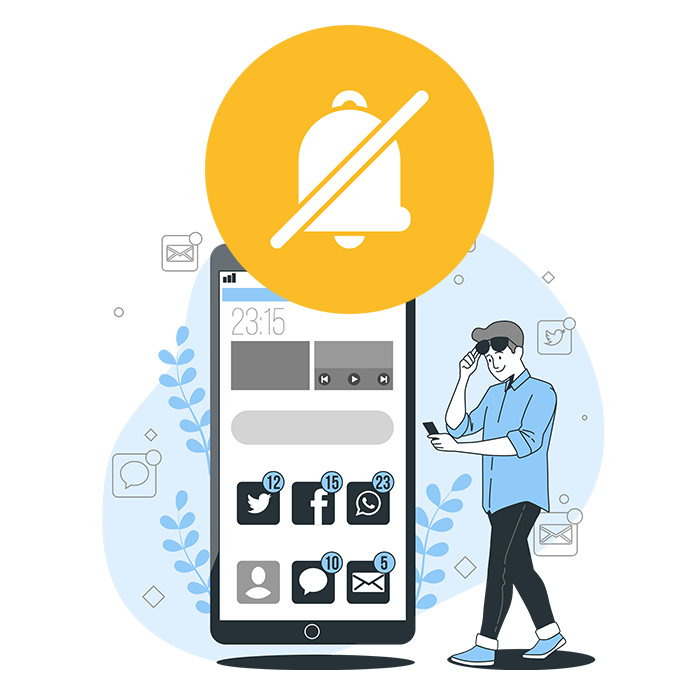
Features like brightly colored icons and app notification sounds can create a significant increase in user engagement, according to a 2020 study on the business ethics of social media. Features like switching your screen to grayscale mode—which removes all the color from your screen—or adjusting your app notifications can help counter the urge to pick up your phone.
“I will typically disable notifications for social media apps that I use regularly,” says Eliza P.*, a recent graduate from Metropolitan State University of Denver in Colorado. “Any that drain me and send too many notifications I delete entirely.”
2. Delete the app.
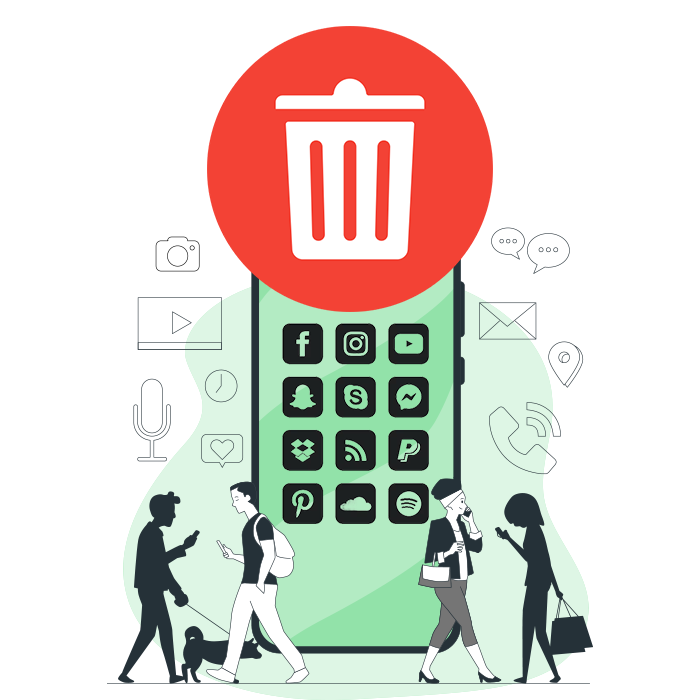
Speaking of deleting, getting social media off your phone altogether is one guaranteed way to reduce your usage. Deleting mobile apps or signing out of your account after each use can make it slightly more difficult to access your social media accounts and help to break the compulsive habit of checking your phone.
“Delete the app and uncheck ‘Remember me’ on the login screen as a way to add friction to the process,” suggests one of my followers from New York City.
3. Use an external app that times your social media use.
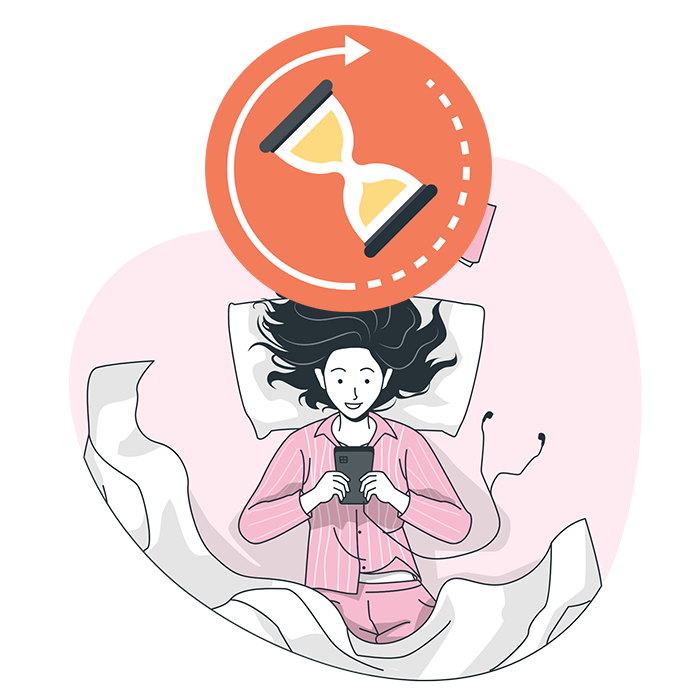
“I use the [Screen Time] app on iPhone to let me know when I’ve spent two hours on social media,” says Alondra M., a third-year graduate student at San Diego State University in California.
The ability to constantly scroll is often cited by experts as a part of what makes social media addictive, so an external reminder that tracks your use can provide a stopping cue when you’ve hit your daily limit. Along with the built-in Screen Time app on iOS, there are a ton of other apps you can find in the app store to monitor your social media use.
What to do if you’re already struggling with social media addiction
For many people, simple tips like those above should be enough to help cut down on social media use. However, changing your habits can be extremely difficult to tackle alone. If you could use some help in doing a digital detox, reach out to family members or friends for tips and moral support, or contact a mental health professional for a more structured plan.
*Name changed
Social media addiction questionnaire: BlockSurvey
Reviews of apps to track and limit your screen time: DigitalTrends
Treatment options for social media addiction: Addiction Center
Resources for people experiencing social media addiction: Internet and Technology Addicts Anonymous
What it’s like to stop social media for a week (video): Real Stories Original
Article sources
Ofir Turel, PhD, professor of engineering and information technology, University of Melbourne, Victoria, Australia.
Ben Rein, PhD, post-doctoral researcher in psychiatry, Stanford University, Palo Alto, California.
Asurion. (2022). Americans now check their phones 352 times per day. Asurion. https://www.asurion.com/connect/news/tech-usage/
Baltaci, Ö. (2019). The predictive relationships between the social media addiction and social anxiety, loneliness, and happiness. International Journal of Progressive Education, 15(4), 73–82. https://eric.ed.gov/?id=EJ1224299
Bhandarkar, A. M., Pandey, A., Nayak, R., Pujary, K., et al. (2021). Impact of social media on the academic performance of undergraduate medical students. Medical Journal Armed Forces India, 77, S37–S41. https://doi.org/10.1016/j.mjafi.2020.10.021
Bhargava, V. R., & Velasquez, M. (2020). Ethics of the attention economy: The problem of social media addiction. Business Ethics Quarterly, 31(3), 321–359. https://doi.org/10.1017/beq.2020.32
Brand M. (2022). Can internet use become addictive? Science, 376(6595), 798–799. https://doi.org/10.1126/science.abn4189
Cheng, C., Lau, Y., Chan, L., & Luk, J. W. (2021). Prevalence of social media addiction across 32 nations: Meta-analysis with subgroup analysis of classification schemes and cultural values. Addictive Behaviors, 117, 106845. https://doi.org/10.1016/j.addbeh.2021.106845
Haynes, T. (2018, May 1). Dopamine, smartphones, and you: A battle for your time. Science in the News: Harvard University. https://sitn.hms.harvard.edu/flash/2018/dopamine-smartphones-battle-time/
Keles, B., McCrae, N., & Grealish, A. (2020). A systematic review: The influence of social media on depression, anxiety and psychological distress in adolescents. International Journal of Adolescence and Youth, 25(1), 79–93. https://www.tandfonline.com/doi/full/10.1080/02673843.2019.1590851
Meshi, D., Tamir, D. I., & Heekeren, H. R. (2015). The emerging neuroscience of social media. Trends in Cognitive Sciences, 19(12), 771–782. https://doi.org/10.1016/j.tics.2015.09.004
Reissner, K. J., & Kalivas, P. W. (2013). Common mechanisms of addiction. Biological Research on Addiction, 2, 161–168. https://doi.org/10.1016/b978-0-12-398335-0.00017-0
Stieger, S., & Lewetz, D. (2018). A week without using social media: Results from an ecological momentary intervention study using smartphones. Cyberpsychology, Behavior, and Social Networking, 21(10), 618–624. https://doi.org/10.1089/cyber.2018.0070