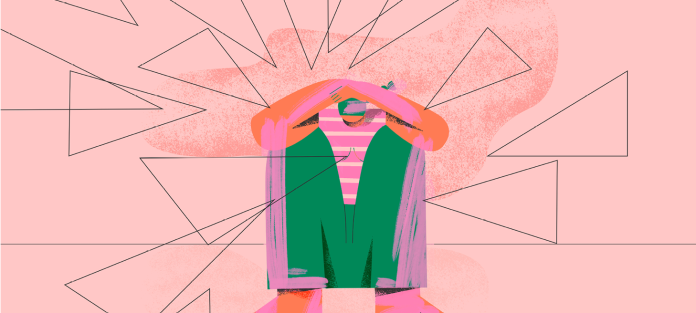
From exams and job interviews to traveling and dating, life’s stressors come and go. Occasionally worrying about them is reasonable and even expected. However, worries can sometimes escalate, feel out of proportion to the situation, or interfere with our ability to go about our daily activities. This intensity can sometimes manifest as anxiety or panic attacks. Learning the symptoms of increased and persistent anxiety, along with coping techniques, can be enormously helpful.
- Rapid heartbeat
- Heart palpitations
- Shortness of breath
- Rapid breathing
- Sweating
- Chest pain
- Feeling of choking
- Cold or sweaty hands
- Nausea or other gastrointestinal issues
- Numbness in hands or feet
- Muscle tension
- Dry mouth
- Trembling
- Feeling weak or tired
- Trouble sleeping

Physical symptoms of anxiety:
- Rapid heartbeat
- Heart palpitations
- Shortness of breath
- Rapid breathing
- Sweating
- Chest pain
- Feeling of choking
- Cold or sweaty hands
- Nausea or other gastrointestinal issues
- Numbness in hands or feet
- Muscle tension
- Dry mouth
- Trembling
- Feeling weak or tired
- Trouble sleeping
Fortunately, mindfulness techniques, such as controlled breathing and meditation, are science-backed tools for diffusing a range of anxiety symptoms and reducing stress. They’re also super easy to learn.
For example, deep, slow breathing is a technique that can activate the body’s relaxation response. This guided slow breath meditation is fairly short—about six minutes long—but it should help you start to relax your mind and body. If you still need more time, you can always repeat the meditation or continue deep breathing on your own.
Slow breathing techniques like this can be effective for coping with stress, especially when you practice them during calm moments, too, and not just when difficulties arise. However, if you’re finding that your anxiety is too much to handle on your own, or you’re struggling to get through each day, reach out to your school counselor or mental health resource for referrals and recommendations.
If you are in crisis or thinking about hurting yourself, call the National Suicide Prevention Lifeline by dialing 988. You can also text the Crisis Text Line (HELLO to 741741) or use the Lifeline Chat on the National Suicide Prevention Lifeline website.
Why deep breathing makes you feel so chill: Right as Rain by UW Medicine
Article sources
Anxiety disorders. (2020, December 17). Cleveland Clinic. https://my.clevelandclinic.org/health/diseases/9536-anxiety-disorders
Mayo Clinic Staff. (n.d.). Anxiety disorders. Mayo Clinic. https://www.mayoclinic.org/diseases-conditions/anxiety/symptoms-causes/syc-20350961
Taren, A. A., Gianaros, P. J., Greco, C. M., Lindsay, E. K., et al. (2015). Mindfulness meditation training alters stress-related amygdala resting state functional connectivity: A randomized controlled trial. Social Cognitive and Affective Neuroscience, 10(12), 1758–1768. https://academic.oup.com/scan/article/10/12/1758/2502572