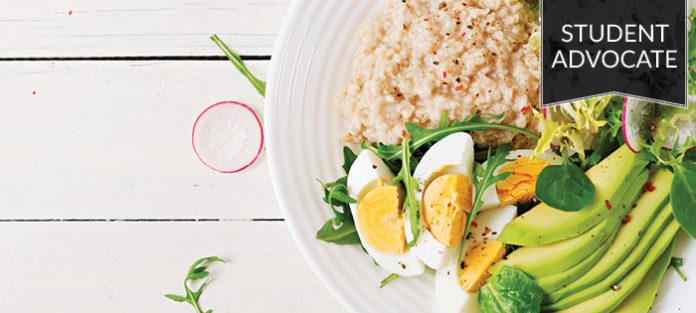
It’s a cliché, but it’s true: Breakfast is a vital part of the day—especially for students who need energy for those extra-long days on campus. “Breakfast kick-starts your energy for the day. It’s fuel, both for [your] brain and body,” says Jan Dowell, registered dietitian and instructor in the nutrition department at Benedictine University in Illinois.
But that doesn’t mean all breakfast foods are created equal. For example, sweet cereals might taste good, but they can cram in more sugar than our bodies know what to do with. One bowl of a sugary cereal like Lucky Charms® could have students exceeding 25 grams before they’ve even had the chance to eat lunch.
Instead of a breakfast loaded with the sweet stuff, encourage students to incorporate these nutritious foods into their breakfast, which will help them set their day up for success:
Whole grains
Examples
Whole-wheat or whole-grain toast, waffles, or pancakes offer complex carbs that provide fiber and sustained energy.
Why
“The complex carbs from [a] waffle will give you energy to burn. The fiber from the whole grains will help to stabilize blood sugar, which will result in lasting energy to keep you full and satisfied all morning,” says Jenna Volpe, a registered dietitian specializing in weight management and eating disorders in Massachusetts.
Protein
Examples
Scramble tofu or lean meat into eggs and have some yogurt on the side. Tip: “Opt for plain yogurt to minimize added sugars,” says Volpe.
Why
Protein can keep students energized and their appetite satiated. Eating 35 grams or more of protein at breakfast may even help avoid mindless snacking later, according to a 2013 study published in the American Journal of Clinical Nutrition.
Healthy fats
Examples
Students can add nuts or seeds into a smoothie, slice up some avocado with eggs, or spread peanut or almond butter on toast.
Why
“A spoonful of nut butter can [offer a] boost of heart-healthy fats and will help reduce the glycemic index (rate at which our blood sugar goes up after a meal),” Volpe says.
Fruits and vegetables
Examples
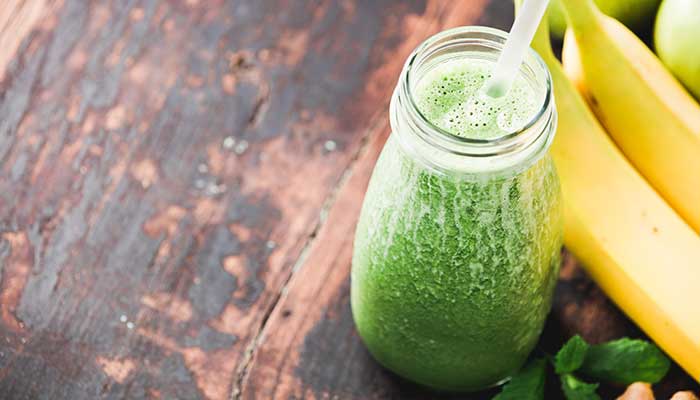
“Green leafy vegetables, like [adding] kale or spinach to [a] scramble, adds lots of nutrients and fiber,” says Karen Moses, registered dietitian and director of health promotion at Arizona State University. “[Or] by blending greens into your morning smoothie, you get all the fiber and nutrients of the veggies in a delicious breakfast drink.” As for fruits, try berries, grapefruit, melons, kiwi, and oranges for low-sugar options.
Why
The US Department of Agriculture recommends at least 2.5 cups of veggies for women and 3 cups for men, plus 2 cups of fruit a day, so breakfast is a good way to sneak in some of these nutritious foods early in the day. Fruits and veggies provide energy, fiber, vitamins, and minerals.
For recipes you can share with students involving all of these ingredients, check out the full article.
Recipes, cooking videos, and nutrition information: Eatright.org
Jan Dowell, MS, MHS, RD, adjunct instructor in the nutrition department at Benedictine University in Lisle, Illinois.
Karen Moses, EDD, RD, CHES, director of health promotion, Arizona State University.
Jenna Volpe, RD, registered dietitian specializing in weight management and eating disorders, Quincy, Massachusetts.
Bole, K. (2014, November 10). UCSF launches sugar science initiative. Retrieved from https://www.ucsf.edu/news/2014/11/120751/ucsf-launches-sugar-science-initiative
Centers for Disease Control and Prevention. (2014, October 6). Nutrition and the health of young people. Retrieved from https://www.cdc.gov/healthyyouth/nutrition/facts.htm
Cheerios. (n.d.). Original Cheerios. Retrieved from https://www.cheerios.com/Products/Cheerios
General Mills. (n.d.). Kix. Retrieved from https://www.generalmills.com/Brands/Cereals/kix
General Mills. (n.d.). Lucky Charms product list. Retrieved from https://www.generalmills.com/en/Brands/Cereals/lucky-charms/brand-product-list
Leidy, H. J., Ortinau, L. C., Douglas, S. M., & Hoertel, H. A. (2013, February 27). Beneficial effects of a higher-protein breakfast on the appetitive, hormonal, and neural signals controlling energy intake regulation in overweight/obese, “breakfast-skipping,” late-adolescent girls. American Journal of Clinical Nutrition, 97(4), 677–688. Retrieved from https://academic.oup.com/ajcn/article/97/4/677/4576985
Mayo Clinic. (2014, April 8). Healthy breakfast: Quick, flexible options. Retrieved from https://www.mayoclinic.org/healthy-lifestyle/nutrition-and-healthy-eating/in-depth/food-and-nutrition/art-20048294
O’Neil, C. E., Byrd-Bredbenner, C., Hayes, D., Jana, L., et al. (2014, August 14). The role of breakfast in health: Definition and criteria for a quality breakfast. Journal of the Academy of Nutrition and Dietetics, 114(12), Supp. S8–S26. Retrieved from https://www.andjrnl.org/article/S2212-2672(14)01355-0/pdf
Quaker Oats. (n.d.). Quaker® Oats. Retrieved from https://www.quakeroats.com/products/hot-cereals/old-fashioned-oats.aspx?utm_source=google&utm_medium=ppc&utm_ter m=quaker+oatmeal+nutrition&utm_campaign=rlsa-sqo-brand_oldfashionedoats_brand&gclid=CjwKEAjwt_isBRDuisOm1dTQqGISJAAfRrEAagmWOt6FI8WALGXZbAEgxuAZYe–k8XvSaA1IU33RoC2Cjw_wcB
Rampersaud, G. C., Pereira, M. A., Girard, B. L., Adams, J., et al. (2005, May 1). Breakfast habits, nutritional status, body weight, and academic performance in children and adolescents. Journal of the American Dietetic Association, 105(5), 743–760; quiz 761–762. Retrieved from https://www.ncbi.nlm.nih.gov/pubmed/15883552
CampusWell survey, January 2016.
World Health Organization. (2015, March 4). WHO calls on countries to reduce sugars intake among adults and children. Retrieved from https://www.who.int/mediacentre/news/releases/2015/sugar-guideline/en/
Wyatt, N. (2014, June 4). The breakfast debate: New study determines whether it helps with weight loss. UAB News. Retrieved from https://www.uab.edu/news/innovation/item/4766-the-breakfast-debate-new-study-determines-whether-it-helps-with-weight-loss