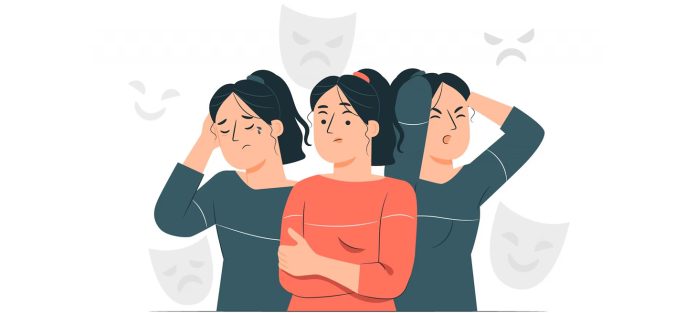
Depression, like the kind Nadia experienced, isn’t as simple as just feeling sad. “We all experience sadness—when we lose someone, are disappointed, or just don’t have things turn out the way we want and expect,” says Dr. Alan J. Gelenberg, professor emeritus of psychiatry at the University of Arizona. But for some, the downs keep coming.
When sadness isn’t tied to a specific disappointment or tragedy, and you’re stuck in a cycle of negative thoughts (e.g., feeling like nobody likes you or like nothing will ever work out for you), depression might be the culprit.
If this sounds like where you’re at, you’re not alone: According to a 2016 nationwide survey, 16.2 million adults in the US suffered at least one major depressive episode in the year before the survey.
“A stressor can trigger negative thoughts or distress, but depression is a sustained feeling of sadness along with a decreased interest in most activities, every day, regardless of the situation,” says Dr. Helen S. Mayberg, professor of psychiatry at Emory University School of Medicine in Atlanta, Georgia.
Here are some of the symptoms that people with depression may experience. Keep in mind that with depression, these will generally be present for two weeks or longer.
- Feelings of hopelessness and discouragement.
- Feeling “empty.”
- Feeling worthless or helpless.
- Withdrawal from friends, family, and activities that you used to enjoy.
- Aches and pains (depression can actually cause physical issues like headaches, digestive problems, loss of appetite, weight loss or gain, and muscle pain).
- Difficulty falling asleep or staying asleep at night.
- Low energy and trouble concentrating.
- Self-harm (e.g., cutting, burning, pulling hair out) or thoughts of suicide. If you’re experiencing this, reach out to your school’s counseling center or peer resources (like an RA). If you can’t bring yourself to tell someone in person, text HOME to 741741 for help.
There’s no shame in depression. Celebrities like Beyoncé, Lady Gaga, Kristin Bell, Kid Cudi, and Michael Phelps have all opened up about their experiences with it in an effort to shed light on a topic many of us are afraid to talk about. Viral social media movements like #WhatYouDontSee have helped bring depression out of the dark even further, encouraging honesty and openness about experiences with depression.
“Depression is a brain disorder, not a weakness of character,” says Dr. Mayberg. “No one should be shy or embarrassed to ask for help.”
The science of depression
Researchers don’t fully understand why some people experience depression and some don’t. Here’s what they do know: It’s a physical disorder—not just something happening in your mind. A cause-and-effect relationship isn’t perfectly clear, according to the Mayo Clinic, but people with depression appear to have physical changes in their brains, including changes in neurotransmitters and hormones.
Psychiatrists will generally diagnose people experiencing depression symptoms into two categories: major depressive disorder or persistent depressive disorder, though that doesn’t necessarily mean all of a person’s symptoms fit into one or the other.
Major depressive disorder (MDD) is severe and disabling. MDD involves some combination of depression symptoms (everyone is different), but most people with MDD will lose interest in the activities they once enjoyed. This type of depression usually comes as an intense episode and lasts a few weeks or months at most. Once it’s over, you’ll generally feel like yourself again.
Persistent depressive disorder (dysthymic disorder) is similar to MDD, but symptoms are less severe (so you may be able to function at school or in social situations). It lasts longer, though, and can affect people for years.
Depression can happen at any time, but college students are particularly likely to experience it, thanks to an onslaught of new stressors, including academic stress and personal changes, says Dr. Lauren Weitzman, director of the University of Utah Counseling Center.
Women are more likely than men to experience depression. There are a few theories as to why; studies show women experience more intense hormonal fluctuations, higher genetic likelihood, and higher stress levels than men do. Read more about the gender gap in depression here.
Underlying medical conditions (e.g., hyperthyroidism, mononucleosis) can cause exhaustion and symptoms that feel like depression. If you’re having symptoms, be sure to get a full medical evaluation to check for these conditions and to rule out any other illnesses.
Those with other disorders, such as attention deficit hyperactivity disorder (ADHD), anxiety, or eating disorders, are more likely to develop depression, as are those with chronic medical conditions (asthma, cancer, diabetes, etc.).

How to help yourself
“If you feel like your typical functioning is being impacted by what might be depression or any other mental health concerns”—e.g., you’re having a hard time concentrating in class or feeling apathetic about things you used to enjoy—”it’s always a good idea to get that checked out,” Dr. Weitzman says.
A lot of colleges have online mental health screenings where you can assess yourself and make an appointment with a university counselor, says Dr. Weitzman. That can be a good place to start.
It’s also important to reach out—whether it’s to a counselor or friends and family—to talk about your symptoms. “One of the things that can happen with depression a lot is a sense of social isolation,” Dr. Weitzman says. “It doesn’t have to be a counselor necessarily, but just sharing, ‘This is how I’m feeling. I’m not sure what’s going on,’ can be helpful.”
What treatment looks like
Treatment for depression usually involves talking to a trained therapist and/or taking medications (e.g., antidepressants). While the approach might vary depending on the type of therapist, “typically there’s an assessment of symptoms,” says Dr. Weitzman, where the therapist will ask you questions to get a pulse on exactly how you’re feeling. “Counselors are going to be listening for whether they think a medication evaluation might be warranted,” Dr. Weitzman explains.
Treatment for depression often involves cognitive behavioral therapy (CBT), which helps you deal with depression by examining your thought patterns and helping you come up with a new way of thinking, Dr. Weitzman says. In treatment for depression, your therapist may:
- Help you recognize negative thinking patterns and how to change them.
- Lead you to understand your emotions and what’s triggering them.
- Help you come up with solutions for problems that are weighing you down.
- Suggest changes to your lifestyle that could improve your mood (physical activity has been shown to help alleviate symptoms of depression).
- Help you feel more confident and hopeful by reassuring you that you can get better.
- Encourage you to keep a journal so you can keep track of your feelings and reactions.
*Name changed
15 ways to overcome depression and sadness: Lifehack
Text, call, or chat helpline: 988Lifeline
Talk to someone now: National Suicide Prevention Lifeline
Call 1-800-273-8255
Article sources
Lauren Weitzman, PhD, director of the University of Utah Counseling Center.
Alan J. Gelenberg, MD, professor emeritus, Department of Psychiatry at the University of Arizona and editor-in-chief of the Journal of Clinical Psychiatry.
Helen S. Mayberg, MD, professor, Department of Psychiatry at Emory University School of Medicine in Atlanta, Georgia.
Ahrnsbrak, R., Bose, J., Hedden, S. L., Lippari, R. N., et al. (September 2017). Key substance use and mental health indicators in the United States: Results from the 2016 national survey on drug use and health. Substance Misuse and Mental Health Services Administration. Retrieved from https://www.samhsa.gov/data/sites/default/files/NSDUH-FFR1-2016/NSDUH-FFR1-2016.htm#mde1
Anxiety and Depression Association of America. (n.d.). Anxiety and depression in children. Retrieved from https://adaa.org/living-with-anxiety/children/anxiety-and-depression
Anxiety and Depression Association of America. (n.d.). Girls and teens. Retrieved from https://adaa.org/find-help-for/women/mental-health-in-young-girls-and-teens
Craft, L., & Perna, F. (2004). The benefits of exercise for the clinically depressed. Primary Care Companion to the Journal of Clinical Psychiatry, 6(3), 104–111. Retrieved from http://www.ncbi.nlm.nih.gov/pmc/articles/PMC474733/
Harvard Health Publications. (2011, May). Women and depression. Retrieved from http://www.health.harvard.edu/womens-health/women-and-depression
Mayo Clinic. (2016). Depression (major depressive disorder). Retrieved from http://www.mayoclinic.org/diseases-conditions/depression/basics/symptoms/con-20032977
Moghaddam, B., & Sturman, D. (2012). Processes reward differently in adolescents versus adults. Proceedings of the National Academy of Sciences, 109(5), 1719–1724. Retrieved from http://www.pnas.org/content/109/5/1719.abstract
National Institute of Mental Health. (2014). Major depression among adolescents. Retrieved from http://www.nimh.nih.gov/health/statistics/prevalence/major-depression-among-adolescents.shtml
CampusWell survey, September 2016.
University of Michigan Depression Center. (2016). Depression in children and adolescents. Retrieved from http://www.depressiontoolkit.org/lifespan/children.asp