Key points
- Systemic racism refers to the inherent racism built into a societal system that negatively impacts Black, Indigenous, and other people of color (BIPOC).
- In the US, healthcare, education, housing, employment, the financial system, and the criminal justice system were all built in a way that negatively impacts people of color.
- Educating oneself, uplifting BIPOC people, community organizing, and getting involved politically are all ways to combat systemic racism.
In 2020, the murder of George Floyd reignited conversations on race and racism, which spread like a wildfire across the country. Since then, overt displays of racism, such as violent hate crimes or harmful stereotypes, are often called out. But these racist acts are rooted in something bigger: systemic racism.
“Systemic racism refers to the ways that the social, political, and economic structures of our society operate to produce, reproduce, and reinforce inequality,” says Dr. Dawn Belkin Martinez, associate dean for Equity and Inclusion and clinical associate professor at Boston University School of Social Work in Massachusetts. Essentially, our society is built around colonialist policies that have long been discriminatory against Black, Indigenous, and other people of color (BIPOC). These racist policies show up everywhere, including healthcare, education, housing, employment, and the criminal justice system, to name a few.

 Knowing that our society is built on systemic racism is one thing; being able to recognize and disrupt it when it happens is another.
Recognizing systemic racism allows us to take steps to respond and begin to repair the damage it has done to people from BIPOC communities and our society as a whole. Here are some examples of how racism has embedded itself into our societal systems.
Redlining is a practice introduced by the Home Owners’ Loan Corporation in the 1930s that prevented Black people from purchasing homes. Predominantly Black neighborhoods were outlined in red on city maps and deemed “hazardous” to lend to, hence the term. By denying them home loans or loaning to them at an extremely high interest rate, it effectively made it impossible to ever pay off the loan.
“Redlining is [one of] the most easily recognizable examples of systemic racism,” says Ben H., a fourth-year student at Michigan Technological University in Houghton. While redlining was officially outlawed in 1968, its detrimental effects are still seen today. Many cities that were once redlined continue to be highly segregated, and Black and Latin American folks are still denied home mortgages at significantly higher rates than whites in cities across the US, according to a 2018 report covered by the Associated Press.
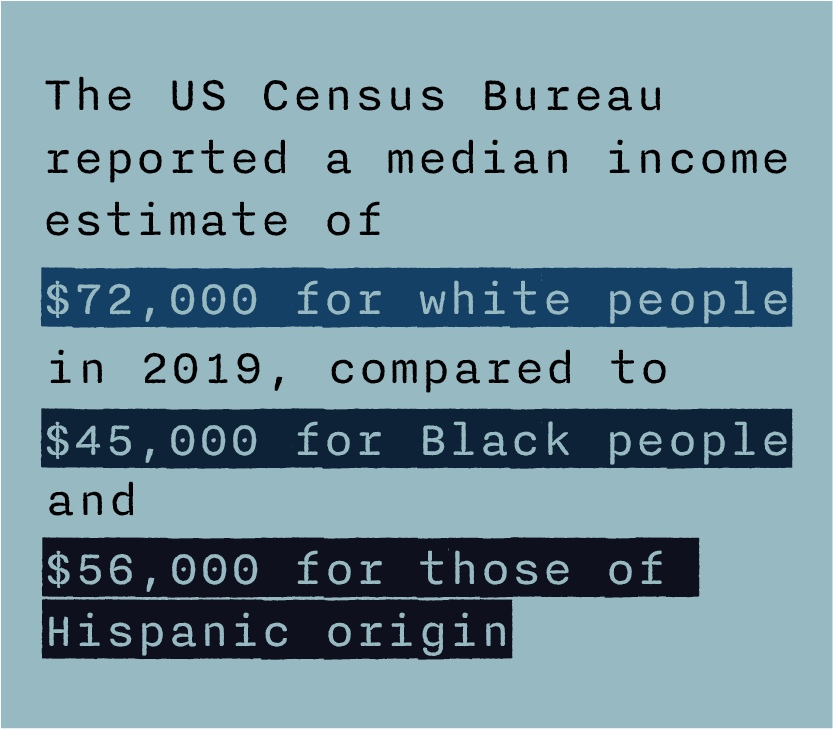
The outcome: It’s harder for Black (and other POC) families to build generational wealth, which is often built through owning a home and passing it on to one’s children. As a result of this and other factors, the average income for people of color is significantly less than that of white people.
The wealthier a community, the more financial support its schools, parks, libraries, and other public resources receive through taxpayer dollars. Redlining allowed those in power to keep wealth in white neighborhoods, leaving POC communities with significantly less funding for these important public resources. In fact, it’s estimated that primarily non-white school districts receive $23 billion less annually than primarily white school districts, according to a 2019 report from EdBuild.
The outcome: Without proper funding, schools can’t maintain their facilities and attract and retain high-quality teachers. Funding disparities in BIPOC communities also result in fewer opportunities and more challenges when it comes to higher education and employment.
Multiple studies have examined the disparity between white people and POC (primarily Black people) when it comes to interacting with law enforcement, police brutality, and sentencing. For example:
- A 2020 study published in Nature Human Behaviour that analyzed nearly 100 million traffic stops over the course of a decade found that Black people are more frequently stopped and searched by police at traffic stops than white people.
- Over a span of 18 years, Black men with federal offenses (such as those related to drug trafficking, firearms, and fraud) were sentenced to prison for 19.1 percent longer than white male offenders with similar offenses, according to a 2017 report from the United States Sentencing Commission.
- Black men charged with felony crimes are 25 percent more likely to be held in jail while awaiting their trial than white people charged with the same crimes.
The outcome: While these are just a few of many statistics representing racial disparities within the criminal justice system, the outcomes are clear: All these interactions with the system negatively impact the lives of Black people (e.g., disruptions to home and family life, economic challenges related to parole). And while the data focused primarily on Black Americans, these studies also identified disparities between white people and people of Hispanic/Latin origin.
The impact of systemic racism often influences both health and access to health care.
- Across all income levels, BIPOC are less likely to have health insurance when compared to white people, according to a 2021 study published in the International Journal for Equity and Health.
- A 2015 review of 15 research studies published in the American Journal of Public Health found that the majority of healthcare providers included in the research exhibited implicit racial/ethnic bias against Black, Hispanic/Latinx, and other POC which significantly affected how they interacted with patients, patients’ health outcomes, and even treatment decisions.
- A 2019 report from the Centers for Disease Control and Prevention (CDC) found that Black and Indigenous people are two to three times more likely to die from pregnancy-related causes than white people. This is notable because the majority of pregnancy-related deaths are preventable.
- The CDC also released a 2022 report that BIPOC people are more likely than white people to contract, be hospitalized by, and die from COVID-19.
The outcome: Families and individuals who cannot use medical support or who do not trust medical professionals due to historical cruelties (look up the Tuskegee Syphilis Study as an example) are more likely to be saddled with financial challenges and fewer opportunities (e.g., being unable to work or go to school due to illness). The obstacles for Black and other POC to access healthcare results in higher mortality rates among these communities, such as Black adults in rural areas being two to three times more likely to die from heart disease, diabetes, and strokes, according to a 2021 study published in the Journal of the American College of Cardiology.
 Recognizing all the ways society is built on racism can make people feel helpless. “There have been moments when I couldn’t complete my school tasks because I was emotionally overwhelmed by social injustices,” says a fifth-year undergraduate at the University of Maryland Baltimore County.
These feelings are understandable, but it’s important to keep striving for change. Here are some ideas, big and small, on how you can fight against systemic racism.
Educate yourself and others
“I think the single most important thing to do is to educate yourself as much as possible [on systemic racism],” says David Utter, lawyer and co-founder of the Fair Fight Initiative. “Remember that we are so lucky to be able to attend school and use that education to support communities that are marginalized in this country.”
Just be sure to stay aware of how you’re educating yourself—don’t rely on your BIPOC friends to bring you up to speed, as this can stir up bad feelings and even trauma. Remember that allyship is about alleviating burden, not adding to it.
Attending classes about racism, consuming media that openly challenges it, reflecting on your own attitudes toward racism and privilege, and having intentional conversations with others are all ways to push back against the way society is built.
Join community organizations
There are many organizations you can donate to or volunteer with that are working to dismantle racism within society. “Only through collective organizing and building the movement do we get any change at all,” says Dr. Belkin Martinez.
Identify organizations that empower communities of color and elevate their voices, such as Fair Fight Initiative, which crowdfunds for lawyers and programs working to combat systemic racism. Other organizations might support food resources, job training, mental health, or nearly anything else that helps someone succeed. Here are a few to look into:
Support BIPOC businesses
Systemic racism makes it difficult for BIPOC individuals to succeed, so supporting BIPOC-owned businesses in your community can make a huge difference. Look online to find BIPOC businesses and shop there when you can. If you’re strapped for cash, promote their business on your social media instead, and make sure to follow, like, and comment on theirs. Ensuring that BIPOC-run businesses and organizations continue to succeed disrupts the racist narrative and challenges the systems that hold marginalized people back.
Get involved politically
In order to undo systemic racism, we need policy and change. Consider running for student government to advocate for inclusive policies, or register your peers to vote in local, state, and national elections. Look for internships and jobs that will allow you to engage with legislation. You can also run for office in your local community!
No matter how you decide to fight against systemic racism, remember that you can’t do it alone. When it’s spread this deep and this wide, it will take more than any one person or small group can accomplish. “Fighting systemic racism is hard work,” says Dr. Belkin Martinez, “and having a group of comrades you can get support from really helps sustain people to keep doing the work.”
Interactive map on historical redlining: University of Richmond
Support campaigns against racial injustice: Color of Change
The myth of reverse racism: Alberta Civil Liberties Research Center
15 Black-owned small business directories: US Chamber of Commerce
Article sources
Dawn Belkin Martinez, PhD, associate dean for equity and inclusion, clinical associate professor, Boston University School of Social Work, Massachusetts.
David J. Utter, Esq., co-founder of Fair Fight Initiative, Savannah, Georgia.
Aggarwal, R., Chiu, N., Locco, E. C., Kazi, D. S., et al. (2021). Rural-urban disparities: Diabetes, hypertension, heart disease, and stroke mortality among Black and White adults, 1999–2018. Journal of the American College of Cardiology, 77(11), 1480–1481. https://www.jacc.org/doi/10.1016/j.jacc.2021.01.032
Bailey, Z. D., Feldman, J. M., & Bassett, M. T. (2021). How structural racism works—racist policies as a root cause of U.S. racial health inequalities. New England Journal of Medicine, 384, 768–773. https://doi.org/10.1056/NEJMms2025396
Bailey, Z. D., Krieger, N., Agenor, M., Graves, J., et al. (2017). Structural racism and health inequities in the USA: Evidence and interventions. America: Equity and Equality in Health, 389(10077), 1453–1463. https://doi.org/10.1016/S0140-6736(17)30569-X
Balko, R. (2020, June 10). There’s overwhelming evidence that the criminal justice system is racist. Here’s the proof. The Washington Post. https://www.washingtonpost.com/graphics/2020/opinions/systemic-racism-police-evidence-criminal-justice-system/
Best, R., & Mejía, E. (2022, February 9). The lasting legacy of redlining. FiveThirtyEight. https://projects.fivethirtyeight.com/redlining/
Board of Governors of the Federal Reserve System. (2020). Disparities in wealth by race and ethnicity in the 2019 survey of consumer finances, accessible data. https://www.federalreserve.gov/econres/notes/feds-notes/disparities-in-wealth-by-race-and-ethnicity-in-the-2019-survey-of-consumer-finances-accessible-20200928.htm
Braveman, P. A., Arkin, E., Proctor, D., Kauh, T., et al. (2022). Systemic and structural racism: Definitions, examples, health damages, and approaches to dismantling. Health Affairs, 41(2). https://doi.org/10.1377/hlthaff.2021.01394
Bridges, K. M. (2020, June 11). The many ways institutional racism kills black people. TIME USA. https://time.com/5851864/institutional-racism-america/
Hall, W. J., Chapman, M. V., Lee, K. M., & Merino, Y. M. (2015). Implicit racial/ethnic bias among health care professionals and its influence on health care outcomes: a systematic review. American Journal of Public Health, 105(12), e60-e76. https://www.ncbi.nlm.nih.gov/pmc/articles/PMC4638275/
Loveless, T. (2017). How well are American students learning?. The Brown Center Report on American Education, 3(6). https://www.brookings.edu/wp-content/uploads/2017/03/2017-brown-center-report-on-american-education.pdf
Calgary Anti-Racism Education. (n.d.). The myth of reverse racism. Alberta Civil Liberties Research Center. https://www.aclrc.com/myth-of-reverse-racism
CampusWell surveys, June 2022 and February 2017.
Centers for Disease Control and Prevention. (2019, September 5). Racial and ethnic disparities continue in pregnancy-related deaths [Press release]. https://www.cdc.gov/media/releases/2019/p0905-racial-ethnic-disparities-pregnancy-deaths.html
Centers for Disease Control and Prevention. (2022). Risk for COVID-19 infection, hospitalization, and death by race/ethnicity. https://www.cdc.gov/coronavirus/2019-ncov/covid-data/investigations-discovery/hospitalization-death-by-race-ethnicity.html
Centers for Disease Control and Prevention. (2022). Pregnancy mortality surveillance system. https://www.cdc.gov/reproductivehealth/maternal-mortality/pregnancy-mortality-surveillance-system.htm
Davis, J., Penha, J., Mbowe, O., & Taira, D. A. (2017). Prevalence of single and multiple leading causes of death by race/ethnicity among people aged 60 to 70 years. Preventing Chronic Disease, 14. http://dx.doi.org/10.5888/pcd14.160241
Deggans, E. (2020, August 25). “Not racist” is not enough: Putting in the work to be anti-racist. NPR. https://www.npr.org/2020/08/24/905515398/not-racist-is-not-enough-putting-in-the-work-to-be-anti-racist
Dobbie, W., Goldin, J., & Yang, C. S. (2018). The effects of pretrial detention on conviction, future crime, and employment: Evidence from randomly assigned judges. American Economic Review, 108(2), 201–240. https://doi.org/10.1257/aer.20161503
EdBuild. (2019). $23 billion. https://edbuild.org/content/23-billion/full-report.pdf
Flournoy, E. B. (2021). The rising of systemic racism and redlining in the United States of America. Journal of Social Change, 13(1), 48–54. https://scholarworks.waldenu.edu/cgi/viewcontent.cgi?article=1316&context=jsc
Glantz, A., & Martinez, E. (2018, February 17). Modern-day redlining: How banks block people of color from homeownership. Chicago Tribune, Associated Press. https://www.chicagotribune.com/business/ct-biz-modern-day-redlining-20180215-story.html
Horowitz, J. & Utada, C. (2018, December 6). Community supervision marked by racial and gender disparities. PEW. https://www.pewtrusts.org/en/research-and-analysis/articles/2018/12/06/community-supervision-marked-by-racial-and-gender-disparities
Jackson, C. (2021, August 17). What is redlining?. The New York Times. https://www.nytimes.com/2021/08/17/realestate/what-is-redlining.html
Lee, D. C., Liang, H., & Shi, L. (2021). The convergence of racial and income disparities in health insurance coverage in the United States. International Journal for Equity in Health, 20, 96. https://doi.org/10.1186/s12939-021-01436-z
Lombardo, C. (2019, February 26). Why white school districts have so much more money. NPR. https://www.npr.org/2019/02/26/696794821/why-white-school-districts-have-so-much-more-money
Melillo, G. (2020, June 13). Racial disparities persist in maternal morbidity, mortality and infant health. American Journal of Managed Care. https://www.ajmc.com/view/racial-disparities-persist-in-maternal-morbidity-mortality-and-infant-health
Murphy, S. L., Kochanek, K. D., Xu, J., & Arias, E. (2021). Mortality in the United States, 2020. Centers for Disease Control and Prevention. https://www.cdc.gov/nchs/products/databriefs/db427.htm
Pierson, E., Simoiu, C., Corbett-Davies, S., Jenson, D., et al. (2020). A large-scale analysis of racial disparities in police stops across the United States. Nature Human Behaviour, 4, 736–745. https://doi.org/10.1038/s41562-020-0858-1
Priest, N., & Williams, D. R. (2021). Structural racism: A call to action for health and health disparities research. Ethnicity & Disease, 31(Suppl 1), 285–288. https://doi.org/10.18865/ed.31.S1.285
Rothstein, R. (2020, January 20). The neighborhoods we will not share. The New York Times. https://www.nytimes.com/2020/01/20/opinion/fair-housing-act-trump.html
Russell, T. (2021, January 13). Mortality rate for black babies is cut dramatically when black doctors care for them after birth, researchers say. The Washington Post. https://www.washingtonpost.com/health/black-baby-death-rate-cut-by-black-doctors/2021/01/08/e9f0f850-238a-11eb-952e-0c475972cfc0_story.html
Sawyer, W. (2019, October 9). How race impacts who is detained pretrial. Prison Policy Initiative. https://www.prisonpolicy.org/blog/2019/10/09/pretrial_race/
Schmitt, G. R., Reedt, L., & Blackwell, K. (2017). Demographic differences in sentencing: An update to the 2012 Booker Report. United States Sentencing Commission. https://www.ussc.gov/sites/default/files/pdf/research-and-publications/research-publications/2017/20171114_Demographics.pdf
The Sentencing Project. (2018). Report to the United Nations on racial disparities in the U.S. criminal justice system. https://www.sentencingproject.org/publications/un-report-on-racial-disparities/
Semega, J., Kollar, M., Shrider, E. A., & Creamer, J. (2020). Income summary measures by selected characteristics: 2018 and 2019. United States Census Bureau. https://www.census.gov/data/tables/2020/demo/income-poverty/p60-270.html
University of Richmond. (n.d.). Mapping inequality: Redlining in New Deal America. https://dsl.richmond.edu/panorama/redlining/#loc=6/39.114/-83.628
Wright, J.E., II, & Merritt, C. C. (2020). Social equity and COVID-19: The case of African Americans. Public Administration Review, 80(5), 820–826. https://doi.org/10.1111/puar.13251
Yearby, R., Clark, B., & Figueroa, J. F. (2022). Structural racism in historical and modern US health care policy. Health Affairs, 41(2). https://doi.org/10.1377/hlthaff.2021.01466