Rate this article and enter to win
—Grace C., third-year student, The College of New Jersey, Ewing
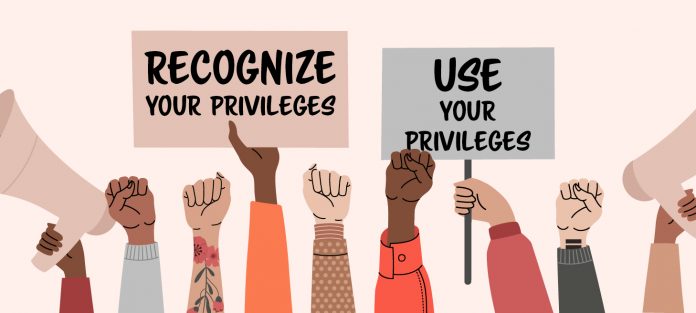
Every day, students who are marginalized on the basis of race, gender, sexuality, disability, and socioeconomic status overcome the burden of oppression to thrive. As a student who is not marginalized, you can help relieve this burden by recognizing your privileges and using them to support your peers.

It is important that you understand what it means to have a majority voice at your institution—this is one of your privileges. Privilege also comes with biases that inform how you see yourself and others in society. Recognize your privileges by reflecting often on what it means to occupy space with the socioeconomic status as well as the racial, gender, and sexual identities that make you, you. Hold yourself accountable for challenging stereotypes about people from minority groups, and refer to enriching texts to guide your thinking (see below for recommendations).

Recognizing your privilege is only the first step. It is equally important to align your actions with your beliefs. Be an ally to your marginalized peers by committing to a lifelong journey of advocating for those who are marginalized. Participate in and share campus activism opportunities with your networks. Align yourself with minority-focused campus organizations such as the Black Students Association and ask for ways that you can show support. For example, you can show support by co-writing a letter of concern to people in positions of power at your university, such as administrators or the college dean.
To help you understand the weight of race and racism in the US, I recommend the following books:
- The Body Is Not an Apology: The Power of Radical Self-Love by Sonya Renee Taylor
- Pushout: The Criminalization of Black Girls in Schools by Monique W. Morris
- Borderlands/La Frontera: The New Mestiza by Gloria Anzaldúa
- How to be an Antiracist by Ibram X. Kendi