Key points
- Addiction and substance misuse are common and affect many people.
- Recovery is possible, especially with the support of peers, family, support groups, and mental health professionals.
- Finding meaning in life, fostering human connection, and giving back to society can aid in recovery.
Content warning: This piece discusses substance use, addiction, and drug overdose.
Substance misuse and addiction can happen to anyone, at any time, and at any age. In a recent CampusWell survey of more than 1,000 students, about 9 percent said that they have dealt with substance misuse or addiction at some point in their lives. Of that number, 63 percent say they are in recovery or are actively trying not to use.
The road to recovery is not often easy—or linear. “It is not uncommon, once a person decides it’s time to stop the destruction caused by substance misuse, to have a slip or relapse,” says Jennifer Sartin, an addiction therapist in Keller, Texas. Setbacks and feelings of doubt or hopelessness are all a normal part of the process.
“A successful recovery process typically begins with acknowledgement, where individuals recognize their substance misuse issue and accept the need for change,” adds Darrell Reynolds, a drug and alcohol counselor and addiction specialist in Flowery Branch, Georgia. “Treatment is a crucial step, often involving therapy, counseling, or medical interventions,” he says. “Equally important is the establishment of a robust support system, which can include friends, family, support groups, and therapists.”
Here, Isabelle, a second-year student in Kentucky, shares her story of opioid addiction and recovery.
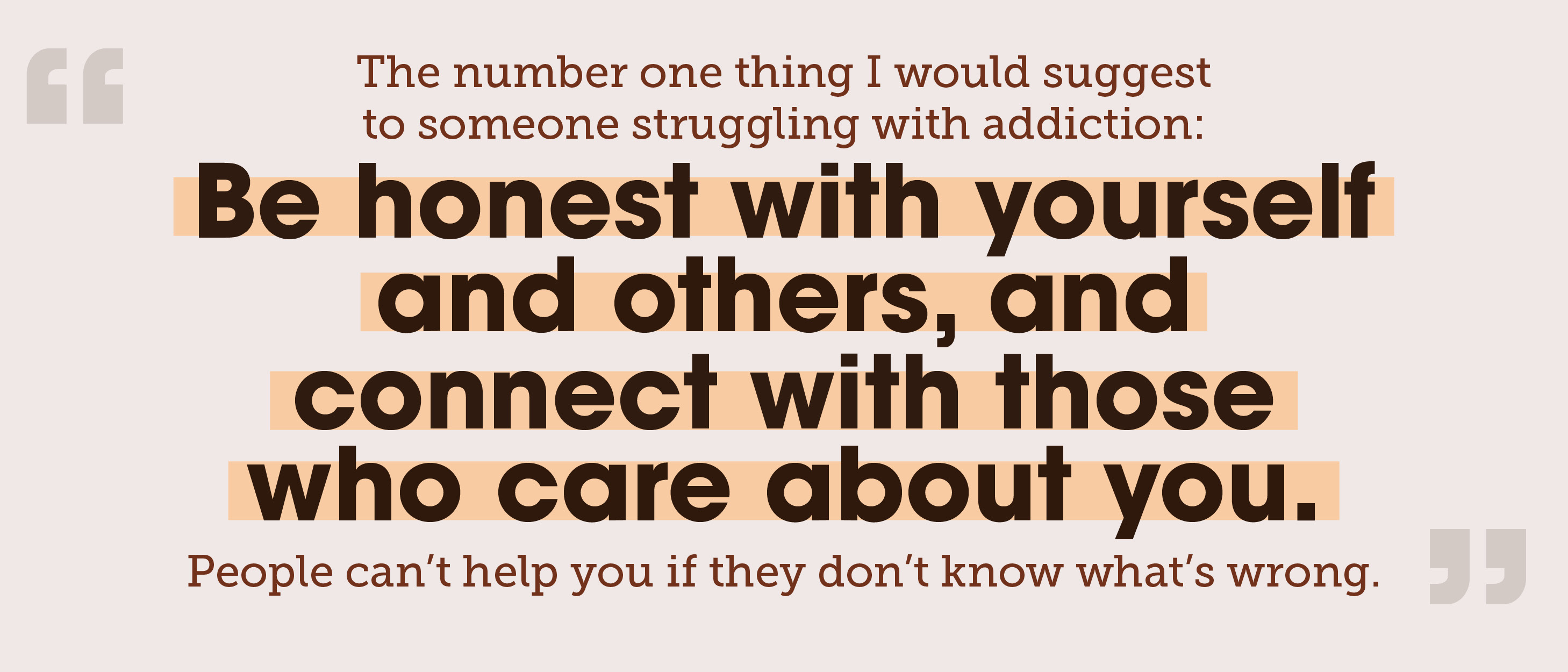
Human connection is integral in recovery
Isabelle’s story sheds light on the importance of being connected to a social support system—in her case, her therapist, support group, friends, and family.
“Students who are struggling with substance misuse simply cannot be expected to intuitively know how to begin recovery,” says Sartin. “Many are not convinced that there is an actual problem; they believe they just need to try harder or use more willpower. I have many clients where I simply act as a guide and an objective person to help point out certain things that we are unable to see in ourselves.”
According to a 2021 study published in Frontiers in Psychology, long-term recovery is more likely to be successful when an individual has certain things in place, specifically:
- A connected social life (e.g., close friends and family who support and accept them)
- Active participation in society (e.g., through work and societal obligations)
These factors are part of what’s called “recovery capital,” a term coined by addiction researchers. Recovery capital encompasses someone’s personal, social, and community resources that influence their recovery journey—both positively and negatively. For example, when an addict is ostracized by society for their addiction through things like arrest, incarceration, and the inability to find employment, these are negative influences on their recovery capital. However, when an addict has the support of friends or family and is able to find and maintain work and social responsibility, these are positive influences on their recovery capital, and therefore make recovery more likely.
“Reintegrating into society after dealing with serious addiction issues is a vital step for individuals in recovery,” says Reynolds. “It’s advisable to take a gradual approach, easing back into obligations while allowing time for adjustment.” To make the reintegration process easier, lean on your support system. Sponsors, or peers who have dealt with addiction and are now successful in their sobriety, will be especially helpful here.
“I have been in recovery for almost 20 years and I still reach out to my mentor because I have learned that I am simply not equipped to diagnose myself and my actions in an objective manner—and that’s OK!” says Sartin. “The worst thing I can do is isolate myself. Just because I am an addiction therapist does not mean I have the answers for myself. There is a humility in that, and it honestly feels good.”
Finding a support group
Reynolds and Sartin recommend that students who are grappling with substance misuse seek out the following to support their recovery process:
- 12-step programs, such as:
- Alcoholics Anonymous (AA)
- Narcotics Anonymous (NA)
- Young People in Alcoholics Anonymous (YPAA)
- Celebrate Recovery (a faith-based support group)
- SMART Recovery (a group that is less focused on a higher power and more focused on cognitive behavioral processes)
- University counseling services
- Therapists or counselors who specialize in substance misuse and recovery
- Peers who share similar experiences, with whom you can be open and honest
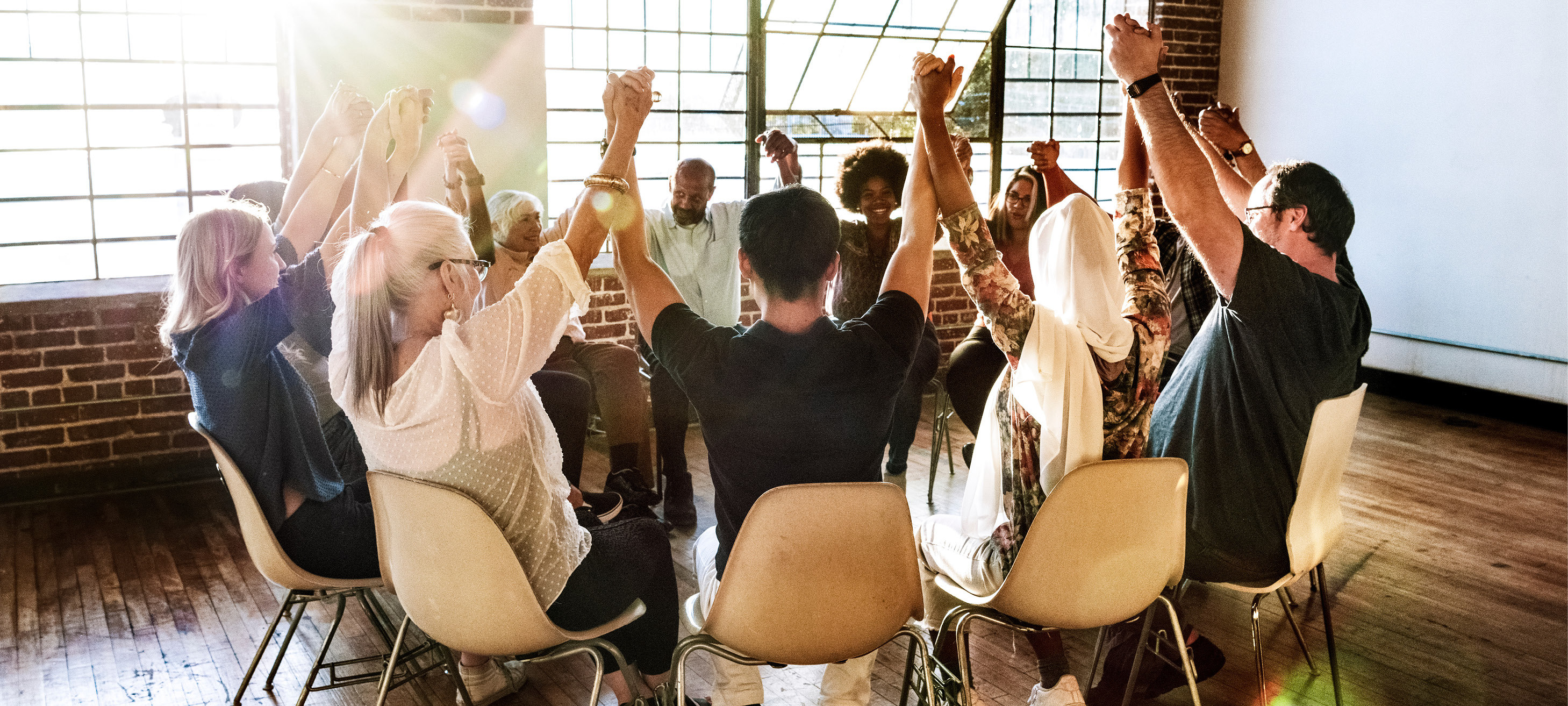
Support groups provide hope, meaning, and positive identity
Research shows that when people in recovery are connected with a group of peers having a similar experience (such as members of Isabelle’s NA group), it helps generate a sense of hope that recovery is achievable. Support groups can also motivate those individuals to complete meaningful activities, such as becoming a sponsor for others in recovery, which in turn provides a sense of empowerment and positive identity—key factors in maintaining sobriety. Groups like Alcoholics and Narcotics Anonymous, as well as sober-living houses, are based around this idea.
“As difficult as it may feel to return to your support system after a slip [or relapse], one extremely valuable benefit of being a member of a group of people who truly care about your well-being is that most of us have been there and you will feel compassion and empathy that is simply [incredible] and may be missing at home,” says Sartin.
Adopting lifestyle changes to support your recovery
Another important key in maintaining sobriety lies in adopting new lifestyle habits that support your recovery, rather than going back to the situations (and people) that might trigger your addiction. “Lifestyle changes, such as adopting healthier habits, coping mechanisms, and stress management techniques, play a pivotal role,” says Reynolds. Finding new interests and passions that provide life with meaning and direction will also be beneficial, he adds.
“Do not be afraid to ask for help, and don’t beat yourself up too hard either. This is a more difficult battle than anybody could ever understand if they haven’t [been through] it. It is not linear. There are going to be bad days, and sometimes that means reusing or relapse. You’re no less worthy of recovery and a happy life, no matter how many setbacks or slipups you experience. Don’t give up. I was so beyond hopeless for so long, and now I still have my bad days and a slip here and there, but life is finally starting to look like it gets better. If I can get there, so can you.”
—Recent graduate, Texas A&M University, Corpus Christi
“Do internal shadow work, get therapy, talk about it with a friend, and have an accountability buddy. Be kind to yourself.”
—Fourth-year student, Marshall University, Huntington, West Virginia
“It’s a mental game; addiction tells you to constantly go back to it because you ‘need it,’ but the truth is that you don’t need it and you have to push through the urges and cravings. If you tell yourself you are strong enough to beat this, then you are. And just because you may relapse does not mean recovery is not in your future. You’ve just got to get back up and keep trying. That’s all you can do.”
—First-year student, University of Wyoming, Laramie
“Remember that your addiction does not define you. I always thought, ‘I’ve already done this to myself, why stop now?’ but you can heal and be so much more. Remember there are people who love you and care for you. There are always resources available.”
—Second-year student, Saint Louis University, Missouri
“Find a program. [Take it] one day, even one minute at a time. Change your people, places, and things. You can do this! Slipups happen, but get back on the horse.”
—Second-year student, Grand Rapids Community College, Michigan
“Share your story because it will be the best relief ever and [you will] no longer [be] carrying the weighted baggage that you have hidden in the dark.”
—Fourth-year student, San Bernardino Valley College, California

Recovery resources
If you think you might need help with substance misuse, check out these recovery resources to find support in your area:
Narcotics Anonymous: Find a meeting
Substance misuse help and treatment referrals: SAMHSA
Drug and alcohol addiction hotlines: American Addiction Centers
Article sources
Darrell Reynolds, MA, CMAC, CAMSII, drug and alcohol counselor, Addiction Counselor USA, Flowery Branch, Georgia.
Jennifer Sartin, MS, LCDC, addiction counselor, Alcohol and Addiction Support, Keller, Texas.
Best, D., Sondhi, A., Brown, L., Nisic, M., et al. (2021). The strengths and barriers recovery scale (SABRS): Relationships matter in building strengths and overcoming barriers. Frontiers in Psychology, 12, 663447. https://www.ncbi.nlm.nih.gov/pmc/articles/PMC8033166/
Ingram, I., Kelly, P. J., Deane, F. P., Baker, A. L., et al (2020). Loneliness among people with substance use problems: A narrative systematic review. Drug and Alcohol Review, 39(5), 447–483. https://onlinelibrary.wiley.com/doi/abs/10.1111/dar.13064
Substance Abuse and Mental Health Services Administration. (2023). Recovery from substance use and mental health problems among adults in the United States. https://store.samhsa.gov/sites/default/files/pep23-10-00-001.pdf
Substance Abuse and Mental Health Services Administration. (2023, September 20). SAMHSA releases new data on recovery from substance use and mental health problems among adults in the United States [Press release]. https://www.samhsa.gov/newsroom/press-announcements/20230920/new-data-recovery-from-substance-use-mental-health-problems-among-adults-in-united-states