Key points
- Drinking alcohol can mess with your brain chemicals and your mood, making you feel down or anxious the next day.
- The “comedown” after drinking too much can be even worse for those with existing anxiety or mental health issues.
- For those who choose to drink, there are strategies to minimize the likelihood of experiencing hangovers.
If you’ve ever been hungover, you know it feels rough. But aside from the physical miseries—the pounding headache, queasy stomach, and unshakable tiredness—some people experience emotional symptoms, too, such as an uptick in anxiety or a looming sense of dread. This phenomenon has been coined “hangziety” (aka hangover anxiety), and it’s very unpleasant.
In a recent CampusWell survey, students described what hangziety feels like:
 A number of scientific studies have validated these symptoms—feelings of anxiety, low mood, and depression are common with hangovers. In one Dutch study published in the Journal of Clinical Medicine, 30 percent of young adults who had hangovers during the study period said they experienced feelings of depression with their hangover, and 20 percent experienced anxiety.
“Alcohol hangover refers to the combination of negative mental and physical symptoms experienced after a single episode of alcohol consumption [as the person’s] blood alcohol concentration approaches zero,” says Andy Kim, a substance use researcher and PhD candidate in the Clinical Psychology program at Dalhousie University in Halifax, Nova Scotia, Canada. “This definition is important because it means that hangovers can be experienced at any amount of alcohol consumption.”
Additionally, research shows that some people are more sensitive to hangovers than others. These “hangover sensitive” individuals are more likely to experience hangover symptoms, including anxiety, even after consuming small amounts of alcohol, according to a 2019 study of more than 5,000 university students in the UK and Netherlands.
What is it about drinking that causes anxiety?
More research is needed, but study findings suggest that there may be a link between a person’s overall mental and emotional state and their experience of hangovers. In other words, those who are more anxious or depressed may experience worse hangovers, and they may also feel more anxious or down while hungover.
There are biochemical explanations behind hangziety, too. Alcohol is a nervous system depressant. Those relaxed, pleasurable feelings you might get after your first drink or two are the result of a dopamine release in your brain. But as the alcohol starts to wear off, your brain begins to experience a mini withdrawal, which can make you feel anxious. For those who drink heavily on a regular basis, this is even more pronounced—their nervous system gets so used to the suppressing effect of the alcohol that their body then goes into fight-or-flight mode when the alcohol level drops—a more severe form of alcohol withdrawal.
If you struggle with anxiety on a regular basis, drinking might feel like a momentary relief—but as the feeling of being tipsy or drunk wears off, there’s evidence that the “bounce back” can leave you feeling much worse, according to Kim.
“I felt immobilized in my bed for a while the next day, not wanting to get out of bed to talk to people or think about what I did while intoxicated the night before.”
—Fourth-year student, Northwest Missouri State University, Maryville, Missouri
“[I felt] like I was going to be sick and hoped I wouldn’t be around other people.”
—Fourth-year student, University of California San Diego, La Jolla, California
“[Being hungover] makes me worry and wonder what poor decisions I made. I also immediately check my bank account to see how much money I wasted.”
—Fourth-year student, University of Washington, Seattle, Washington
“You wake up the next morning and are filled with dread that you did something embarrassing or wrong while you were drunk.”
—First-year graduate student, Northern Illinois University, DeKalb, Illinois

Dehydration 
Alcohol has a diuretic effect (meaning it makes you go to the bathroom more often). This often leads to dehydration, which can cause headaches and tiredness.
 Poor sleep
When someone falls asleep after a night of drinking, they’re getting lower-quality rest that can leave them feeling tired and groggy the next day. That’s because the human body spends less time in the restorative REM stage of sleep when it’s busy processing alcohol.
 Low blood sugar
Our liver may stop releasing glucose when it needs to process alcohol, and that can cause blood sugar levels to drop. This can leave some people feeling shaky and irritable during a hangover.
 Stomach problems
Your stomach produces more acid when you’re drinking, which can mess with your digestion the next day. Some people experience diarrhea or constipation as a result.
 Brain chemistry imbalance
Drinking temporarily increases our brain’s levels of feel-good dopamine and serotonin, but as the effects wear off, your brain could experience a “mini withdrawal.” This chemical comedown makes some people feel more restless and anxious than they felt before drinking.
 Social stress
Remembering how you behaved or what you might have said while drunk can make you worried about repercussions within your relationship, family, or friend group.
What to do about hangziety
Obviously, you can avoid hangover anxiety by choosing not to consume alcohol. If you’ve been drinking heavily or you’re concerned about how alcohol is affecting your life, you might consider trying out sobriety (short or long term). Being “sober curious” is gaining popularity for good reason: As normalized as drinking is, lots of people are negatively affected by it. You could also try cutting back if you’re not ready to quit altogether.
“Drinking less might not get rid of hangovers, but it can help hangovers not be so severe,” says Kim. “A rough estimate of heavy drinking is defined as consuming five or more drinks for [those assigned male at birth] and four or more drinks for [those assigned female at birth] during a two-hour period.”
If you do choose to drink, there are a few ways to manage your alcohol intake to minimize the impact it has on your body.
How to reduce the impact of hangovers 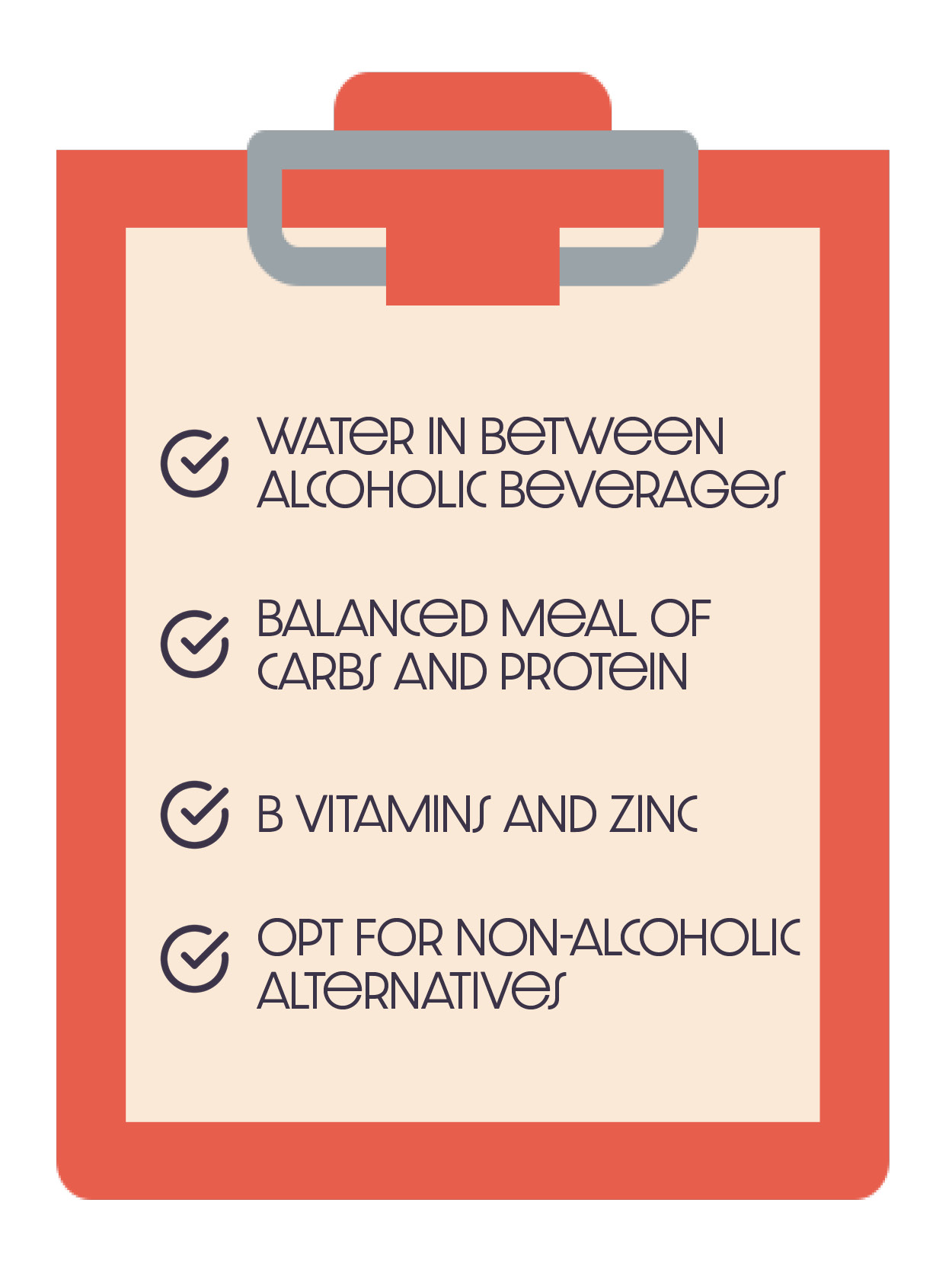
- Drink a glass of water in between alcoholic beverages. This doesn’t have to be boring: Try infusing some water with cucumbers, herbs, or fruit, or add some juice and make a mocktail.
- Eat a balanced meal of carbs and protein before drinking. We know that drinking can lower your blood sugar levels, so it’s wise to make sure you’re well-fed first. The day after drinking, a carb and protein meal (like eggs and toast, a nut butter sandwich, or a slice of pizza) can help replenish energy levels.
- Get B vitamins and zinc in your diet before you drink. A 2019 study of 23 social drinkers found that those who had consumed foods rich in B vitamins and zinc within the 24 hours before drinking suffered less severe hangovers. While this isn’t a hangover solution and more research is needed, it wouldn’t be a bad idea to get those vitamins and nutrients in before you start drinking. (Chicken, grass-fed beef, lamb, yogurt, and spinach contain both.)
- Opt for non-alcoholic alternatives of your go-to beverages. Non-alcoholic beer is becoming more available at bars and restaurants, as are non-alcoholic liquors. This way, you can still enjoy the social aspect of a night out with friends, without all the next-day effects.
If you do find yourself experiencing major anxiety, you can seek help and learn how to manage anxiety and panic attacks.
When to get help
If you’re struggling to manage your drinking, try speaking to a mental health professional who can help you determine whether you are using alcohol to cope. Addressing any existing mental health issues or working through trauma might help you reframe your relationship with alcohol—whether you decide to cut it out altogether or turn to healthier consumption habits.
How a night of drinking can tank your mood: New York Times
Alcohol and anxiety: DrinkAware
Article sources
Andy Kim, alcohol and substance researcher, PhD candidate in the Clinical Psychology program at Dalhousie University, Halifax, Nova Scotia, Canada.
CampusWell survey, May 2023.
Di Chiara, G. (1997). Alcohol and dopamine. Alcohol Health and Research World, 21(2), 108–114. https://pubmed.ncbi.nlm.nih.gov/15704345/
Fleming, A. (2019). “Hangxiety”: Why alcohol gives you a hangover and anxiety. The Guardian. https://www.theguardian.com/lifeandstyle/2019/jan/27/hangxiety-why-alcohol-gives-you-a-hangover-and-anxiety
Kim, A. J., Sherry, S. B., Nealis, L. J., Mushquash, A., et al. (2022). Do symptoms of depression and anxiety contribute to heavy episodic drinking? A three-wave longitudinal study of adult community members. Addictive Behaviors, 130, 107295. https://doi.org/10.1016/j.addbeh.2022.107295
Kim, A. J., Sherry, S. B., Shannon, T., Kehayes, I., et al. (2021). A matter of perspective: The convergent and incremental validity of informant‐reported drinking motives. Drug and Alcohol Review, 41(3), 588–593. https://doi.org/10.1111/dar.13381
Milton, I. J., Sillence, E., & Mitchell, M. (2020). Exploring the emotional experiences of alcohol hangover syndrome in healthy UK-based adults. Drugs: Education, Prevention & Policy, 27(3), 248–260. https://doi.org/10.1080/09687637.2019.1654431
Tellez-Monnery, K., Berghoff, C. R., & McDermott, M. J. (2023). Investigating the effects of emotion dysregulation and repetitive negative thinking on alcohol hangover anxiety and depression. Addictive Behaviors, 140, 107619–107619. https://doi.org/10.1016/j.addbeh.2023.107619
U.S. Department of Health and Human Services. (2021, March). Hangovers. National Institute on Alcohol Abuse and Alcoholism. https://www.niaaa.nih.gov/publications/brochures-and-fact-sheets/hangovers
Verster, J. C., Vermeulen, S. A., Balikji, S., Van de Loo, A. J. A., et al. (2019). Dietary nutrient intake, alcohol metabolism, and hangover severity. Journal of Clinical Medicine, 8(9), 1316. https://doi.org/10.3390/jcm8091316
Van Lawick van Pabst, A. E., Devenney, L. E., & Verster, J. C. (2019). Sex differences in the presence and severity of alcohol hangover symptoms. Journal of Clinical Medicine, 8(6), 867. https://doi.org/10.3390/jcm8060867