Key points
- Research suggests that people who consider themselves spiritual have better overall well-being.
- Nourishing your spirituality can include religious practices, but it doesn’t have to.
- There are easy and practical ways to be more spiritual, and reap the benefits, every day.
What do hiking, meditation, painting, praying, and volunteering have in common? Depending on how you approach them, each one could be a key part of your spiritual practice. In a recent CampusWell survey, over half of student respondents said they consider themselves to be spiritual. If you don’t consider yourself spiritual, think about this: In the past month, have you enjoyed nature, done some form of art, exercised, or volunteered? Any of these can be approached in a spiritual way, which has proven benefits for your health and well-being.
“[Spirituality is] a word that can be defined in multiple ways,” says Greg M. Epstein, humanist chaplain at Harvard University and the Massachusetts Institute of Technology in Boston. It can mean “having an active and reflective inner life, cultivating awe and gratitude, pursuing meaning and purpose, taking time to appreciate beauty, and working for justice and equity,” he says. While many people who believe in those values may not consider themselves spiritual—Epstein himself is an atheist—he posits that “affirming the value of the human spirit (one’s own and that of all people) is extremely important for overall well-being.”
Spirituality helps us cope with the uncertainties of our world
Research confirms that spiritual wellness is a vital part of personal growth, mental health, and well-being. A 2022 review of research published in The Journal of the American Medical Association showed that spirituality played a key role in serious illness management and also in overall health. Even so, you may find yourself neglecting spiritual wellness, not realizing how closely tied it is to mental and physical health. Or maybe you’re under the impression that spirituality is only tied to religion. But tapping into spirituality is a uniquely personal experience that is accessible to everyone—no matter your beliefs.

“The world around us can be really hard to live in.” says Epstein. “Health is uncertain. Relationships are complicated. Politics and culture often leave us wishing people could learn to treat one another better. Modern society can be so lonely and isolating, especially with all the tech we’re immersed in. There’s far too much racism, sexism, and oppression of all sorts. What some call spirituality—and others would just call living with deep intention, purpose, and care—can be a kind of antidote for the negative impacts of all these problems and more. Because when our external circumstances get tough, we may or may not be able to change them, but we can always work on changing our own inner, subjective experience.”
9 ways to enhance your spiritual wellness
By now you’re probably thinking, ‘All this sounds great, but how do I actually put it into practice?’ Below, we’ll explore the benefits of embracing your spiritual side and offer some down-to-earth tips for connecting with your own spirituality, whether you consider yourself religious or not.

Spirituality means something different to everyone. Cultivating your spirituality boils down to exploring your own beliefs and values to pursue what brings you a sense of peace, which is just one of the benefits of spirituality.
“Spirituality can be found within traditional religious frameworks or in nontraditional forms—for example, finding sacredness in nature,” says Dr. Tracy A. Balboni, co-director of the Initiative on Health, Spirituality, and Religion at Harvard University in Cambridge, Massachusetts. “Data suggests that the benefits of spirituality are when it is shared within communities. That could be as part of a faith community, but also can be part of other nontraditional groups, such as book clubs, service groups, or other groups where sources of ultimate meaning, connection, and purpose are shared.”
“Embracing and exploring the beauty of the unknown in our world while also looking for deeper knowing and understanding with the things we can know.”
—David C., fifth-year student, Michigan Technological University, Houghton County
“Being out in nature, interacting with plants and the earth is spiritual to me.”
—Audrey H., second-year graduate student, Portland State University, Oregon
“I am Baha’i. I would say spirituality looks like strengthening my own character—trying to become a person that lives up to their own values, and is also reflective and figuring out their own values.”
—Yasmene E., fourth-year graduate student, University of Washington, Seattle
“Praying and having a personal relationship with God.”
—Janelle K., third-year student, Utah State University, Logan
“Finding peace [through] self-care, tarot, yoga, exercise, and sharing positivity and growth with close friends and family.”
—Juliette P., first-year student, Art Center College of Design, Pasadena, California

Practicing mindfulness and meditation can help open you up to deeper spiritual wellness. These practices involve being fully present in the moment, observing your thoughts without judgment, and accessing a sense of inner peace and clarity. While more research is needed, there’s evidence that exercise, yoga, and meditation can all help with symptoms of depression and anxiety.
Tip: If you’re just starting out, guided meditation can be helpful. There are a variety of mindfulness and meditation resources that can talk you through quick, three- to five-minute sequences (or longer ones, once you get the hang of it). Calm and Headspace are two popular subscription-based apps, but there are plenty of free options on our site as well.

Dance, yoga, stretching, and walking meditation are all ways to move your body that can become part of a spiritual practice. Dancing can boost endorphins and doubles as exercise that helps keep your body healthy. And if you choose to simply stretch or walk, try playing your favorite chill playlist as a soundtrack. It can turn the act into a relaxing experience that lets you introspect and unwind.

Yoga is another way to connect with your body that encourages you to focus on linking your breath to your movement, which helps you release stress and recharge. However, because of the way the West has co-opted and commercialized yoga, it has lost the connection with its spiritual origins. To be a conscientious yoga practitioner and avoid cultural appropriation, it’s best to read up on yoga’s South Asian origins and history first. You can also aim to learn from and support South Asian yoga teachers when possible.

Spending time in nature is a powerful way to tap into your spiritual side. The Japanese call the practice of connecting with nature “forest bathing,” or shinrin-yoku. There’s a solid amount of research showing that immersing yourself in natural greenery can provide multiple health benefits, from decreased stress hormones to reduced risk of heart disease and stroke. Those who spend more time in nature also self-report better overall health.
Take regular walks in a park, go hiking, or find a quiet spot to sit and enjoy the tranquility of nature. Even walking around the block, watching the birds, or having your morning coffee out on a patio or balcony can help you recharge and feel invigorated.

Practicing gratitude shifts our focus toward appreciation and abundance. It encourages us to recognize the positive aspects of our lives. It may sound abstract, but there’s evidence that it really works: In a 2023 review of 64 randomized clinical trials, a meta-analysis found that those who practiced gratitude experienced better mental health and fewer anxiety and depression symptoms than those who didn’t.

Get started today by writing in a gratitude journal, no fancy stationery required: Just begin or end each day by writing down three things you are grateful for (it can be as simple as being grateful for the delicious dinner you ate or the friend who texted you to check in.) It’s not a fix-all, but the simple act of giving thanks seems to help foster a sense of contentment that can permeate the rest of your thoughts and feelings, even after you’ve closed the journal.

Something as simple as holding the door for someone or helping a neighbor carry a heavy load can bring a smile to your face—and the other person’s, too. A 2023 review of studies related to volunteering and its benefits showed positive effects on general well-being and quality of life, as well as increased pride and empowerment.
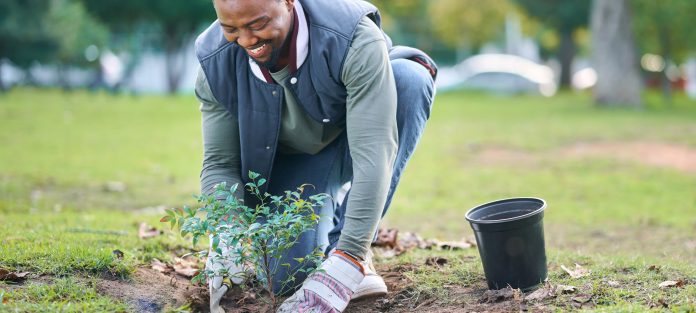
Giving back to your community and helping people in need can make you feel like you’re a part of something greater than any one single person—a key aspect of spirituality. It can also put things into perspective and help you feel grateful for everything you have in your life (essentially tapping into that gratitude practice we mentioned above). Find local volunteer opportunities, volunteer through your faith-based community or service organizations on campus, or initiate your own small acts of kindness to spread positivity.

Creative expression, such as art, music, writing, or dance, can be deeply spiritual experiences that have also been shown to boost your mental health. One large-scale study of adults in Taiwan suggests that frequent participation in these types of experiences, as well as attending cultural events, leads to lower stress levels and better life satisfaction.

Engaging in creative pursuits allows us to unleash self-expression and connect with a powerful spiritual energy. Explore your passions and make time for activities that bring you fulfillment. Even making a quick sketch of your dog, decorating your room, planting a mini garden, or singing in the car on your way to work can help get you into a feel-good flow state.

Nothing broadens the mind like travel. Spending time outside of your home country (or state) lets you immerse yourself in new cultures, learn about different beliefs and traditions, and develop greater empathy for others. While you’re exposed to a variety of different people and experiences, you’ll realize that, inside, we’re all the same. This experience can help foster spiritual growth and understanding.
Studying abroad is a great way to spend an extended period of time out of the country and gain life-changing experiences, connections, and memories while you’re in college.
If going abroad seems way out of reach, try a road trip across parts of the US, camping and spending time in different areas of the country. You may be surprised by the abundant variety in subcultures, terrain, and ways of living within our own shores.
Tip: Travel is expensive. If you can swing it, try to set aside at least five percent of your paychecks into a savings account that you’ll reserve for a future trip. Just setting this goal can be incredibly rewarding once you reach it, and will make finally booking those tickets that much more satisfying. You can also look into work exchange or volunteer trips abroad, where you’ll exchange some hours of your time or specific skill sets for a reduced rate on lodging and/or food.

Some of us who were raised religious may only have memories of being bored to death every Sunday in layers of stuffy clothing. But that doesn’t mean all organized religion will have this effect on you. There are many types of faith and worship that may jive more with your worldview than the one your parents raised you on.

Check to see if there are any religious groups or clubs that meet locally or on campus—particularly ones that are interfaith (meaning you don’t need to be associated with one faith in particular). Or see if you can tag along with a friend to their religious service; this can make it more comfortable than going alone.
If you’re having trouble finding an organized religion that feels right for you, you might find a fit in one that is nondenominational (the Unitarian church, for example), meaning it includes members with a wide variety of creeds. Keep an open mind—you may be surprised as to what speaks to you.
“Spirituality’s impact on our lives is most evident when shared with a community, so finding ways to pursue one’s spirituality with a group of trusted friends is important,” says Dr. Balboni.
Practicing your spirituality doesn’t have to feel serious or heavy, though sometimes it might. It can also feel like play or relaxation. Whether you find peace by spending time out in nature, praying, making art, going to church, or connecting with other people, prioritizing your sense of clarity and connectedness is always a good use of time. Do yourself a favor: Spend a few minutes today on your spirituality practice. Your mind and your heart will thank you.
How to become more spiritual: Time
10 types of spirituality: Happier Human
A beginner’s guide to exploring spirituality: Becoming Minimalist
Does being in a faith-based community help you live a longer, healthier life?: CampusWell
Article sources
Tracy A. Balboni, MD, MPH, FAAHPM, professor of radiation oncology and co-director, Initiative on Health, Spirituality, and Religion, Harvard University, Cambridge, Massachusetts.
Greg M. Epstein, humanist chaplain, Harvard University and the Massachusetts Institute of Technology, Boston.
Balboni, T. A., VanderWeele, T. J., Doan-Soares, S. D., et al. (2022). Spirituality in serious illness and health. JAMA, 328(2), 184–197. https://doi.org/10.1001/jama.2022.11086
CampusWell survey, August 2023.
Diniz, G., Korkes, L., Tristão, L. S., Pelegrini, R., et al. (2023). The effects of gratitude interventions: A systematic review and meta-analysis. Einstein (Sao Paulo, Brazil), 21, eRW0371. https://doi.org/10.31744/einstein_journal/2023RW0371
Hansen, M. M., Jones, R., & Tocchini, K. (2017). Shinrin-yoku (forest bathing) and nature therapy: A state-of-the-art review. International Journal of Environmental Research and Public Health, 14(8), 851. https://doi.org/10.3390/ijerph14080851
Lee, C. W., Lin, L. C., & Hung, H. C. (2021). Art and cultural participation and life satisfaction in adults: The role of physical health, mental health, and interpersonal relationships. Frontiers in Public Health, 8. https://doi.org/10.3389/fpubh.2020.582342
Nichol, B., Wilson, R., Rodrigues, A., & Haighton, C. (2023). Exploring the effects of volunteering on the social, mental, and physical health and well-being of volunteers: An umbrella review. Voluntas: International Journal of Voluntary and Nonprofit Organizations, 1–32. https://doi.org/10.1007/s11266-023-00573-z
Saeed, S. A., Cunningham, K., & Bloch, R. M. (2019, May 15). Depression and anxiety disorders: Benefits of exercise, yoga, and meditation. American Family Physician. https://www.aafp.org/pubs/afp/issues/2019/0515/p620.html
Yeung, J. W. K., Zhang, Z., & Kim, T. Y. (2017). Volunteering and health benefits in general adults: Cumulative effects and forms. BMC Public Health, 18(1), 8. https://doi.org/10.1186/s12889-017-4561-8